
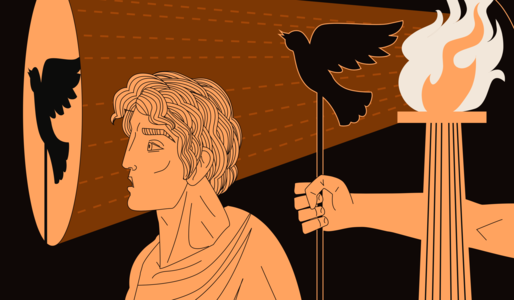
In stable times, society shares a single reality. Experts speak, and the public listens. Institutions issue reports, and citizens believe them. There is a general agreement on what is true, what is false, and how the world works. This is not because everyone is a scientist or a historian. It is because trust in the "sense-making" class holds firm.
But we no longer live in stable times. We have entered an era of deep institutional decay. In this phase, the cohesive glue of society dissolves. The most visible symptom of this decay is the explosion of alternative narratives, fringe beliefs, and conspiracy theories.
Critics often dismiss these beliefs as mere stupidity. They mock those who question the shape of the earth or the safety of vaccines. They assume that if they simply provide more facts, the public will return to the fold. This view misses the point entirely. The rise of conspiratorial thinking is not a crisis of intelligence. It is a crisis of trust.
History shows this pattern clearly. During the final stage of a historical cycle, the Fourth Turning, the institutions that define truth lose their authority. They fail repeatedly. They manipulate data to protect their power. They lie to cover up incompetence. Eventually, the public notices.
When a government lies about a war, people stop trusting its foreign policy. When a health agency flips its guidance based on politics rather than science, people stop trusting its medical advice. When the media suppresses stories that later turn out to be true, people stop trusting the news.
Once this trust breaks, it does not easily return. The compact between the ruler and the ruled shatters. Without a trusted authority to curate reality, people drift into the wilderness of information. They look for new patterns. They seek new explanations for the chaos they see around them.
This is where the "Flat Earth" and other fringe theories find their soil. They are not popular because they are scientifically sound. They are popular because they offer a total rejection of the established order. To believe the earth is flat is to say that every government, every space agency, every university, and every media outlet is lying. For a person who feels betrayed by these institutions, that is a seductive proposition.
It is an act of rebellion. It is a way to say, "I see through the charade."
The danger is not the belief itself, but what it signals. A society cannot function without a shared baseline of truth. Markets need reliable data. Courts need agreed-upon facts. Communities need a common language of reality. When these dissolve, the social fabric tears apart.
We see this fragmentation everywhere. Political tribes now inhabit different worlds. They consume different news, believe different histories, and define words in different ways. They do not just disagree on policy; they disagree on what is real.
This fragmentation accelerates as the internet prevents any single narrative from dominating. In the past, three television channels defined the national conversation. Today, a million voices compete for attention. The truth is available, but it is buried under avalanches of noise.
For the individual, this creates a profound sense of disorientation. It is hard to know what to believe. The natural reaction is to retreat into a tribe. We find a group that shares our suspicions and validates our fears. We build a fortress of certainty in a chaotic world.
But this tribalism only deepens the divide. It makes compromise impossible. If your opponent is not just wrong but deluded, how can you negotiate? If their reality is a lie, how can you live together?
The only way out of this cycle is not through debunking or mockery. It is through the restoration of trustworthy institutions. Authority cannot be demanded; it must be re-earned. Institutions must start telling the truth, even when it is painful. They must admit error. They must prioritize competence over optics.
Until that happens, the fracturing will continue. The center will not hold. New and stranger beliefs will rise from the rubble of the old consensus. We must understand them not as jokes, but as warning signs. They are the cracks in the foundation, showing us that the house is falling down.
In the Fourth Turning, the old world dies so a new one can be born. The define characteristic of this death is the loss of shared truth. We are walking through a hall of mirrors, and until we build new institutions worthy of trust, we will have to find our way in the dark.