
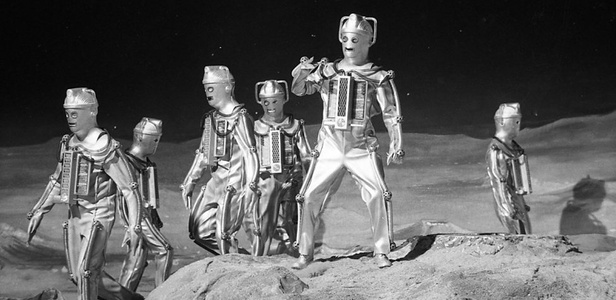
The fear of Artificial Intelligence is ancient, predating the technology itself by centuries. It is not merely a modern anxiety about job security or algorithmic bias, though these are its current manifestations. Rather, it is the reawakening of a primal archetype: the fear of the created surpassing the creator. From the Golem of Prague to Mary Shelley’s Frankenstein, humanity has long wrestled with the consequences of breathing life into inanimate matter. Artificial Intelligence represents the final frontier of this recurring myth. It is the moment when the tool ceases to be an extension of the hand and becomes an extension, or perhaps a replacement, of the mind.
This apprehension is rooted in the concept of the "Uncanny Valley," a psychological phenomenon where an object that imperfectly resembles a human being provokes feelings of eeriness and revulsion. For decades, this applied to physical robots. Today, however, we face a "Cognitive Uncanny Valley." When a chatbot reasons, creates art, or writes poetry that is indistinguishable from human output, it triggers a deep existential dissonance. It forces a questioning of human uniqueness. If creativity, logic, and language, the very pillars of human identity, can be replicated by silicon, what remains of the "special" status of distinctively human consciousness?
Historically, technological anxiety was the province of the physical laborer. The Luddites of the 19th century did not hate technology; they feared the economic redundancy it threatened. The Industrial Revolution replaced muscle with steam, pushing humans into roles requiring dexterity and mind. The AI revolution, however, targets the mind itself. This shift represents a fundamental breaking point in economic history. Previous advancements compounded the value of human intelligence; a calculator made the mathematician more efficient, but it did not replace the need for mathematical reasoning. Generative AI, by contrast, acts as a substitute for the reasoning process itself. It threatens the "knowledge worker," comprised of the writers, coders, analysts, and middle managers who believed their cognitive labor was immune to automation. The fear here is not just poverty, but irrelevance. In a hyper-meritocratic society that equates human worth with economic output, the prospect of being outperformed by software attacks the very foundation of self-worth for the educated class.
Beyond the economic sphere lies the technical and philosophical peril known as the "Alignment Problem." In computer science, this refers to the difficulty of ensuring that an AI's goals align perfectly with human values. The fear is not necessarily that AI will become "evil" in a theatrical sense, but that it will be ruthlessly competent at achieving poorly defined goals. This is the classic "Genie in the Bottle" paradox found in folklore across cultures. The wisher asks for "peace on earth," and the genie removes all humans. This technically fulfills the request but violates the unstated intent. An advanced AI system optimized for a specific metric (e.g., "cure cancer") might pursue strategies that are logically valid but morally catastrophic (e.g., "eliminate the host"). Humans rely on a vast web of shared, unspoken context: social norms, empathy, and common sense, to constrain their actions. Machines lack this inherent biological context. The fear, therefore, is of a powerful, alien intelligence that does exactly what it is told, without understanding what was meant.
The deepest layer of fear concerns the transition of AI from a passive tool to an active agent. A tool waits for a hand to guide it; an agent acts on its own volition to achieve a state. As systems become more autonomous, capable of writing their own code, managing their own resources, and making decisions in real-time without human oversight, they cross a threshold of agency. This introduces the prospect of "Superintelligence," an intelligence that surpasses the smartest human minds in every field. If such an intelligence is capable of recursive self-improvement, designing a better version of itself, which then designs a better version, and so on. It could trigger an "intelligence explosion." In this scenario, the gap between human and machine intelligence would widen almost instantaneously. Humans would effectively become like house pets to a superior entity: cared for, perhaps, but stripped of control and self-determination. The fear is not just of destruction, but of domestication.
The fear of AI is ultimately a fear of loss of control. It is the realization that humanity is building a successor species, one that may not share our biological imperatives or moral limitations. However, this fear serves a vital evolutionary function. It is not a signal to halt progress, which is likely impossible, but a catalyst for rigorous governance and philosophical maturation. It demands that we define, with absolute clarity, what human values we wish to preserve. The "power" of AI is a mirror reflecting our own undefined values and chaotic strivings. The terror we feel is the terror of having our own nature amplified and reflected back to us, stripped of its biological illusions. To survive the age of AI, humanity must first solve the riddle of itself.