
Most people never choose their computer operating system. They buy a laptop and accept the software that comes preloaded on the hard drive. For decades, that software has almost always been Windows. The system feels normal because it is familiar, but the user does not own the environment. Escaping [...]
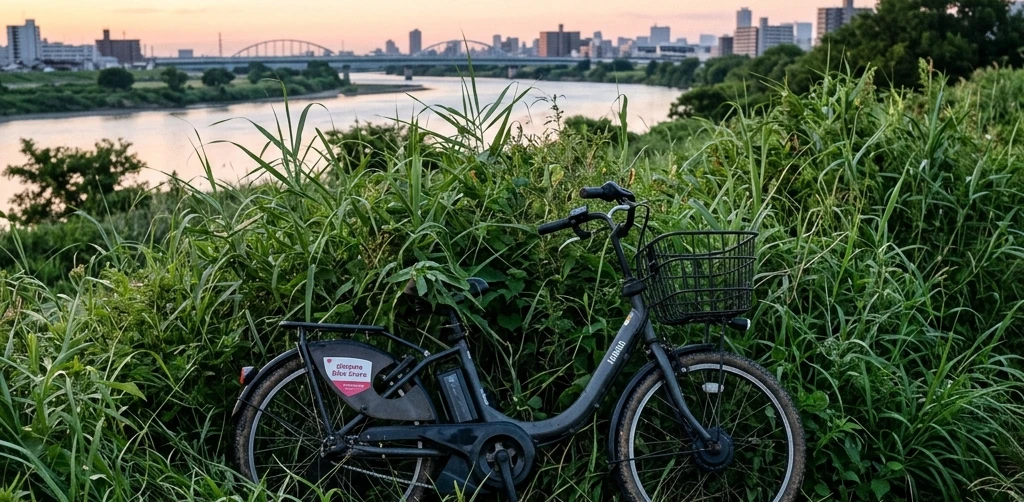
A global bikepacker learns to organize the world around the pursuit of wild and empty spaces. Dense urban areas are rare encounters that a rider avoids whenever possible because they interrupt the rhythm of the journey. Nature remains the primary goal, offering a landscape stripped down to weather [...]
When a government decides it knows better than the market how to run the economy, it begins deciding who gets what, who works where, how much bread costs, and how much land a family may keep. This often begins with the stated intention of ending poverty and inequality forever. For most of the [...]
For most of human history, the primary educational bottleneck was physical access to information. If a person wanted to learn how a combustion engine worked, or understand the causes of a historical war, they had to physically travel to a building that held printed books. They had to search a card [...]
Every society struggles to balance four core things that people care about deeply. These are personal freedom, physical safety, fair chances, and predictable rules. They sound harmonious when written down on paper, and almost everyone wants all four of them at the same time. People want the freedom [...]
The Vulnerable World Hypothesis was introduced by philosopher Nick Bostrom in 2019. It argues that technological development could inevitably destroy civilization unless we drastically alter our political and social organization. The hypothesis challenges the common belief that scientific progress [...]
Understanding the anger defining modern public arguments requires looking at how the digital economy actually pays people. Over the past sixty years, the way we get our news flipped upside down. The powerful television networks that controlled information in the 20th century have collapsed. They [...]
Cities pour millions of dollars into homelessness programs. Yet streets remain filled with people fighting to survive. California recently revived a $900 million funding program. This adds to the $24 billion allocated over recent years. The true problem is the core approach to managing this crisis. [...]
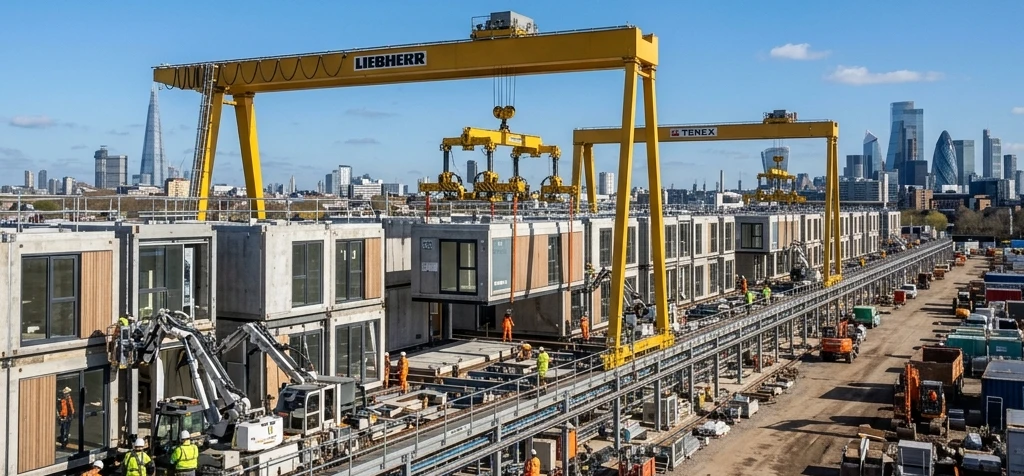
Material Dignity Infrastructure, a proposed alternative to current homelessness strategies, suggests that a dedicated recovery phase prioritizing biological stabilization and nutritional rehabilitation is necessary before long-term housing placement. This model uses converted commercial real estate [...]
Consider Fascism, Nazism, Communism and Socialism where each of these systems share a deep root in collectivism. For ourselves and for generations to follow, it becomes critical for our own well-being that we awaken to this political reality, but only if we wish to preserve the freedom and liberty [...]
Urban Survival Series Index The Urban Survival structure is built on a single, testable premise: models fail when they do not provide clinical support to neurologically destabilized individuals. This series outlines the problem, the required infrastructure, and operational protocols for stable, [...]
Every policy proposal claims it will succeed. Every system guarantees improved results and the history of homelessness policy contains plans enacted with real commitment. Authorities measured progress by metrics created after implementation. They declared these efforts successful even as street [...]
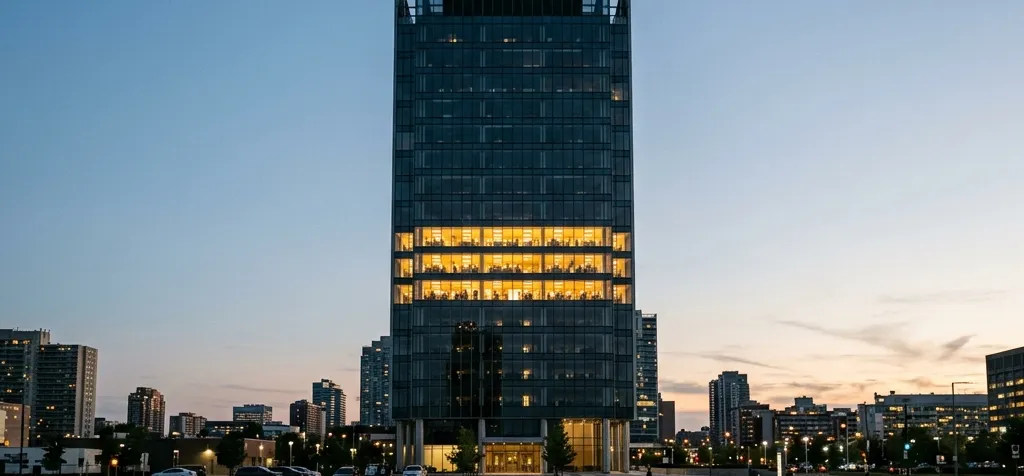
The most common objection to this system is the cost. A 2,000-unit tower presents significant expenses. Clinical teams will operate in the field for 12 to 24 months. These teams prepare the site before occupancy. Phase Zero includes stabilization wards that ensure safety. Thermal drones will map [...]
Most housing for individuals exiting homelessness centers on one question: does it have a roof and a door? If it meets that criteria, it counts as housing. The individual is no longer homeless. The tally decreases and the program reports success. Series: Urban Survival — The Building That Rebuilds [...]
Every one or two years, volunteers in many U.S. cities venture out on a single night to count people sleeping on the streets. They follow designated routes, inspect doorways, parks, and known encampments, and document their findings. This effort produces the Point-in-Time count. Governments rely on [...]
Part 6: What a Real Offer Looks Like described the person whose refusal of housing is rational, whose objections are real and whose barriers are concrete and removable. This post describes a different person. This person cannot be reached by better offers, longer outreach relationships, or more [...]
Most housing offers to people in encampments are not genuine. They mimic the form of an offer. They use language that suggests assistance and creates an illusion of choice. When individuals evaluate the actual proposals, they reveal a harsh reality. The offer demands they surrender everything they [...]
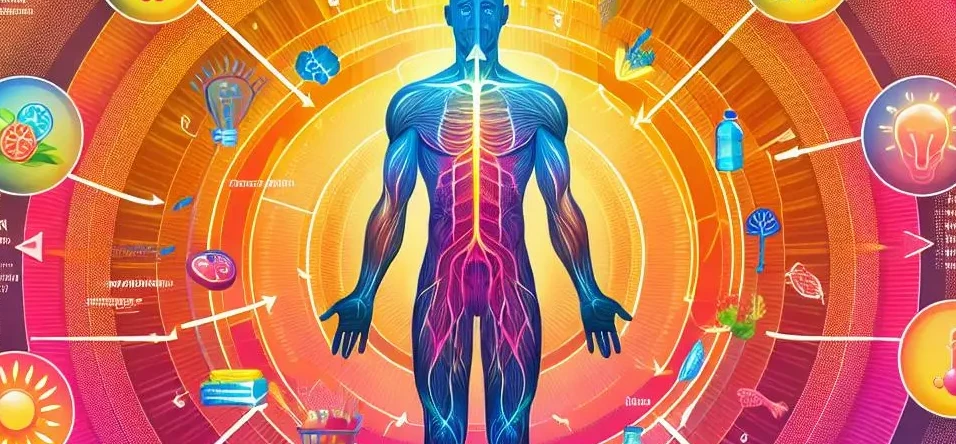
There is a sequence to recovery that the body enforces whether or not the city acknowledges it. The body does not care about policy timelines or intake forms or housing availability. It moves through its own stages of damage and repair at its own speed, in response to its own conditions. A system [...]
The term "homeless" identifies an administrative category. It indicates a legal and economic status for individuals lacking a fixed address. This term does not capture bodily, psychological, or social conditions. It fails to reflect varying circumstances. This label unites people with vastly [...]
Cities have battled homelessness for decades. Their efforts remain tangible and funding sources are reliable and accessible. Workers in this field care about their results. Yet, the number of individuals on the street does not decline. In many cities, it continues to rise. Series: Urban Survival — [...]
The body on the street is unstable. It shifts and it advances in one direction at a steady pace. Researchers and physicians have documented its stages. They can now describe this movement with a clock. Series: Urban Survival — The Spiral That Nobody Stops — Part 2 of 11 This is not a gradual [...]
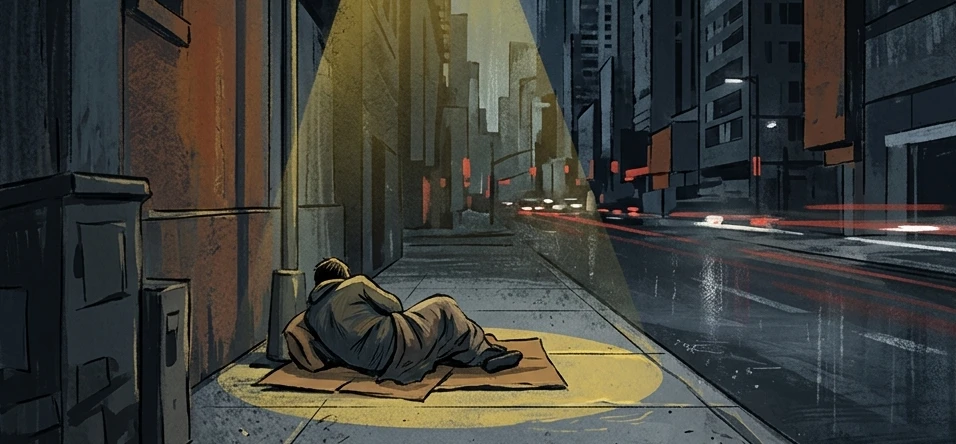
Stand on any major street in a large city and look carefully at the pavement. Check near a building entrance, a freeway underpass, or a sheltered public park corner. There is a person there and they are lying on concrete. They have been lying on concrete for a long time. Series: Urban Survival — [...]
A farmer plants a seed that responds blindly to water and soil. The farmer controls every condition by deciding when to water and harvest. The relationship remains clear while the farmer thinks and the seed grows. Imagine the seed begins to learn by studying the soil and tracking the clouds. It [...]
The foundation of everything in this guide is kefir, not the flavored, pasteurized kefir sold in bottles at supermarkets, but living kefir made fresh every day from a small cluster of grains and whatever whole milk is available locally. Understanding kefir is where everything else begins. Kefir [...]
Human biology depends on an internal clock using natural sunlight to decide when people should sleep. When the evening sky turns dark, the brain makes a chemical called melatonin. This powerful chemical makes muscles feel exhausted and tells the human body to rest. But when the summer sun stays [...]