
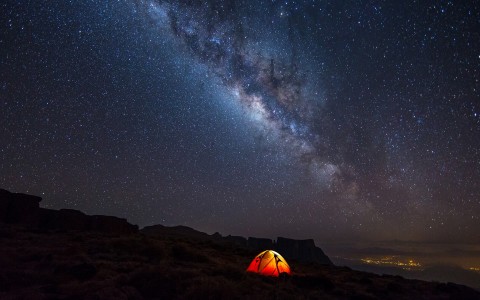
Solo camping represents a specific structural interface between the individual and the natural environment. This practice functions as a mechanism for temporary decoupling from complex social and technological systems. By removing the immediate influence of communal expectations and digital noise, the individual enters a state of isolated governance. The wilderness provides a neutral frame where the laws of nature replace the protocols of urban life. This transition allows for the observation of internal psychological patterns that are often obscured by the high-frequency distractions of modern society.
The architecture of isolation within a wilderness context relies on the mastery of physical systems. Pitching a shelter and managing thermal regulation function as survival tasks. They are acts of structural self-reliance. Success in these operations creates a psychological feedback loop of competence and agency. When the reliance on external infrastructure decreases, the capacity for autonomous decision-making increases. The environment acts as a rigorous filter, where every action leads to a direct and observable consequence. This clarity of cause and effect leads to a stabilisation of the individual's relationship with their immediate reality.
Analysis of the solo experience reveals a shift in the perception of time and space. The absence of social mediation allows for the prioritisation of biological and environmental rhythms. Sunrise and sunset become the primary markers of activity, replacing the artificial constraints of the industrial clock. This alignment with natural cycles reduces institutional friction within the mind. The silence of the wilderness is not a vacuum but a dense field of environmental signals. Birds, wind, and water provide a constant stream of information that requires active interpretation, shifting the cognitive load from abstract social data to primary sensory intake.
The psychological impact of extended solitude is characterised by the thinning of the socially constructed self. In the absence of an audience, the need for performative identity diminishes. This reduction in social overhead allows for a more authentic assessment of personal values and goals. The state of isolation functions as a sanctuary where the individual can process complex experiences without the interference of external bias. This process of internal audit is vital for maintaining resilience during periods of significant social or environmental change. Solitude provides the necessary space for the recalibration of the mental compass.
Environmental connection in a solo context is highly intimate and unmediated. Every step on a trail and every choice of campsite is a direct interaction with the landscape. The individual becomes a witness to the structural complexity of ecosystems, from the growth patterns of mountain flora to the hydrological cycles of forest streams. This direct observation fosters a sense of stewardship that is rooted in experience. The wilderness is recognised as a system of immense value and delicate balance. Protective instincts are sharpened when the individual perceives themselves as an integrated participant within the natural order.
The return to social systems after a period of solitary isolation is often marked by a heightened awareness of institutional inefficiencies. The clarity gained in the wilderness acts as a benchmark for evaluating the utility of social structures. The individual brings back a strengthened sense of autonomy and a reduced dependence on external validation. This capacity for independent thought is a critical asset in a fragmenting world. Solo camping serves as a rigorous training ground for the cultivation of a robust and self-sustaining mind.
The lasting value of the solo wilderness experience lies in the development of a resilient internal interface. By facing the challenges of the natural world alone, the individual builds a foundational confidence that persists across all areas of life. The wilderness offers a sanctuary for the maintenance of human agency in an age of increasing systemic complexity. Structural stability for the individual begins with the capacity to stand apart. The practice of solo camping ensures that the ability to navigate the margins of society remains a vital and functional skill.