
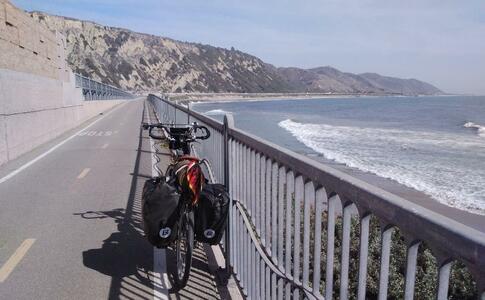
The concept of living on a bicycle strikes many as a paradox. It combines the ultimate freedom of movement with the severe constraints of carrying one's entire life on two wheels. Yet for those who embrace this nomadic existence, the trade-off offers a unique perspective on the world. It is a lifestyle that demands rigorous planning, ruthless minimalism, and a willingness to adapt to the unpredictable nature of the road.
To live effectively on a bicycle requires a fundamental shift in how one views material possessions. The bicycle itself becomes the most critical asset, serving as transportation, gym, and moving van all at once. Selecting the right machine is the first step in this transformation. It must be robust enough to handle varied terrain, from smooth asphalt to gravel backroads, while remaining comfortable for hours of daily riding. Reliability outweighs speed in this equation, as a breakdown in a remote area turns an adventure into a survival situation.
Packing for this life is an exercise in discipline. Every item placed in a pannier must earn its passage through utility or absolute necessity. The constraints of weight and volume force a clarity of purpose that is rare in modern life. One quickly learns the difference between what is needed and what is merely wanted. A heavy load not only slows progress but fatigues the rider and strains the equipment. Therefore, the successful bicycle nomad becomes a master of minimalism, carrying only essential clothing, tools, and perhaps a small shelter, knowing that anything extra is a burden that must be pedaled up every hill.
Route planning serves as the strategic backbone of the journey. While the romantic notion of drifting aimlessly has its appeal, practical survival requires a general awareness of resources. A cyclist must know where the next water source lies, where food can be replenished, and where safe rest is possible. This does not mean adhering to a rigid itinerary, but rather maintaining a rolling awareness of the landscape ahead. It is a balance between the freedom of the open road and the biological necessities of the human engine powering the vehicle.
The road, however, rarely respects even the most meticulous plans. Weather shifts, mechanical issues arise, and closed roads can force detours. This is where the bicycle nomad learns the vital skill of flexibility. The ability to adapt to changing circumstances is more valuable than any piece of gear. When a storm rolls in or a derailleur snaps, the rigid traveler breaks, but the flexible one yields and finds a new path. This adaptability extends to where one sleeps, what one eats, and how far one travels in a day. It is a surrender to the reality that the environment, not the rider, is ultimately in charge.
Furthermore, this lifestyle exposes the rider to the raw reality of the world in a way that enclosed travel cannot. There are no windows or walls to separate the traveler from the heat, the cold, the wind, or the rain. This vulnerability fosters a deep connection with the environment. One becomes acutely aware of the topography, sensing the slightest gradient in the road and the shifting direction of the wind. It changes the perception of distance and time, slowing the world down to a human pace where every mile is earned through physical effort.
Safety and preparedness act as the silent guardians of the journey. A well-stocked repair kit and the knowledge to use it are non-negotiable. Self-sufficiency is the goal, as help may be hours or days away. Similarly, a first-aid kit and the means to communicate in an emergency are essential components of the loadout. These preparations are not born of fear, but of a respect for the variables that come with a life lived outdoors and in motion.
Living on a bicycle is certainly not a path for everyone. It requires physical stamina, mental resilience, and a tolerance for discomfort that many find unappealing. It strips away the comforts of stationary life, replacing a soft bed and climate control with a sleeping pad and the ambient temperature. Yet for those who accept these terms, it offers a reward that is difficult to quantify. It provides a sense of autonomy and engagement with the world that is rare in a sedentary society.
Ultimately, this way of life proves that one needs far less to be happy than commerce would suggest. It demonstrates that a rich existence is not defined by the accumulation of static goods, but by the accumulation of experiences and the freedom to move through them. The bicycle nomad trades security for discovery and comfort for intensity, finding that the weight of their possessions is far less than the weight of a stagnant life.