
In the quiet city of Rome, New York, behind a retail store on Rome-Taberg Road, an unusual earth pattern sits etched into the dirt. Satellite photos show a large round formation spreading across several acres of thick woodland. Circular pathways and ringed clearings cut through dense forest timber, looking as though drawn by a deliberate hand. High aerial pictures show that this woodland earthwork has existed since at least May 1997. Yet its full layout remained unseen from the road, hidden beneath thick leaves and summer branches. Local drivers passed the woods for years without suspecting that an elaborate design lay carved inside the grove. Modern digital maps brought this silent forest ring to light, linking an upstate town with an ancient mystery.
The map coordinates of this New York site reveal a measured layout that echoes historic landscape rings across the Atlantic ocean. Local scouts tracing the terrain found that the clearing aligns with solar paths and forest streams. Unlike short-lived patterns stamped into green summer wheat, this woodland feature was cut deep into forest earth and tree trunks. The lasting imprint of the earthwork raises curious questions about who built it and why it was placed in quiet seclusion. Old aerial surveys allow researchers to track how the design survived decades of harsh snow and summer growth. The following aerial view documents the location and forest shape of the Rome formation.
The Ancient Fields of Wiltshire and the English Tradition
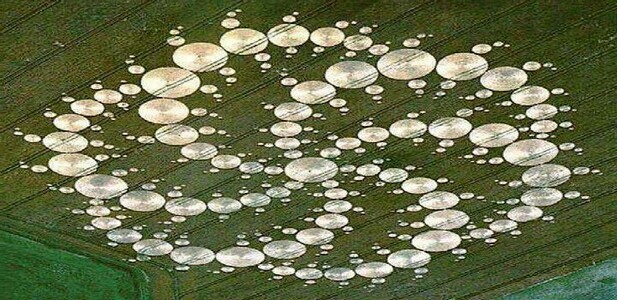
The modern fascination with landscape circles began thousands of miles away in the rolling farm valleys of Wiltshire, England. Wiltshire has served as a sacred home for ancient mounds, chalk paths, and megalithic stone rings for over five thousand years. Famous monuments like Stonehenge and Avebury stand upon rolling plains known for folklore and mysterious legends. During the late twentieth century, rural fields in Wiltshire drew world attention when circular marks appeared in ripening wheat and barley. Travelers and writers traveled to the district each summer, drawn by the surprising geometric layout of the field marks. The rolling chalk downs turned into an open-air stage for debating how landscape forms influence human culture.
Old country tales reveal that unusual field shapes appeared in the English countryside long before modern tourist trips began. Woodcut leaflets from 1678 show a mowing devil cutting odd oval rings into oat crops overnight. Similar reports cropped up through the nineteenth century, describing flattened grain found after sudden wind gusts. By the late twentieth century, the phenomenon grew from plain round shapes into stunning spiral diagrams. Some writers blamed weird vortex winds, while others suspected skilled local artists pulling midnight pranks. The mystery sparked worldwide debate, turning quiet farm towns into hotbeds of scientific inquiry.
 Outline
Theories of Origin from Folk Legends to Human Artistry
Over years of debate, curious observers offered contrasting stories to explain the creation of giant field shapes. One mystical school suggested that the markings were sacred signs left by unseen visitors or departed spiritual guides. Supporters of this idea argued that the measured layout of the circles showed an intellect beyond ordinary jokers. Other investigators showed that dedicated painters using wooden boards and survey twine could craft stunning designs under dark skies. These artist crews crafted intricate knots, spiral arms, and complex math proofs across southern England. Whether caused by mysterious forces or human craft, the field marks proved a widespread human hunger for wonder and myth.
The woodland circle in New York adds a fresh twist to this history by moving from wheat fields into deep woods. Cutting concentric paths through living timber requires steady trail tools, surveyor compasses, and hard physical labor. Unlike crop stalks that spring back or rot away, felling forest trees leaves a lasting trace upon the soil for decades. The Rome clearing proves that someone spent months carving old European forms into an American forest. Archival flight scans show that the round forest paths were clearly etched in aerial photos taken three decades ago. The picture below shows the earliest aerial photo of the Rome site from May 1997.
 Earliest image, May 1997
The Enduring Power of Landscape Symbols and Sacred Geometry
The recurring presence of geometric rings across separate continents reveals an enduring human love for balance and circular form. From ancient tribal wheels to medieval church floors, human cultures repeatedly return to the circle as a sign of wholeness. Etching these timeless shapes into the dirt joins daily human labor with the wide geometry of the stars. When hikers or pilots spot surprising shapes in the wild, busy routines give way to quiet awe and reflection. Landscape art transforms an ordinary hillside into a quiet space where nature and human imagination meet. These large earth shapes challenge observers to think about how people leave their stamp on the soil.
Whether found in the chalk hills of Wiltshire or the thick groves of New York, earth markings remind observers of life's hidden beauty. They show that physical land is a living canvas for human wonder rather than a dull field for commercial sprawl. Towns that shelter these curious sites keep a living link to art, mystery, and the search for purpose. As modern satellites map every inch of the globe, quiet geometric riddles still spark questions that resist quick answers. The hidden woodland rings in Rome show that fascinating stories can thrive right behind busy highways. People will always scan the earth for signs of wonder, leaving their own marks as quiet milestones of the human journey.