Cycles of Change

Engineering practical systems and exploring the physical world.

The Invention Secrecy Act of 1952 limits the distribution of new technologies. Under this law, the government blocks patents to protect national interests. Defense offices and the patent office review new ideas. The government pays inventors compensation to maintain secrets. Later, the government [...]

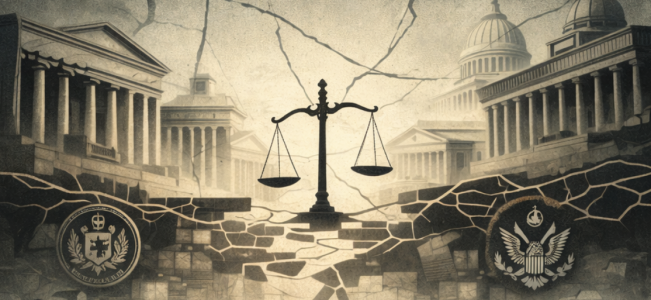
Free republics endure only when state power faces firm legal limits. When public officials rule without checks, government reach expands until basic civil liberties fade away. The early architects of free government saw that human ambition moves toward raw control unless blocked by rival powers. [...]
Constitutional originalism is a structural commitment to institutional resilience. It works as a fixed anchor for the social contract. This prevents the arbitrary growth of bureaucratic power. The base rules of the system must stay still to ensure long-term stability. This stability allows for the [...]
The interface between biological and synthetic intelligence is shifting. Interactions with early systems were rigid and mechanical. Users were required to memorize opaque command-line syntax or master labor-intensive rule engines that required years of training. The barrier to entry was high, and [...]
The idea that everything organized at a gigantic scale is heading toward failure reflects a critical view of modern society's reliance on massive institutions and systems. This perspective suggests that big governments, giant companies, huge capital investment firms, global shipping, energy [...]
Modern civilization is built upon a series of tightly coupled dependencies. These systems provide efficiency. However, they also create the conditions for a Black Swan event to propagate with catastrophic speed across unrelated sectors. A Black Swan is a highly improbable event with a massive [...]