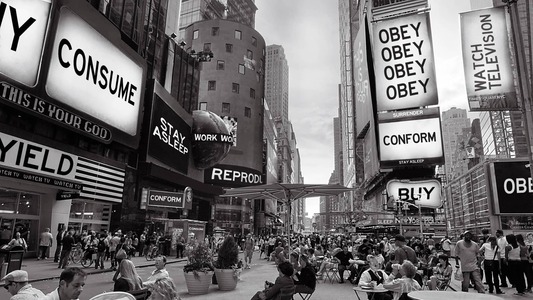

There have always been those who stand apart, outside the fray of conflict and noise. They do not belong to any side, nor do they seek to. They are the watchers, the ones who refuse to be claimed by a cause or a movement. In ancient times, they wandered the forests, mountains, and deserts, living [...]
The Cloward-Piven Strategy represents a provocative sociological framework conceived by Richard Cloward and Frances Fox Piven during the mid-twentieth century. This approach posits that radical reform of the social safety net can be achieved through the intentional overloading of existing welfare [...]
The concept of human rights represents the historical unfolding of a specific philosophical and legal consensus regarding the inherent value of the individual. This progression is not linear or inevitable, but reflects a series of cognitive and social revolutions that expanded the definition of who [...]
The stability of a pluralistic society depends upon the maintenance of a "sacred canopy," which is a shared system of meaning that provides a sense of cosmic order and social security. A primary threat to this canopy is the institutional encouragement of religious mockery. This converts satire from [...]
Explaining complex social and moral issues to a developing child, especially when they may be exposed to potentially harmful or confusing influences, requires careful thought. Children are naturally curious and absorb information from their surroundings, so guiding them thoughtfully through these [...]
The modern urban environment is a complex and dynamic landscape defined by a high density of variables and a constant flux of human and institutional forces. For the individual inhabiting this space without the protection of traditional domestic structures, the city becomes a field of engagement [...]
Hannah Arendt first introduced the concept of the "banality of evil" during the 1961 trial of Adolf Eichmann. She used this phrase to describe how ordinary people can participate in horrific crimes through simple obedience and an absence of thought. She observed that Eichmann was not a complex [...]
Democracy is a dynamic system for staying strong. It works through the steady renewal of public trust and the fair split of power. Cycle theory states that mature societies face decay during a "Fourth Turning." This phase shows less social cooperation and more internal conflict. Success requires [...]
The situation in Cuba is dire, particularly for the elderly population. With a meager $10 monthly pension, many retirees struggle to survive as food, medicine, and other basic necessities become increasingly scarce. The lack of resources, combined with the government's inability or unwillingness to [...]
The Housing First model represents progress in addressing homelessness. It prioritizes stable shelter as the primary solution. In communities with limited resources and overwhelming numbers of homeless individuals, providing immediate housing for everyone becomes an impossible task. A more [...]
Living without a cellular telephone in a world of failing institutions is a departure from modern survival. This choice forces an evaluation of how life operates when digital tools become mechanisms of control. It challenges social rituals that prioritize convenience over autonomy. Such decisions [...]
The Cartesian Crisis, rooted in the philosophical approach of René Descartes, emerges from the profound separation between mind and body, leading to an existential dilemma for humanity. This crisis has shaped modern thought, where the pursuit of rationality and the emphasis on individualism have [...]