
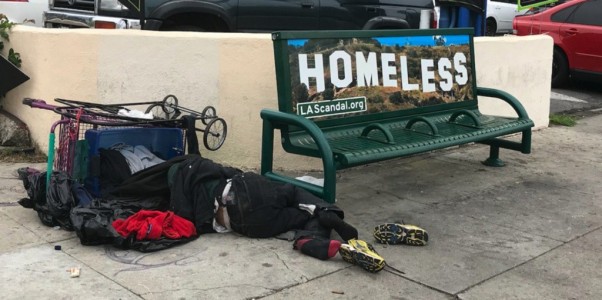
Homelessness in Los Angeles is not primarily a housing supply constraint but a pipeline problem, because the system connecting the street to housing has never been engineered. That distinction is the central idea that underpins the Material Dignity Infrastructure (MDI) approach, and it changes what a viable solution looks like.
California has spent over $20 billion on homelessness programs since 2019. Los Angeles County alone spends approximately $50,000 per person per year managing its chronically unsheltered population through emergency rooms, police responses, court appearances, and repeated encampment clearances. The spending is substantial, and the outcomes are not commensurate with the investment. The root cause is a system design problem, not a funding problem.
The current system operates in a loop in which outreach teams engage encampments and individuals cycle through fragmented services on timelines that do not match the months-to-years engagement window that a population with high rates of psychiatric and neurological impairment requires. Congregate shelters generate rational refusal because they prohibit pets, separate partners, and storage of personal possessions. Encampment clearances without simultaneous housing placement produce geographic redistribution rather than reduction. The population moves; it does not diminish. This pattern, which the working paper calls the Leaf Blower Effect, is a predictable output of an undesigned system.
What Is Actually Different Here
Rather than adding another program to a fragmented landscape, the MDI framework proposes an integrated system that differs from prior approaches in six specific ways.
First, it operates as an end-to-end pipeline rather than a collection of fragmented programs. Field engagement, legal pathways, and a physical receiving node are designed to operate as a single coordinated system. This level of integration and scale has not been implemented in Los Angeles.
Second, housing units are pre-matched to named individuals before any offer is made. The by-name HMIS registry, built during 12-18 months of ACT outreach, ties a specific room on a specific floor to a specific person. The offer is not a referral to a waitlist but an immediate, concrete commitment.
Third, the offer is timed to the warm offer window, which is the acute crisis moment when a person who has refused every previous approach will accept. This moment is medical, social, or psychological in origin. ACT teams trained in sustained presence engagement are designed to be present when it occurs.
Fourth, the framework includes a parallel legal pathway for individuals whose neurology precludes voluntary engagement. CARE Court, Assisted Outpatient Treatment (AOT) under Laura's Law, and LPS Conservatorship for grave disability cases provide a court-supervised compelled pathway running alongside the voluntary track. These instruments are designed as community-based, court-supervised treatment pathways rather than institutionalization, though their use remains legally and ethically contested and their implementation at the scale MDI requires has not been tested in California.
Fifth, the terminal node is a single high-density stabilization site capable of receiving 2,000 matched individuals simultaneously. This is what converts 18 months of ACT outreach investment into visible population movement at scale.
Sixth, the clinical, architectural, and operational systems are integrated into the same building. Ground floor intake, on-site medical, pharmacy, psychiatric services, and the residential environment above operate as a single integrated system rather than separate programs.
The Three Populations and Why One Approach Cannot Serve All
The chronic unsheltered population is not a single cohort. The MDI paper identifies three structurally distinct sub-populations, each requiring a matched intervention.
Pipeline A individuals are near-homeless or voluntarily transitioning due to economic disruption, institutional discharge, or temporary crisis. They engage voluntarily with existing Coordinated Entry System processes. MDI accelerates this pipeline by creating additional unit inventory.
Pipeline B individuals are encamped but engageable. They retain enough cognitive function to evaluate offers rationally. They refuse congregate shelter specifically, not housing in general. Multi-city housing-first and encampment resolution studies consistently identify three stated refusal reasons: pets will not be accommodated, partners will be separated, and accumulated possessions will be lost or discarded. When these barriers are removed, Houston's "The Way Home" program achieved 58-70% encampment-level acceptance rates. MDI's architectural response to all three barriers is built into the physical structure of the building, not handled through policy promises.
Pipeline C individuals have long-duration untreated psychosis, often with anosognosia. Anosognosia is a neurological condition in which frontal lobe damage prevents the individual from perceiving their own psychiatric illness, which means this is not denial or defiance and that persuasion-based outreach targets a cognitive faculty that has been damaged. ACT teams operating under a sustained presence model over 12-24 months, combined with the legal lever system, are the indicated intervention for this cohort. The voluntary acceptance rate for this population, globally and across all evidence-based programs, is 15-30%. The remainder requires the compelled clinical pathway.
A riparian sub-variant of Pipeline C occupies the flood control channels and creek systems of the Los Angeles basin. This population is systematically undercounted in point-in-time surveys and is resistant to both voluntary outreach and standard legal engagement. The paper recommends, but notes as not currently operational, a FLIR thermal drone mapping track coordinated with environmental enforcement agencies. The legal basis is not housing law but documented Clean Water Act violations produced by riparian encampments, enforceable by environmental regulators independent of the Grants Pass framework governing urban sweeps. The approach is legally plausible under existing aerial observation precedent, but its application to ground-level riparian encampments has not been tested in court, and the inter-agency coordination it requires between environmental regulators, the Army Corps, and the MDI housing authority does not yet exist. No clearance under this track proceeds without a confirmed room ready for the displaced individual.
The Building Is Not the Solution
The working paper is explicit on this point. The converted tower is the terminal node of the pipeline, not the pipeline itself. A tower without the ACT field architecture, the by-name registry, and the legal lever system is a large empty building. The system produces the population movement; the building receives it. The capacity of the building defines the throughput ceiling of the pipeline; without matched intake capacity, upstream engagement cannot convert into population reduction.
One California Plaza is in Chapter 11 receivership following a $300 million default. The verified floor valuation is $120 per square foot, representing approximately an 80% discount from peak commercial value. The paper proposes acquisition through a state-backed Stewardship Bond instrument targeting distressed commercial real estate at this floor valuation. The building is chosen not for symbolic reasons but because it is the only asset class currently available at this scale and price point in Los Angeles capable of receiving 2,000 matched individuals simultaneously while making the fiscal model work.
Inside the building, the architecture is designed to specific clinical requirements. Units are built to STC 65 acoustic specification, which reduces ambient sound transfer to near-clinical-quiet levels. This matters because chronic street exposure produces hypervigilant nervous systems that cannot reach the parasympathetic state required for psychiatric stabilization. The specification is a medical decision, not a comfort decision. The 2,000-unit floor plate is partitioned into 13 Home Pods of approximately 154 residents each, organized around shared kitchens, biophilic corridor nodes, and pod-specific elevator loops. Pods are sized to maintain mutual recognition and informal accountability among residents. Research on high-density residential settings consistently identifies anonymity, the inability to recognize neighbors as known individuals, as the primary predictor of inter-resident conflict.
The ground floor operates as a zero-barrier public commons that is open to anyone with no conditions and no name required. It carries a walk-in medical clinic, a pharmacy dispensing node, a robotic cafeteria with 1,200-seat capacity, and a veterinary facility. This floor is the conversion mechanism of the pipeline. A person who has refused every institutional offer for years will enter a building that treats their wound infection without asking for identification. Over weeks or months of visits, the warm offer from the outreach team becomes credible because the building is already part of that person's daily pattern of survival.
The designed endpoint of the MDI pipeline is not permanent residence in the tower but graduation to the private rental market, with each resident accumulating income, restoring credit and identification documents, and establishing rental history while housed until a private market lease is signed and funded.
The Fiscal Case, With Uncertainty Stated
The prototype capital budget is approximately $195 million, consisting of $120 million for asset acquisition, $50 million for modular unit installation, and $25 million for physical plant hardening to MDI specification.
The efficiency argument is based on a current expenditure baseline of $50,000 per person per year managing 2,000 chronically unsheltered individuals through fragmented emergency services. That amounts to $100 million annually that produces no capital asset and no reduction in population. The MDI operating model is projected to cost less per resident than this baseline through consolidated on-site services, robotic automation, non-profit co-location, and Medicaid reimbursement for clinical services delivered on-site. Not all current emergency and policing costs disappear upon placement; savings are partial and accrue over time as residents stabilize and reduce system dependence.
The paper models three scenarios. In the best case, the efficiency surplus reaches $82 million per year and the $195 million capital cost recovers in 29 months. In the most probable case, which applies 25% lower savings and 25% higher costs against the baseline, the surplus is $52.5 million per year with a 45-month recovery. In the worst case, with 40% lower savings and 50% higher costs, the surplus is $33 million per year with a 71-month recovery. The paper establishes the 45-month most-probable timeline as the operational falsifiability threshold: if the prototype cannot demonstrate a trajectory toward 45-month recovery within its first 24 months of operation, the financial thesis is falsified and network expansion does not proceed.
These are modeled projections, and actual outcomes will depend on operational execution, staffing success, regulatory approval timelines, and factors the model cannot fully anticipate.
What This Depends On
The framework is not without dependencies and risks that should be stated plainly.
The legal lever system, consisting of CARE Court, AOT, and LPS Conservatorship, requires California courts to process petitions at a volume and speed the current system has not demonstrated. Legislative alignment and judicial capacity are preconditions, not certainties.
Building conversion at this density and specification is a complex engineering project with no direct precedent in Los Angeles. STC 65 acoustic retrofit of commercial floor plates, modular unit installation at 2,000 units, and ground floor clinical build-out carry execution risk.
ACT sustained-presence deployment requires trained clinical staff at scale. The staffing pipeline for ACT-qualified personnel in Los Angeles is a real constraint.
A single 2,000-person site concentrates operational risk. A critical systems failure in physical plant, staffing, or clinical management would affect the entire prototype population simultaneously. The paper does not address redundancy across sites during the prototype phase.
The FLIR-assisted riparian enforcement track is a recommended addition, not a funded or operationally approved program. It requires inter-agency coordination that has not been established.
A single-site model at this scale may also face community opposition and political resistance, which could affect siting, approvals, and ongoing operation.
How Success Would Be Measured
The prototype is designed to be falsifiable. The paper proposes evaluation against the following metrics: housing retention at 6, 12, and 24 months post-placement; reduction in the unsheltered count in the target corridor; emergency room and hospital visits; county jail cycling reduction for placed individuals; and cost per stabilized individual compared to the $50,000 per-person-per-year baseline. The 45-month capital recovery trajectory provides a financial falsifiability threshold independent of clinical outcome measures.
Why Los Angeles
The mild Pacific climate makes street survival viable year-round in a way that it is not in colder cities. This is the structural reason the problem is worse here, and it is not reducible to policy failure alone. A person can survive outdoors in Los Angeles in January in a way that is not possible in Chicago or Denver. The result is a population with five, ten, or fifteen years of outdoor habituation, whose neurological and psychiatric deterioration across that span makes standard intervention timescales inapplicable.
Houston reduced its unsheltered population by approximately 60% between 2011 and 2020 using the same field engagement logic of by-name registry, pre-matched units, and warm offer at the crisis window, and reported 90% two-year housing retention for placed individuals. Finland reduced long-term homelessness by 68% nationally between 2008 and 2022 by ending sobriety and employment preconditions for housing access. Both cases demonstrate that the method works under different governance structures and housing market conditions.
Houston and Finland differ from Los Angeles in important respects, including greater availability of public housing stock and broader legal frameworks for involuntary treatment. Yet, Los Angeles would demonstrate, if the MDI prototype succeeds, that it works under the most difficult structural conditions in the United States. It would produce a replicable blueprint for other cities across the United States facing the same severe pipeline problem and the challenge of repurposing vast inventory of distressed commercial real estate.
The prototype asks for a single tower and a single test, with results to be independently verified and expansion to follow only if the falsifiability thresholds are met.
The full working paper is available for download at Working Paper: Material Dignity Infrastructure (2026). The podcast series and full research archive are available at bikepaths.org/podcast.