
Cycles of Change

Engineering practical systems and exploring the physical world.

The pursuit of artificial superintelligence assumes that human cognition is a sequence of mathematical calculations and pattern recognition. This assumption ignores a fixed boundary in how biological creatures process the physical world. Modern software operates on two distinct frameworks. It uses [...]
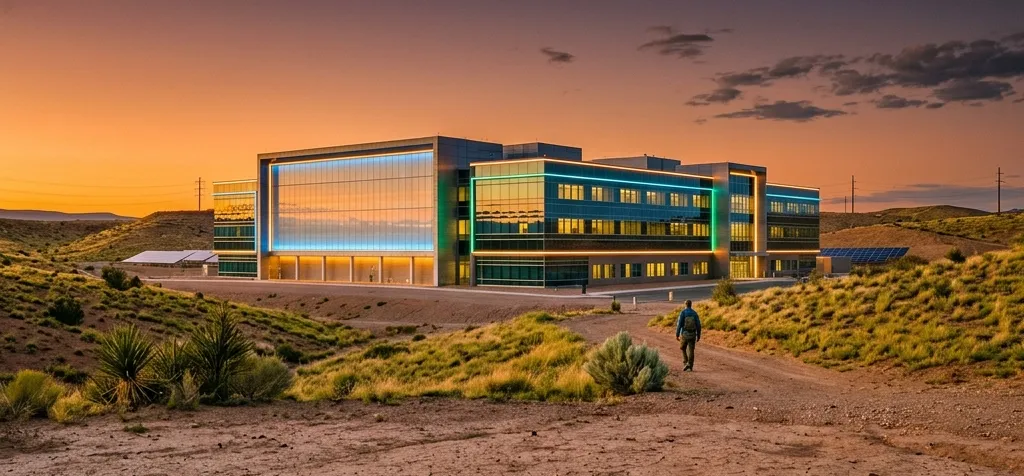
A worker in a brightly lit factory in Hsinchu, Taiwan, lowers a silicon wafer into a chemical bath. The silicon undergoes a series of precise acid washes and laser etchings to carve billions of microscopic pathways into the metal. The factory consumes enough electricity each day to power a small [...]
If the public provides the raw material that powers artificial intelligence, the next step requires building a container to capture the value of that material. The previous argument established that machine learning models rely on human knowledge to function. The companies building the software [...]
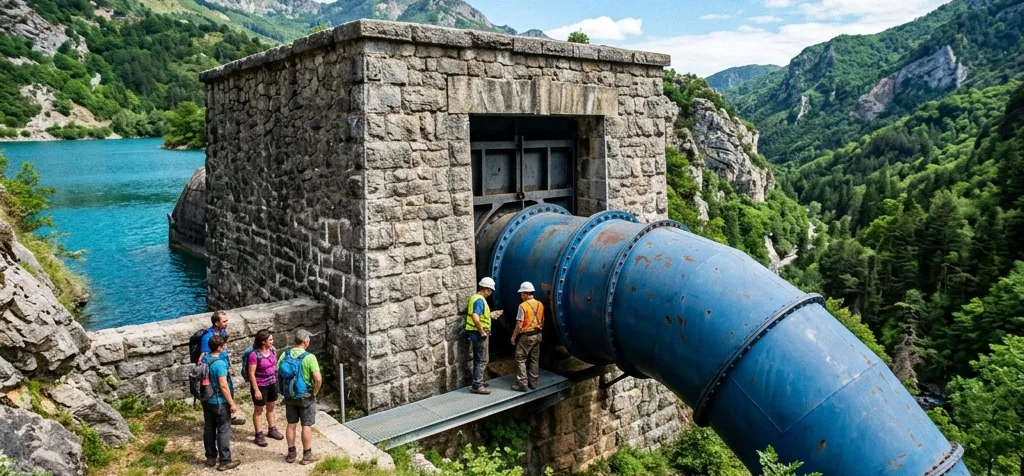
Imagine a farming village situated at the bottom of a large mountain. For hundreds of years, every family in the village carries stones up the mountain path to build a massive reservoir. Grandparents carry stones. Their children carry stones. The reservoir collects rain that falls across the entire [...]
The transition into a new year shows a shift in how systems work. For students who want a deep understanding of this time, four points are clear. People navigate reality by verifying truth and organizing complex systems. The first point involves truth. Most digital information appears on screens [...]
Google Antigravity represents a fundamental shift in how people create software. Traditional web-based assistants respond to prompts within a chat window. Antigravity functions as a local environment. This platform changes the developer from a manual programmer into a high-level architect. The user [...]