
Walking into a language classroom at fifty feels, to most people, like walking into a room designed for someone else. The assumption is old and stubborn. Children absorb languages like water into dry cloth, and adults do not. The brain, according to this story, closes its doors to serious [...]
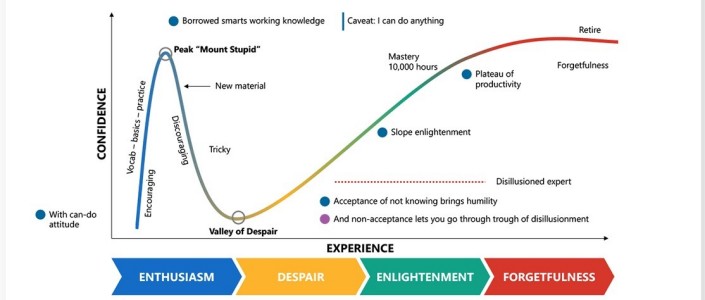
The Dunning-Kruger Effect identifies a cognitive bias where individuals with limited knowledge overestimate personal competence. We perceive this phenomenon as a structural failure of Metacognition. Metacognition exists as the mechanical ability to monitor and judge internal thought processes. To [...]
Adopting a measured model of truth exists as a philosophical choice and a cognitive effort that conflicts with the biology of the human brain. We observe that most people default to Binary Logic because it remains metabolically cheap. Deciding a claim is strictly true or false requires minimal [...]
Modern discourse often treats truth as a binary choice. We observe claims being classified as either strictly true or entirely false. This rigid framework generates a structural failure when we analyze complex systems or deep ontological questions. When truth remains restricted to an absolute [...]
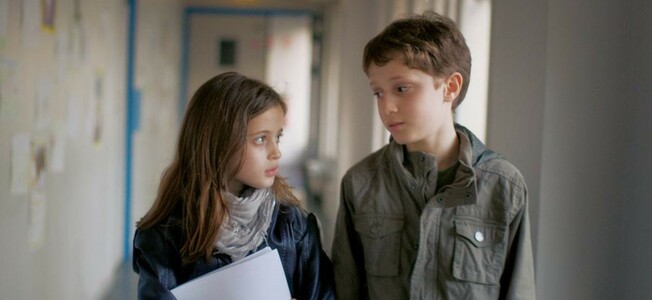
Public life across fractured societies often suffers from an inability to hold calm and reflective conversations. While adult partisans trade harsh words across digital networks, elementary classrooms hold fresh hope for civic renewal. Children between the ages of six and twelve possess young minds [...]
The human brain functions as an engine of prediction. Every second, it processes millions of data points, searching for patterns that allow it to anticipate what comes next. This biological need for efficiency allowed early humans to survive in dangerous environments where a rustle in the grass [...]
Imaginative thinkers often bear a deep burden of inner strife, self-doubt, and sharp frustration. While society celebrates original art and breakthrough ideas, the mental path behind artistic work remains turbulent and stormy. A mind trained to spot hidden patterns and dream of distant outcomes [...]
The experience of taking sharp offense acts as a quiet undercurrent moving through daily social life. While speakers often assume they are sharing plain facts, pride and thin skin shape how words are heard. A blunt remark, a missed greeting, or an awkward pause can suddenly spark feelings of [...]
In developmental psychology and legal history, the seventh year of childhood marks a quiet milestone. For centuries, civil courts and religious councils identified seven as the age of reason. Before that point, a young child acts on sensory curiosity and physical habit. After crossing that line, [...]
Human training often rewards clever test scores while overlooking the quiet arts of judgment and emotional perception. A student can solve difficult puzzles yet struggle to read the subtle tensions in a crowded room. Sharp mental gifts provide helpful tools for analysis, but daily life demands more [...]
Modern science gives us powerful tools to study our world, from mapping distant stars to reading the human genetic code. For three hundred years, empirical research taught us to test claims through repeated experiments. This steady approach improved medicine, built our power grids, and sent probes [...]
Human awareness unfolds across time as a gradual journey. From the first breath of air at birth to the quiet stillness of old age, the way people meet life undergoes steady change. A newborn infant enters the world through raw skin touch, loud noises, and bright lights. The baby lacks spoken words [...]