
Cycles of Change

Engineering practical systems and exploring the physical world.

Rudyard William Lynch built a broadcasting empire on his own terms. He held no university fellowship, sought no network television slot, and answered to no editorial board. He set up a microphone, started talking, and let the audience decide. Over a decade, that decision produced one of the most [...]

The digital landscape now prioritizes passive consumption, where fragmented video, quick audio clips, and short headlines have largely replaced the focused architecture of a well-constructed paragraph. Deep reading is transitioning from a baseline skill into a specialized art, leaving a broad [...]
Walking into a language classroom at fifty feels, to most people, like walking into a room designed for someone else. The assumption is old and stubborn. Children absorb languages like water into dry cloth, and adults do not. The brain, according to this story, closes its doors to serious [...]
Teaching someone to read and helping someone love to read are two different jobs. The first is a mechanical skill that requires instruction in letters, sounds, and blending. The second is an ongoing emotional relationship built on the idea that books are worth a person's time. A child can build the [...]
This story is written for children, but adults may find it uncomfortably familiar. Read the fable first, then read the explanation at the end. The Whisper-Phones and the Schoolyard The children at Valley School loved a game called Kick-the-Can. For a long time, the game ran on a very simple engine. [...]
For most of human history, the primary educational bottleneck was physical access to information. If a person wanted to learn how a combustion engine worked, or understand the causes of a historical war, they had to physically travel to a building that held printed books. They had to search a card [...]
Schools operate through written rules. Those rules shape daily life, define authority, and quietly reveal where real power sits. When students learn to read those rules as operating instructions rather than fixed truths, they gain a precise method for change. Collective questioning offers a lawful, [...]
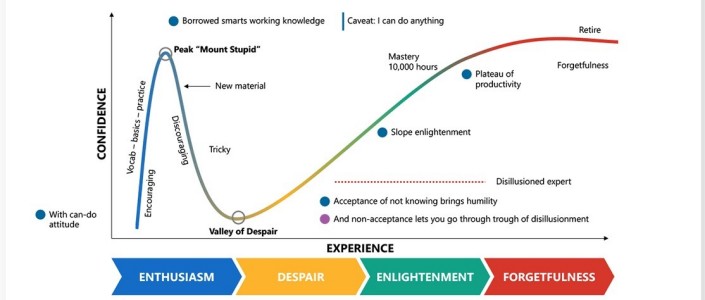
The Dunning-Kruger Effect identifies a cognitive bias where individuals with limited knowledge overestimate personal competence. We perceive this phenomenon as a structural failure of Metacognition. Metacognition exists as the mechanical ability to monitor and judge internal thought processes. To [...]
Economic structures often appear permanent until the moment they dissolve. Modern society currently occupies a precarious interval between the exhaustion of a debt-fueled growth model and the emergence of a system grounded in physical utility and technological efficiency. This transition involves [...]
Public life across fractured societies often suffers from an inability to hold calm and reflective conversations. While adult partisans trade harsh words across digital networks, elementary classrooms hold fresh hope for civic renewal. Children between the ages of six and twelve possess young minds [...]
Raising children in a fast-paced media climate presents modern parents with unique moral challenges. Young people meet conflicting messages about identity, duty, and truth long before their minds develop mature judgment. Digital screens, classroom debates, and peer groups expose growing youth to [...]
The development of a strong tech ecosystem in emerging nations requires a synthesis of individual skill and strategic building. A primary example of this path is found in the life of Rithy Thul, a Cambodian leader who transitioned from rural poverty to the forefront of national digital innovation. [...]