
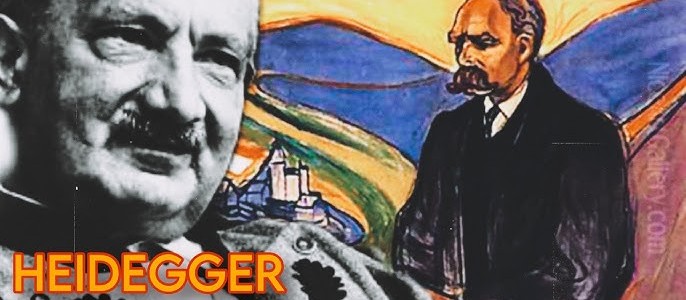
The stability of personal purpose in a connected society depends upon the power to navigate the cognitive structures of social pressure. A primary challenge to authenticity is the reliance on assumptions, which are the mental shortcuts that automate choice and align personal results with external standards. This automated mode of life, described by Martin Heidegger as "Das Man," represents a state where the individual is lost in the anonymous hopes of the crowd. Achieving true freedom requires a steady deconstruction of these habits to ensure that life paths are chosen through clear evaluation in place of institutional force.
Søren Kierkegaard famously asserted that "the crowd is untruth," highlighting the tension between popular consensus and genuine personal integrity. This philosophical framework posits that the adoption of mass-marketed markers of success often results in a loss of self-awareness. When individuals value external validation over internal truth, they risk becoming "cultural exiles" in their own lives. Viktor Frankl’s work further suggests that meaning is found through the pursuit of unique values and the recognition of personal responsibility. An intentional life is made by using rigorous thought to verify that old paths resonate with the core self.
Brain habits serve as a double-edged sword in the stay of mental safety. While shortcuts allow for the fast use of complex facts, they also help the growth of hidden bias. Confirmation bias and anchoring effects often support the "sacred canopy" of social rules. This makes it hard to see when personal goals have been replaced by social hopes. A skilled approach to mental freedom involves the use of regular check plans to find these biases. By checking the goals behind work and personal choices, one can move from a state of mindless life to a state of purposeful growth.
The mechanics of social capital are improved when links are built on authenticity in place of shallow talk. Relationships that are founded on mutual understanding and shared goals provide a better base for strength. In contrast, taking social links for granted leads to a drop in the quality of the social fabric. True connection requires a will to engage with the lives of others without the lens of old assumptions. This way improves the health of the community by building a world of genuine care and help. The pursuit of depth in human talk is a vital part of a strong and growing state.
Ultimately, the journey toward intentionality involves a commitment to learning and the power of self-governance. Individuals must recognise that meaning is not a fixed goal but a dynamic process of alignment and recalibration. By grounding actions in foundational values, one ensures that each step contributes to the integrity of the wider world. The goal of a sophisticated society is to build citizens who prioritize clarity and purpose in the face of persistent ideological noise. Reclaiming the "master role" in one's own life is the primary requirement for maintaining individual freedom and contributing to the advancement of the human experience.