
Every civilization asks the same question: where does authority come from? The answer shapes everything. It determines who makes the laws, who enforces them, and who can challenge them. Two answers have competed across human history. Understanding both reveals why the republic remains one of the most deliberate systems of governance ever built.
The Pyramid
The first answer is the oldest. Authority flows from God through one chosen person. In ancient Mesopotamia, kings were described in temple inscriptions as the "image of god" (Lutz, 1984), selected to stand between heaven and the human world. Medieval Europe built this into formal doctrine. The King represented God on earth. To disobey the King was to disobey God.
The logic holds a certain clarity. One voice. One will. One direction. The problem is also clear. This model requires a perfect human conductor. It assumes the King carries divine will without distortion, without personal interest, without corruption. History shows this assumption fails often and at great cost.
The Web
The second answer distributes authority across all people. Genesis 1:26-27 teaches that every human being carries the image of God, what theologians call the Imago Dei. If that is true, then no single person owns the divine spark. Every person carries a piece of it.
John Locke built his political philosophy on this foundation. In Two Treatises of Government (1689), he argued that legitimate authority requires the consent of the people who carry that image. Citizens are moral agents, not passive subjects.
The weakness here is also real. Large groups do not always choose wisely. Majorities can confuse desire with justice. Without structure, the web produces noise, not truth.
The Republic
A republic, from the Latin res publica meaning "public affair," builds a practical structure between these two failures. It does not place full trust in one ruler. It does not surrender fully to the crowd either.
Montesquieu, the French philosopher cited more than any secular writer in the Founders' pre-constitutional documents (Lutz, American Political Science Review, 1984), identified what a republic requires above all else: virtue. In The Spirit of the Laws (1748), he wrote that when citizens stop caring about the common good, the republic begins to rot from inside.
James Madison translated this directly into the American design. In Federalist No. 51 (1788), he wrote that "ambition must be made to counteract ambition." The system separates power across three branches so that no single person can dominate. It treats human fallibility as a permanent condition and builds around it.
What Holds It Together
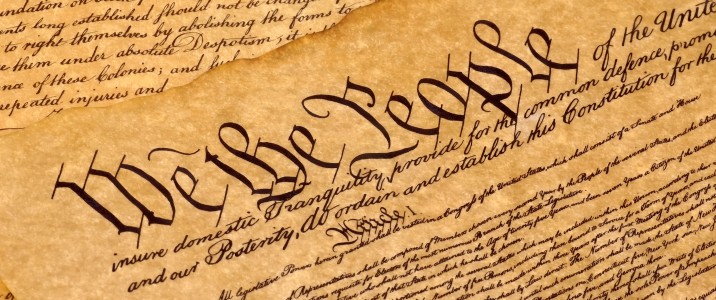
Law holds the structure in place, but virtue keeps it honest. When Benjamin Franklin left the Constitutional Convention in 1787, someone asked what kind of government had been created. He said: "A republic, if you can keep it."
That condition matters. The republic does not run on automatic. It requires citizens who take their role seriously, who argue in good faith, and who accept correction when they are wrong.
The pyramid trusts one extraordinary person. The web trusts the average of everyone. The republic trusts the process: slow, transparent, and built to recover from its own mistakes.
That capacity for correction may be the most honest thing any human institution has ever offered.