
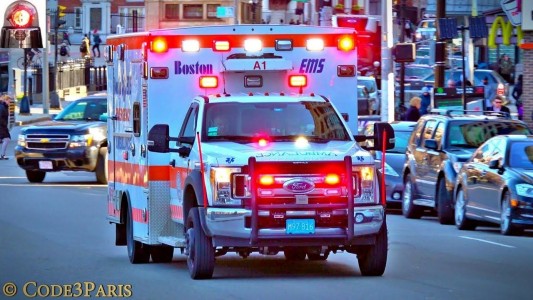
A Safer and Quieter Future for Our (and Your) Community
Oneida County has a chance to be a leader in safety and peace. Research shows that our current sirens are too loud. They cause health problems for our neighbors and actually make car crashes more likely.
The full report on this issue is very long and has many technical words. We created two audio talks to help everyone understand the facts quickly. These interviews explain the legal and health issues in plain and simple language.
The Easy Discussion - Listen to this talk to learn how we can make our streets quieter. It explains how a more peaceful city helps our families and local businesses.
The Intense Debate - Check out this segment for the tough questions. It explains the legal risks that our leaders must face today.
Rome, NY (USA) has always been a place for bold ideas. By making our community quieter, we make it a better place to live and work. We want to attract people who love the outdoors and a peaceful home. Listen to these talks now and help us build a safer future for everyone.
This report outlines a modernization strategy for emergency signaling. Current siren usage patterns create a safety paradox where the risks of high-decibel noise outweigh the minimal time saved. By replacing outdated dispatch protocol with a three-tier response model, this proposal seeks to protect the public from the neurological stress and physical dangers associated with traditional siren technology.
The text highlights a significant policy void regarding reasonable necessity while framing noise reduction as a mandatory ADA accommodation for vulnerable populations. The document serves as an evidence-based call to transform the urban soundscape by balancing urgent medical needs with actuarial safety and public health standards.
Three Primary Vectors of Municipal Liability
Modern emergency vehicle signaling protocols operate under significant forensic and actuarial exposure. This research identifies three primary vectors of municipal liability that necessitate immediate administrative reform.
1. The Policy Void as Forensic Liability
Freedom of Information Law audits demonstrate a forensic policy vacuum across municipal jurisdictions. Oneida County records indicate an absolute absence of documentation regarding the statutory reasonable necessity standard (Oneida County FOIL, 2026). This proves that siren activation rests on unguided individual judgment rather than synchronized administrative procedure. In administrative law, the exercise of high-decibel public authority without written criteria constitutes arbitrary and capricious action. Municipalities operating outside the guardrails of documented safety standards remain defenseless in litigation.
2. The Actuarial Safety Paradox
Actuarial data from the National Highway Traffic Safety Administration reveals that siren usage increases collision risk by 17% during the response phase and 144% during the transport phase (NHTSA, 2019). Because this elevated risk provides a clinically meaningful benefit in fewer than 5% of cases, the decision to maintain continuous siren activation for routine transport represents a high-stakes gamble with public safety lacking medical justification (NEMSIS, 2016).
3. ADA and Civil Rights Exposure
Identified data confirms that 8% to 20% of the population suffers measurable physiological harm from sirens exceeding World Health Organization health thresholds by 67 decibels (WHO, 2018; VA, 2023). This vulnerable cohort specifically encompasses individuals diagnosed with PTSD, Autism, and sensory processing disorders. Under the Americans with Disabilities Act, municipalities maintain a statutory obligation to provide reasonable accommodations (ADA, 1990). The failure to adopt discretionary and tiered response protocols represents a systemic refusal to accommodate protected populations. Since these modernized frameworks require zero capital expenditure, the persistence of legacy signaling protocols generates significant and increasing civil rights exposure for municipal administrators.
Video
Acoustic Impact Assessment of Emergency Vehicle Siren Systems
A Systematic Policy Analysis and Modernization Framework
DiBella, Charles Joseph (2026)
Abstract
Emergency vehicle siren systems generate high-decibel acoustic signals (110-120 dB) that penetrate residential structures, creating significant health impacts for 8-20% of the population, including those with PTSD, autism, and sensory processing challenges (CDC, 2022; VA, 2023).
This study documents a safety paradox where siren usage increases emergency vehicle collision risk by 144% during transport while offering marginal time savings that are clinically significant in under 5% of cases (NEMSIS, 2016; NEMSQA, 2021).
Freedom of Information Law audits of Oneida County reveal a systematic policy void where municipalities lack written criteria for evaluating acoustic impact or operationalizing the statutory reasonable necessity standard (Oneida County FOIL, 2026).
The analysis proposes a data-driven, three-tier response framework to modernize emergency protocols, reduce municipal liability, and protect population health.
Document Metadata
Document Type:
- Policy Analysis
JEL Classifications:
- I18 Health: Government Policy; Regulation; Public Health
- K23 Regulated Industries and Administrative Law
- R41 Transportation: Demand, Supply, and Congestion
- H75 State and Local Government: Health; Education; Welfare; Public Pensions
- K32 Environmental, Health, and Safety Law
- I12 Health Behavior
- R53 Public Facility Location Analysis; Public Investment and Capital Stock
SSRN Classifications:
- Health Law & Policy eJournal
- Administrative & Regulatory Law eJournal
- Public Policy & Regulation eJournal
- Law & Society eJournals
- Political Economy - Regulation eJournal
- Urban Economics & Public Policy eJournal
- State & Local Government Law eJournal
Executive Summary
This research examines the systemic failure of mid-20th-century siren signaling protocols to adapt to contemporary urban environments. Standard sirens generate 110-120 decibels, exceeding international residential health thresholds by up to 67 decibels and preventing residential equilibrium (WHO, 2018). This acoustic intensity triggers severe physiological stress in vulnerable populations, including the 3.2% of children with autism and 3.6% of adults with PTSD (CDC, 2022; NIMH, 2023). Paradoxically, this high output increases collision risk by 144% during patient transport while saving under 3 minutes on average. This variance provides clinically significant benefit in under 5% of medical emergencies (NEMSIS, 2016; NEMSQA, 2021). Freedom of Information Law audits of Oneida County reveal an absolute absence of municipal policy regarding these impacts. This research provides a technical roadmap for tiered response protocols that balance responder mobility with population health.
1. Introduction: The Legacy Signaling Problem
Current emergency siren deployment rests on institutional assumptions from the mid-20th century (NHTSA, 2019). High-intensity signaling designed for lower traffic density and minimal cabin insulation creates operational friction in contemporary urban environments (WHO, 2018). Modern vehicles employ sophisticated sound insulation, creating a reversed acoustic landscape where residential structures suffer omnidirectional penetration while motorists remain un-alerted (NHTSA, 2019). This analysis investigates activation control and proposes a framework for alignment with statutory reasonable necessity standards (NY VTL, 2024).
2. Acoustic Penetration Mechanics and Residential Impact
Standard emergency sirens produce 110 to 120 decibels at the source, which represents a logarithmic intensity one thousand times greater than recommended residential exposure levels (WHO, 2018). In urban acoustic canyons, sound waves reflect off surface structures and penetrate residential windows. Standard glazing provides solely 25 to 35 decibels of attenuation (WHO, 2018). A siren traveling five city blocks away generates 75-85 decibels inside a home (WHO, 2018). This excessive penetration contrasts with poor vehicular effectiveness. Modern car insulation prevents a motorist from hearing a siren until the emergency vehicle enters the immediate visual field, leading to the dangerous wake effect (NHTSA, 2019).
3. Vulnerable Population Impact Analysis
High-decibel sirens inflict measurable harm on identifiable groups. Individuals with PTSD (3.6% of adults) experience exaggerated startle responses and amygdala activation, triggering panic and hypervigilance (VA, 2023). For the 3.2% of children with autism and up to 16.5% of the pediatric population with sensory processing challenges, sirens represent extreme stimuli that cause acute distress and sensory overload (CDC, 2022). In a city of 30,000, up to 6,000 residents suffer significant acoustic hypersensitivity. Modernization through discretionary protocols provides a reasonable accommodation under the Americans with Disabilities Act (ADA, 1990).
4. Operational Risk Assessment: The Safety Paradox
Actuarial data reveals that lights-and-sirens operations increase collision risk by 17% during the response phase and 144% during the transport phase (NEMSIS, 2016). This increased risk accompanies minimal time savings, typically clustering between 1 and 3 minutes (Kupas et al., 1994). Clinical analysis indicates that such savings solely impact time-critical interventions like cardiac arrest or severe hemorrhage, which represent under 5% of all emergency calls (NEMSQA, 2021). Defaulting to siren usage for non-time-critical conditions accepts substantial municipal liability with zero patient benefit (NEMSIS, 2016).
5. The Policy Void: Documentary Evidence from FOIL Audits
Freedom of Information Law audits across New York jurisdictions reveal a systematic absence of written standards for siren deployment. Oneida County records indicate a total lack of acoustic impact policies or criteria for the statutory reasonable necessity standard (Oneida County FOIL Response, 2026). While Policy OFF-97-1 governs physical force applications, the system lacks a parallel operational standard for acoustic force. This reliance on New York Vehicle and Traffic Law 1104(c), which grants broad discretion without defining necessity, leaves activation decisions to the subjective judgment of the deputy (NY VTL, 2024). Rome Police Department Manual Order 726 further complicates this landscape by authorizing emergency signaling for clerical functions such as VIP and funeral escorts. This proves that current protocols treat high-intensity acoustic warning as a discretionary privilege. The existing design excludes strict safety requirements for activation (Rome PD, 2024). This policy void prevents the implementation of disability accommodations required under the Americans with Disabilities Act.
6. Comparative Frameworks: National Modernization Models
Several jurisdictions shifted toward discretionary siren deployment. The National EMS Quality Alliance 2024 report explicitly advocates for reducing lights and siren usage, citing a lack of clinical benefit (NEMSQA, 2024). Jurisdictions following the Critical Decision-Making Model, such as Minneapolis, authorize officers to prioritize de-escalation over speed. Minnesota state policy and Maple Grove Police Department protocols authorize a middle tier for urgent situations, permitting lights-only operation (MN Stat § 169.17). Similarly, Missouri statutes effective August 2025 authorize police to suppress audible signals during speeding enforcement and tactical approaches to avoid alerting suspects (MO Rev Stat § 304.022). These graduated response frameworks preserve operational capability while reducing community harm. Data indicates that restricting sirens to time-critical calls reduces usage by 29% with only a six-second delay in median response time (NEMSQA, 2021).
7. Proposed Technical Framework and Implementation Pathways
Modernization requires a three-tier response classification. Tier 1 (Time-Critical, under 5% of calls) warrants full lights-and-sirens (NEMSQA, 2021). Tier 2 (Urgent) uses lights-only with brief siren bursts at intersections to satisfy reasonable necessity while eliminating continuous disruption (Maple Grove PD, 2024). Implementation includes acoustic engineering like directional siren arrays, geographic mapping of sensitivity zones, and training that treats siren activation as an indication-based medical or tactical therapy. Evaluation metrics must track collision rates and community health impacts (NHTSA, 2019).
8. Conclusion: From Legacy System to Evidence-Based Framework
Emergency vehicle siren protocols represent 70 years of institutional path dependency that ignores contemporary acoustic science and actuarial evidence. Current non-discretionary protocols generate collision risk and inflict preventable physiological harm (NEMSIS, 2016). Reforming these systems requires prioritizing evidence over inertia. Jurisdictions following this framework recognize that acoustic warning is a discretionary tool; the existing design excludes blanket safety requirements (NEMSQA, 2021). By adopting tiered response protocols and written acoustic impact policies, municipalities align operations with modern safety standards and disability rights frameworks (ADA, 1990).
References
Centers for Disease Control and Prevention (2022). Prevalence of Autism Spectrum Disorder. MMWR Surveillance Summaries.
Kupas, D. F., et al. (1994). Patient Outcome Using Medical Protocol to Limit Lights and Siren Transport. Prehospital and Disaster Medicine.
Minnesota Statutes Section 169.17. Operation of Emergency Vehicles.
Missouri Revised Statutes Sections 300.100, 304.022. Emergency Vehicle Operations.
National EMS Quality Alliance (2021). Reducing Unnecessary Use of Lights and Sirens in EMS.
National Highway Traffic Safety Administration (2019). Ambulance Crash Characteristics.
New York Vehicle and Traffic Law Section 1104. Authorized Emergency Vehicles.
Oneida County Sheriff's Office. Policy 309: Deputy Response to Calls.
World Health Organization (2018). Environmental Noise Guidelines.
Acronyms
ADA: Americans with Disabilities Act, a law protecting people with disabilities.
CDC: Centers for Disease Control and Prevention, a national public‑health agency.
EMS: Emergency Medical Services, the whole emergency‑response system that treats and transports patients
FOIL: Freedom of Information Law, a rule allowing the public to request government records.
NHTSA: National Highway Traffic Safety Administration, a federal agency studying vehicle safety and crashes.
NEMSIS: National Emergency Medical Services Information System, a national database of ambulance and EMS call data.
NEMSQA: National EMS Quality Alliance, a group focused on improving EMS quality.
NY VTL: New York Vehicle and Traffic Law, the rules governing vehicle operation in New York State.
PTSD: Post‑Traumatic Stress Disorder, a condition where loud or sudden events can trigger fear or panic.
VA: Department of Veterans Affairs, a federal agency supporting military veterans.
WHO: World Health Organization, an international health and safety organization.
Glossary
acoustic penetration: How outside sound enters a home through walls and windows.
actuarial data: Risk‑related numbers used to measure how often events happen.
administrative law: Rules governing how agencies make decisions.
arbitrary and capricious: A legal phrase meaning a decision was made without logic or fairness.
collision risk: The chance that a crash will occur.
discretionary protocol: A rule allowing workers to use judgment instead of following a fixed action.
emergency transport phase: The part of an ambulance trip when a patient is being transported.
health thresholds: Maximum safe levels of noise or stress.
liability: Responsibility for causing harm.
logarithmic intensity: A way of measuring sound where small decibel increases mean large power increases.
omnidirectional penetration: Sound entering from many directions at once.
reasonable necessity standard: A rule saying something should only be done when truly needed.
sensory processing disorder: A condition where sounds or lights feel overwhelming.
tiered response system: A system where emergency vehicles choose different levels of lights and sirens based on urgency.
wake effect: When drivers hear a siren too late and react suddenly.
Footnote
The regional development strategy for Rome and Oneida County rests on a dual commitment to technical innovation and recreational excellence. Technology parks within the county continue to serve as primary hubs for aerospace research and information science. Success in these high-acuity sectors requires a physical environment that supports cognitive focus and high professional standards. The adoption of tiered response protocols directly enhances the professional atmosphere of these innovation corridors. This ensures that the local auditory landscape reflects the sophistication of the regional economy.
A serene outdoor soundscape generates measurable value for the expansive recreational infrastructure of Oneida County. Local parks and athletic trail systems attract a growing demographic of young, health-conscious residents and visitors. These individuals prioritize the outdoor experience and seek a baseline of urban peacefulness as a primary requirement for long-term residency. Preserving the acoustic integrity of historic civic centers and natural districts creates a vibrant, attractive atmosphere for both workers and families.
By pioneering these standards, Rome and Oneida County demonstrate a progressive approach to civic management and quality-of-life policy. This modernization follows a long history of regional leadership in social and technical movements. Strategic investment in urban peacefulness serves as a verified catalyst for attracting the next generation of innovators and outdoor enthusiasts. This shift transforms a reactive liability response into a proactive asset for the future of the region.
Attention:

Oneida County Attorney's Office
Maryangela Scalzo, County Attorney
countyattorney@oneidacountyny.gov
Ph. (315) 798-5910
Oneida County Office Building
800 Park Avenue, Utica, NY 13501

Oneida County Finance Department
Anthony R. Carvelli, Commissioner of Finance
finance@oneidacountyny.gov
Ph. (315) 798-5753
Oneida County Office Building
800 Park Avenue, Utica, NY 13501

Oneida County Department of Emergency
Francis Manfredo, Director Fire & Emergency Services
fmanfredo@oneidacountyny.gov
Ph. (315) 765-2526
Oneida County Emergency Services
120 Base Road, Oriskany, NY 13424
tags: #emergency_response_protocols #acoustic_pollution #public_health_policy #siren_modernization #vulnerable_populations #tiered_response_systems #emergency_vehicle_operations #administrative_law #municipal_liability #auditory_trauma #sensory_processing_disorder #post-traumatic_stress_disorder