
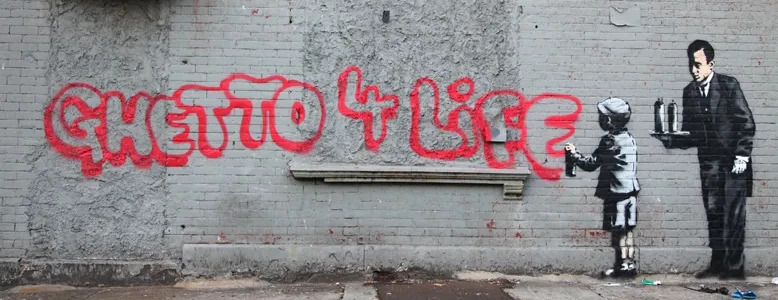
Before any of us understood politics, we understood America. It arrived in film, in music, in the glow of a screen in a school lab or a family living room. It arrived as possibility. Wide roads. Tall buildings. A place where a person with nothing could become something. That image crossed every border, every language, every economic condition. The farmer's child in the countryside received it the same way the general's child in the capital did.
That image has a name. James Truslow Adams coined it in 1931 in The Epic of America. He called it the American Dream, defined as a land where life should be richer, fuller, and better for every person, with opportunity for each according to their ability and achievement. Adams wrote those words during the Great Depression, when America itself was broken. He was describing something aspirational, not actual. That distinction matters more in 2026 than it ever has.
What the Numbers Say
The dream is losing believers, and the loss is accelerating among the young. In 2017, 87% of American Gen Z respondents said they believed the dream was achievable (AEI/Pew, 2024). By 2024, that number dropped to 64%. The 36% who now call it out of reach represent three times the skepticism of just seven years prior.
Among all Americans, 41% say the dream was once possible but no longer is (Pew Research Center, 2024). Another 47% say they personally cannot achieve it, even while 66% still believe the dream could unite the country if anyone could find it again (Archbridge Institute, 2025).
That is a portrait of people who still love something they no longer trust exists.
What the World Now Sees
From outside America, the signal has shifted. Favorable views of the United States dropped sharply across multiple nations in 2025 (Pew Global). Canada moved from 54% favorable to 34% in a single year. Mexico from 61% to 29%. These are not distant or hostile nations. These are neighbors.
Sub-Saharan Africa and Latin America remain the most favorable regions toward America in the world (Pew, 2024). The dream still travels furthest where the distance from it is greatest. Where people are closest to America, the image has begun to blur.
The media that once carried the dream across borders now carries the division too. In 1987, the Federal Communications Commission repealed the Fairness Doctrine, removing the requirement for broadcasters to present opposing views (FCC historical record). What followed was not balance. It was volume. By 2022, only 11% of Americans trusted television news (Gallup). Yet the signal kept broadcasting. The world kept receiving it, dream and fracture simultaneously.
The First Generation to See Both
Something has changed in the years since COVID. For the first time in history, young people from developing nations can sit in school laboratories, free and connected, and watch a superpower in real time. Not through yesterday's newspaper. Not through a filtered broadcast. Through live feeds, shared documents, and conversations that cross twelve time zones before breakfast.
These students did not grow up inside the dream. They grew up watching it. That distance produces a kind of clarity that proximity cannot. They see the gap between the image and the evidence. They see a 250 year old republic celebrating its anniversary while its own citizens report record distrust, record polarization, and a shrinking belief that the system works for them.
Ninety percent of the world's 1.8 billion young people live in developing nations (PwC Global Youth Outlook, 2024). They are not footnotes to this story. They are its largest audience.
What Remains
The dream is not dead. But it has traveled further from its own address. The people inside America still want it. Sixty-six percent believe it could still unite them (Archbridge, 2025). That is not a small number. That is two thirds of a fractured nation reaching toward something they cannot quite name.
From outside, the reaching is visible. So is the wall between the reaching and the finding.
A dream visited during sleep asks nothing of the dreamer. A dream pursued while awake demands everything. America in 2026 stands at exactly that threshold, not between left and right, but between the dream it sold to the world and the republic Franklin warned would require keeping.
The door is there. Whether anyone walks through it is not a question the outside world can answer.
That answer belongs entirely to the people inside the room.