
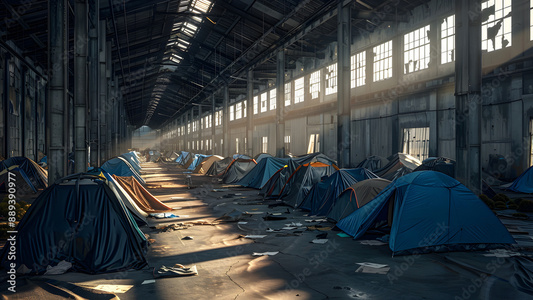
Imagine losing your housing tomorrow. You have a backpack, forty dollars, and a phone with three days of battery life. The skills you need to survive the next week have nothing to do with school subjects or job training. You need to know where to sleep without getting robbed or arrested, how to stay clean enough to keep looking for work, where to find food and water, and how to protect the documents that prove your identity. These are intelligence problems requiring systematic thinking, not luck or hope alone.
Housing insecurity affects millions of young people annually in the United States. Family conflict, aging out of foster care, job loss, medical emergencies, or domestic violence can create sudden homelessness. The transition from housed to unhoused happens faster than most people imagine. Understanding survival principles before crisis occurs creates options that panic eliminates.
The fundamental challenge involves maintaining human needs while lacking permanent shelter. Food, water, hygiene, safety, rest, and health all require different solutions when standard housing is unavailable. Each need connects to others. Poor hygiene makes employment difficult. Lack of sleep impairs judgment. Unsafe sleeping locations increase vulnerability to theft and violence. Solving one problem poorly can create cascading failures across all areas.
Three core principles guide effective survival. The first principle addresses safety through visibility. Complete isolation invites violence, theft, and police harassment without witnesses. Complete exposure invites immediate enforcement action. The balance exists in moderately trafficked areas with some visibility to passersby but not to authorities actively seeking to clear spaces. Parking lots near 24-hour businesses, well-lit public parks with some tree cover, and areas near transportation hubs often provide this balance.
The second principle demands hygiene maintenance regardless of circumstances. Personal cleanliness directly affects health, employment prospects, and social acceptance. Skin infections, foot problems, dental issues, and respiratory illness all develop faster without regular washing. Job interviews and housing applications require presenting as someone who can maintain standards. Public facilities exist specifically for this purpose. Libraries, recreation centers, beaches in coastal areas, and truck stops all provide bathrooms and often shower access. Using these facilities daily prevents the visible deterioration that makes escaping homelessness progressively harder.
The third principle requires protecting critical documents at all costs. Identity documents enable access to benefits, employment, housing applications, and medical care. Losing identification while homeless creates a recursive problem where you cannot get help without documents and cannot get documents without stable address. Birth certificates, state identification cards, Social Security cards, and any professional licenses must stay on your person in waterproof protection. Keeping digital photos of all documents in cloud storage or email provides backup if physical copies are lost or stolen.
Resource location and access requires intelligence gathering and pattern recognition. Every city in America has basic resources for homeless individuals regardless of local political climate. Knowing how to find these resources quickly determines survival success. The national 211 phone service connects to local resource directories in all fifty states. Public libraries provide more than books. They offer bathrooms, climate control, internet access for job searching and benefit applications, and often have dedicated social workers who can connect people to services. Libraries typically require library cards which can be obtained using general delivery addresses or shelter addresses.
Food access follows predictable patterns. Most cities have regular meal programs at churches, community centers, and nonprofit organizations. These programs operate on schedules. Learning the meal schedule for an area allows planning. Food banks exist in every county, though they may require showing identification or proof of need. Grocery stores and restaurants discard food according to schedules. End-of-day donations from bakeries and farmers markets occur regularly. Understanding local food systems creates reliable nutrition without resorting to theft or begging.
Water access in American cities is generally straightforward. Public water fountains exist in parks, libraries, and government buildings. Asking at restaurants for tap water almost always succeeds. Staying hydrated takes planning in extreme heat or cold but remains solvable. Dehydration impairs judgment and makes other problems worse. Treating water access as the first daily priority prevents compounding difficulties.
Shelter and rest present the most complex challenge. Emergency shelters exist in most cities but have serious limitations. They often separate families, prohibit possessions over certain sizes, impose curfews, and run at capacity. Many have mandatory religious programming or sobriety requirements. Coordinated entry systems manage access to shelters and longer-term housing but involve waiting lists. Understanding that these facilities represent one option among several allows flexible planning. Some nights a shelter makes sense. Other nights finding safe outdoor space works better.
Safe outdoor sleeping requires applying the visibility principle. Avoid completely isolated locations where no one can hear calls for help. Avoid high-traffic enforcement zones where police regularly clear homeless individuals. Find spaces with some visibility, moderate ambient noise that masks sleep sounds, and protection from weather. Public transportation areas, 24-hour business parking lots with cameras, and spots near but not directly in front of libraries or community centers often balance these factors. Never leave belongings unattended. Everything worth keeping stays on your person while sleeping.
Health maintenance prevents small problems from becoming crises. Foot care matters enormously when walking becomes primary transportation. Changing socks daily, airing out shoes, and treating blisters immediately prevents infection. Dental hygiene matters because tooth infections spread to bloodstream and can cause fatal complications. Free or sliding-scale dental clinics exist but have long waits. Preventing problems through daily brushing using public bathroom facilities beats waiting months for emergency extraction. Hand washing before eating prevents disease transmission that hits homeless populations harder due to proximity and stress.
Mental health preservation requires deliberate effort. Homelessness creates constant stress, uncertainty, and threat. Maintaining routine provides psychological stability. Morning hygiene ritual, regular meal times, and evening check-in with support network all create structure. Setting small achievable goals daily maintains sense of agency. Apply for one job. Make one phone call about housing. Organize belongings. These small wins counter the helplessness that homelessness can create. Avoiding substance dependence as coping mechanism matters critically. Substances temporarily reduce stress but create new problems that make escape harder.
Understanding available benefits and services accelerates transition to stability. Most states offer General Relief, basic cash assistance for adults without dependent children. Food stamps provide nutrition support. Medicaid offers health coverage. Social Security disability assists those with qualifying conditions. Applying for benefits requires identification and persistence. Case managers at homeless service organizations exist specifically to help navigate these systems. Connecting with a case manager should be an early priority. They know local resources, application procedures, and can advocate for expedited processing.
Legal awareness protects rights and prevents complications. Homelessness itself is not illegal, though many localities pass ordinances criminalizing behaviors associated with homelessness like sleeping in public or sitting on sidewalks. Police cannot search belongings without probable cause. Confiscated property must be retrievable. Medical care cannot be denied in emergencies regardless of ability to pay. Knowing these rights and calmly asserting them when necessary prevents exploitation and additional legal problems. Free legal aid organizations help with outstanding warrants, citations, and other legal barriers to housing.
Path to housing follows a general pattern regardless of location. First obtain identification if missing. Without identification, nothing else moves forward. Second, apply for all available benefits simultaneously. Third, connect with case manager who understands coordinated entry system for local housing. Fourth, address any barriers like outstanding warrants, negative credit, or background issues. Fifth, maintain contact and follow through with all appointments. The process takes time. Coordinated entry systems prioritize by vulnerability, not first-come basis. Maintaining engagement and meeting requirements eventually produces results.
Intelligence skills developed during housing insecurity translate to stability. Pattern recognition, resource mapping, risk assessment, and systematic problem solving all apply to maintaining housing once obtained. The discipline required to stay clean, organized, and focused while homeless builds capabilities that prevent future instability. Understanding how systems work and how to navigate bureaucracy serves anyone regardless of housing status. These skills represent real education that formal schooling often omits.
Housing insecurity can happen to anyone. Economic changes, health crises, family breakdowns, and bad luck affect millions annually. Young people facing this reality or wanting to help others need practical frameworks, not wishful thinking or blame assignment. Survival requires intelligence, discipline, and systematic application of proven principles. These skills can be learned, practiced, and shared. Understanding how to maintain safety, hygiene, health, and access to resources while building toward stability transforms crisis into temporary hardship with clear path forward.