
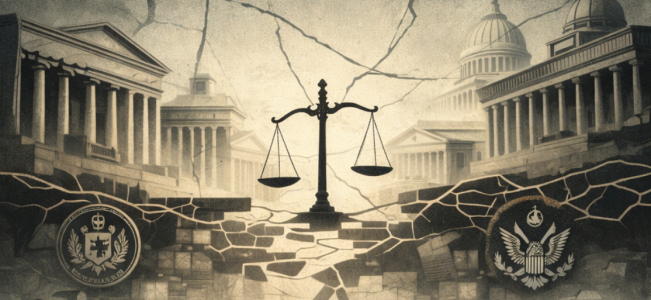
The functionality of a society depends upon the structural integrity of the oversight layers that maintain the boundary between state power and the citizen. These tiers incorporate statutory frameworks, judicial oversight, and specialized institutions that monitor the internal operations of the state. These entities behave in a manner analogous to a referee operating within a professional athletic competition. A referee ensures that all participants observe the same regulations so the competition maintains fairness. When these layers fail, the society begins to fracture. If a community possesses two groups of authorities who do not coordinate, the public cannot identify which protocols to follow. This lack of trust generates a condition of constant friction.
A primary role of a sophisticated system involves the resolution of disputes through shared rules and verifiable proof. In a functional system, when a major event occurs, local and national groups collaborate to establish the truth. One example of this is a property dispute between two residents. For peace to exist, both participants must trust the court to interrogate the facts and deliver a fair decision. If one participant blocks the other from reviewing the evidence, the court cannot perform its duty. Trust vanishes, and the conflict grows larger. During a time of decay, these layers stop working as a team and instead act like rivals.
The events in Minneapolis during January 2026 show this systemic failure. The death of a legal observer during a federal operation led to two different stories. Leaders in the national government said the agent acted in self-defence. At the same time, local and state leaders said the facts showed a different path. The biggest failure was the stop of the search for truth. Local groups chose to quit the search because they could not see the federal evidence. This act represents a total loss of trust between two parts of the same system.
In a healthy society, even when a tragedy occurs, the system maintains peace by providing a single, verifiable search for the truth. This usually involves a "check and balance" where a local agency (like the Minnesota Bureau of Criminal Apprehension) looks at the homework of a federal agency (ICE). By withdrawing from the investigation because they were denied access to the evidence, the local groups signaled that they no longer trust the federal process. Because no neutral group is allowed to see the facts and settle the dispute, these two stories will never be joined.
This loss of a shared reality is a key indicator of deep systemic decay. When the tools built to establish a factual record are obstructed, the citizens must choose between conflicting paths. This condition encourages the growth of divided groups, as individuals seek security within narratives that blame specific actors. These stories frequently obscure the failure of the system itself. Without a neutral, unified standard of truth, there is no way to fix wrongs or prevent future conflicts. The systems no longer maintain stability but act as a source of constant friction that accelerates the breaking of the social fabric.
Staying safe during a system failure requires a focus on the structural components of these conflicts. Individuals must look past the emotional elements of a specific event to see the failure of the rules. Peace returns only through the establishment of new standards that value truth and cooperation over administrative secrecy. The mental freedom of the person depends on the ability to see when official stories no longer match verifiable facts. The path forward involves building environments where the oversight is local and clear. This includes holding all levels of power to a single set of rules that remains visible to everyone.