
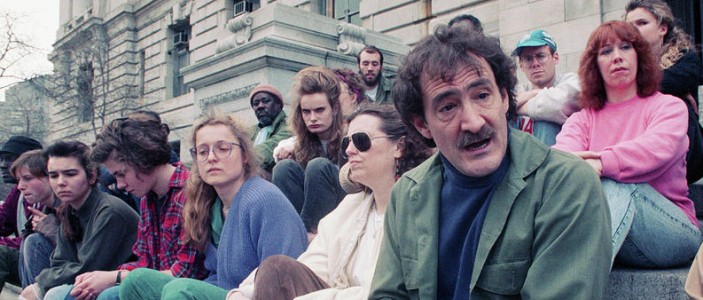
The emergence of modern homelessness in America is frequently attributed to the fiscal and social policies of the late twentieth century. However, a rigorous analysis of the crisis reveals roots that extend deep into the post-war era of urban renewal and the subsequent de-institutionalization of the mentally ill. These systemic shifts, which began decades before the 1980s, created a pool of vulnerable individuals who were increasingly excluded from the traditional safety nets of the state and the community. By the time of the Reagan administration, the problem had reached a level of visibility that required a national response. At the center of this transition was Mitch Snyder, an advocate whose radical tactics and commitment to the preservation of human dignity transformed the political landscape of homelessness advocacy.
Snyder’s path to advocacy was rooted in a personal experience of social displacement and institutionalization. Growing up in New York, his early life was characterized by instability and a difficult childhood that eventually lead to incarceration for property crimes. It was during his time in prison and his subsequent involvement with the Community for Creative Non-Violence (CCNV) in Washington, D.C., that he developed a sophisticated understanding of the social contract and its failures. The CCNV, originally formed as a protest group against the Vietnam War, shifted its focus to the plight of the unhoused population in the nation's capital. This transition marked a critical moment in the history of social movements, as the principles of non-violent resistance were applied to the immediate material requirements of the poor.
The advocacy of Snyder and the CCNV was defined by a rejection of traditional charitable models in favor of direct and often confrontational social action. They recognized that the invisibility of the homeless individual was the primary mechanism of their exclusion. To counter this, Snyder utilized the "theatre of advocacy," creating dramatic and attention-grabbing events that forced the public and the government to acknowledge the crisis. Protests, demonstrations, and the strategic occupation of federal buildings were utilized to demand basic services and shelter. One of the most significant actions involved the establishment of a large-scale shelter in a vacant federal building, which Snyder eventually forced the government to renovate through a high-profile hunger strike. This willingness to risk physical survival for the principle of material dignity was the hallmark of his activism.
Snyder’s use of art and symbolism provided a secondary layer of impact that resonated with a broad public audience. Collaborating with artists, he created powerful displays that recontextualized the unhoused condition within the familiar narratives of the community. "Third World America," a display that replaced the traditional nativity figures with a sculpture of a homeless family, challenged the religious and moral complacency of the era. This artistic intervention forced onlookers to confront the reality of deprivation in a nation of immense wealth. By utilizing the cultural language of the social contract, Snyder elevated the homeless individual from a peripheral nuisance to a central moral figure. His ability to manipulate the media and to create compelling visual narratives was essential for making homelessness a national priority.
The political legacy of Mitch Snyder is defined by the successful elevation of homelessness to a federal policy challenge. Before his advocacy, the response to the crisis was largely localized and discretionary, consisting of a fragmented network of religious missions and municipal shelters. Snyder’s tactics, which included splashing blood on federal buildings and releasing cockroaches in the White House, were often seen as extreme, yet they were effective in breaching the bureaucracy of the state. These spectacles, along with his direct engagement with politicians through provocative events like the "dumpster banquet," compelled the federal government to establish the first dedicated funding streams and policy frameworks for addressing the unhoused population. The eventual passage of federal legislation was a direct consequence of the national visibility he created.
The human cost of this confrontational style of advocacy was reflected in Snyder’s personal struggles and his eventual death by suicide in 1990. The intensity required to maintain a presence on the front lines of social conflict, coupled with the systemic resistance of the state, placed an immense psychological burden on the individual. While his tactics were sometimes criticized as over-the-top or performative, they were a rational response to the profound invisibility and dehumanization of the population he represented. Snyder’s life illustrates the tension between the requirement for radical advocacy to create change and the necessity of stable institutional infrastructure to sustain it. His death was a tragic reminder of the weight of the social contract when it is carried by the individual alone.
Major advocacy organizations that continue to operate today carry the intellectual and strategic legacy of Mitch Snyder’s work. Groups such as the Los Angeles Community Action Network and the National Alliance to End Homelessness utilize a combination of direct action, legal advocacy, and policy development that reflects the multi-layered approach of the CCNV. The transition from the "theatre of advocacy" to the sophisticated management of national policy is the culmination of the work Snyder began in the gutters and halls of power in Washington. These organizations recognize that the resolution of homelessness requires more than charity; it requires a fundamental reconfiguration of the relationship between the state and its most vulnerable citizens.
The Snyderian ethics of visibility establish a foundational principle for modern advocacy: the unhoused individual must be seen as a legitimate and active participant in the community. By refusing to accept the sequestration of the poor in invisible institutions, Snyder reclaimed the public square as a site of moral and political witness. This witnessed truth remains the most potent tool for challenging the systemic inertia of the state. It acknowledges that the preservation of material dignity is not a private matter of charity, but a public requirement of the social contract. To see the homeless individual is to see the failure and the potential of society itself. As long as the crisis of homelessness persists, the radical visibility championed by Mitch Snyder will remain the essential precursor to any meaningful resolution.
The life and advocacy of Mitch Snyder provide a critical lens through which to view the evolution of homelessness in America. By challenging the systemic neglect that preceded the modern crisis, he forced the nation to confront the failure of its social contract. His transition from an institutionalized individual to a national policy catalyst is a testament to the power of human agency and the preservation of dignity in the face of extreme deprivation. While the crisis of homelessness continues to evolve, the principles of material dignity and creative non-violence that he championed remain the essential tools for its resolution. The story of Mitch Snyder is a reminder that the path to a just society requires both the courage of the advocate and the commitment of the community to see the visible truth of human suffering.
The resolution of chronic homelessness will ultimately require the implementation of the infrastructure-based models that Snyder’s advocacy predicted. This involves the transition from temporary shelters to permanent community-integrated hubs that provide hygiene, healthcare, and vocational support. The legacy of Snyder is not merely found in the protests of the past, but in the ongoing efforts to create a society where every individual is provided with the material tools necessary for survival and flourishing. As the understanding of material dignity continues to expand, the radical vision of Mitch Snyder moves closer to the center of the American social contract. The challenge for the future is to build the stable and compassionate systems that his advocacy first demanded.