
The palaces of Mycenaean Greece burned for days in 1200 BC. For four centuries afterward, the Greek world descended into a dark age so profound that the art of writing itself was lost. The sophisticated bureaucracy of the warrior-kings crumbled into memory. Villages forgot how to build with stone. Trade networks that had spanned the Mediterranean for generations evaporated, leaving isolated communities to fend for themselves in a world suddenly grown small and dangerous.
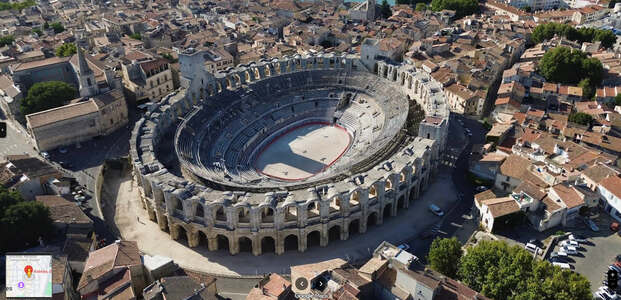
Fifteen hundred years later, the silence returned. As the Western Roman Empire dissolved in the fifth century AD, the great aqueducts that had carried developed waters to millions slowly leaked and failed. The roads were reclaimed by the forests. The safety of a continent-spanning law gave way to the unpredictable rule of local warlords. In both instances, complex, wealthy, and seemingly invincible civilizations did not just change governments; they ceased to function. The lights went out, and they stayed out for centuries.
It is difficult for modern observers to believe that Western civilization could ever face a similar silence. Society is surrounded by the hum of digital networks, the safety of modern medicine, and a wealth that would have staggered a Roman emperor. Progress is often assumed to be a straight line, always ascending. But history suggests that civilizations are organic things. They are born, they struggle to maturity, they grow old, and if they are not careful, they die. The wreckage of the past warns that no society is too rich or too advanced to fail.
The symptoms of societal aging are hauntingly familiar to anyone paying attention to the modern West. Like the late Roman Empire, the prevailing belief is that consumption can exceed production forever. National debts have ballooned to levels that mathematical reality suggests can never be repaid without destroying the currency. The ability to borrow money has been confused with the creation of wealth. When a society spends its future to purchase present comfort, it is eating its own seed corn.
The social fabric is fraying just as visibly as the economic one. A healthy civilization acts like a melting pot, turning diverse people into a unified citizenry with a shared purpose. Today, that pot has cracked. Communities have retreated into a salad bowl of competing tribes, defined by race, religion, or grievance. The middle class of autonomous citizens, the backbone of any free republic, is being hollowed out, replaced by a bifurcation of lords and serfs. When people trust their tribe more than their country, the foundation of the state turns to sand.
Perhaps most dangerously, confidence in collective competence has eroded. The hard work and sacrifice that built the West created a leisure class that now mocks the very values that made their leisure possible. Education has shifted from the rigor of mathematics and history to the comfort of ideology. This is evident in the declining reading scores of high school students and the inability of major cities to maintain basic infrastructure. When a civilization can no longer teach its children how to maintain the machines or understand the laws, the end is visible on the horizon.
Some will argue that technology protects civilization from this fate. They claim that the internet and global trade make a dark age impossible. But complexity does not provide safety; it creates fragility. A peasant in 1000 AD could survive a collapse because he knew how to grow his own food and build his own shelter. A modern urbanite is utterly dependent on a global supply chain that requires peace, order, and energy to function. If the grid fails, "advanced" status becomes a liability, not a shield.
The collapse is not inevitable, but avoiding it requires a choice. The medicine is bitter, but the disease is fatal. A return to fiscal sanity is required, understanding that prosperity cannot be legislated. The comfort of tribalism must be rejected in favor of the hard work of civic nationalism, judging neighbors by their character and not their group identity. An education system that values empirical skill and historical truth over emotional affirmation must be restored.
The Mycenaeans and the Romans likely believed their worlds would last forever. They were wrong. The darkness that followed them lasted for uncounted generations. History serves as a warning. The question for this era is whether sufficient wisdom exists to listen, or if this civilization will simply become another chapter in the story of how great things fall.