
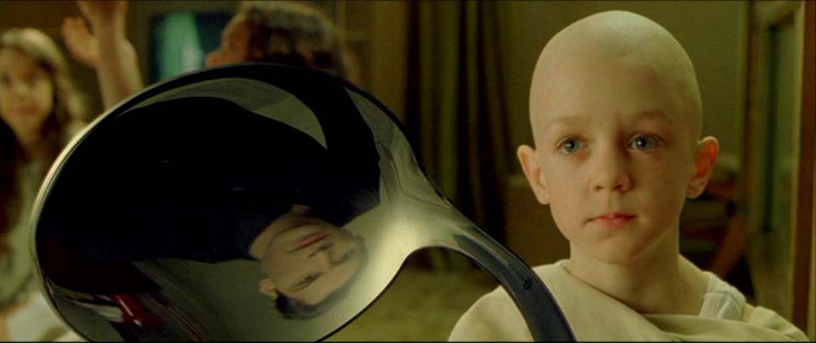
A monk once asked his teacher how to overcome fear in the marketplace. The teacher replied, "Show me the coin you hold when your hand is empty." This koan invites us to look closer at what we think we possess. It challenges the basic assumption that we must hold something to be safe.
Most people approach life with a closed fist. We grasp our money, our reputation, and our relationships. We believe this tightness protects us. We think that if we open our hand, we will lose what we have gathered. But a closed fist cannot receive anything new. It can only hold what is already there, and even then, it crushes the life out of it.
Fear drives this grasping. We fear that without our possessions, we are nothing. We fear that if we do not control every outcome, disaster will strike. So we hold on tighter. We turn our relationships into contracts. We turn our generosity into transactions. We give only to get something back, even if it is just a feeling of being a "good person."
True generosity operates differently. It behaves as admission, not transaction. When the hand is empty of objects, it remains full of potential. To give from this state is to admit another person into that potential. You do not transfer a coin from your pile to theirs. You simply share the capacity to hold the sky.
This requires the discipline of non-interruption. When we give an object, we often interrupt the moment with our expectation of gratitude. We want the other person to acknowledge our sacrifice. This collapses the potential. The interaction becomes small and solid, like a stone. It is no longer a shared space, but a trade.
If the hand closes to secure the gift, the potential vanishes. The open hand allows the sky to remain. It does not claim ownership of the space. It simply allows the space to exist. This is difficult because it feels like doing nothing. It feels like we are not "helping" in the way we have been taught.
But consider the alternative. When we try to help by fixing, managing, or controlling, we fill the space with our own ego. We leave no room for the other person to grow. We crowd them out with our good intentions. We become like a gardener who stands so close to the flower that we block the sun.
The discipline of the empty hand removes this obstruction. It requires us to trust that the other person can grow without our constant interference. It requires us to trust that the sky is big enough for both of us. This is not indifference. It is a profound form of respect.
When you practice this, your relationships change. You stop keeping score. You stop worrying about who owes what. You realize that the only thing worth holding is the space between you. And you can only hold that space by keeping your hand open.
Fear will rise. You will want to close your fist. You will want to grab onto something solid. When this happens, remember the teacher’s question. Look at your empty hand. Realize that it is not lacking anything. It is simply open. And because it is open, it holds everything.