
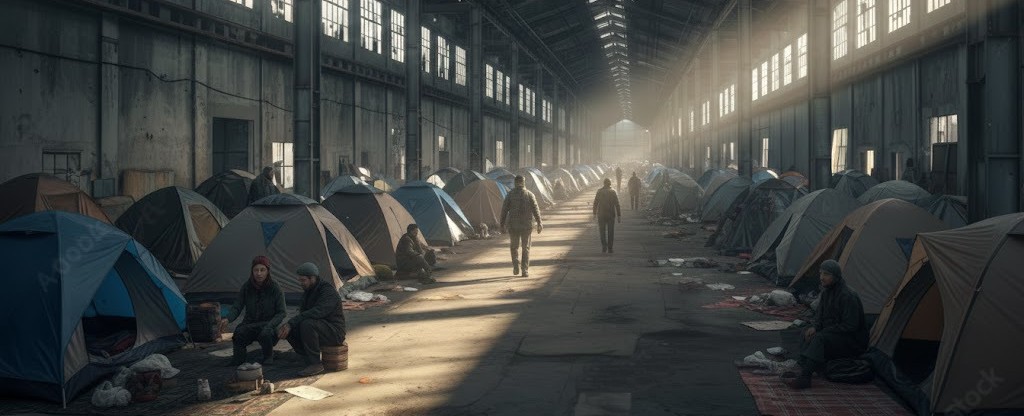
Modern discourse regarding homelessness in America often fails by treating a multifaceted crisis as a single, monolithic problem. Within the broad group labelled as homeless, analysis reveals distinct environments and trajectories. This includes single mothers and children sleeping in vehicles, remote workers in vans, individuals with severe mental illness, and families in transitional living. Most people merge these distinct lives into a single category defined by the most visible and extreme cases. News stories focus on crime and public disorder, which forces the public to view any unhoused person through a lens of suspicion. This merging is not merely a mistake. It is an administrative choice that serves political goals while preventing effective help from reaching specific groups.
Economic shock and the sudden loss of housing form the largest part of this crisis. These people are often the working poor who have faced a sudden financial failure. Many now live in vehicles across major cities. These groups include older women and families with children. Research indicates that between forty and sixty percent of people experiencing homelessness have steady employment. Most of these people have jobs, which contradicts common stereotypes of laziness or personal failure. Even within this group, there are significant differences. One family may face a crisis with a broken vehicle that consumes all repair money. Another family may choose to live in a van to avoid extreme rents while saving for a home. Both are labelled homeless, but their needs are fundamentally different.
There is also a hidden crisis of homelessness that official government lists do not count. This group includes families crowded into small apartments or young people moving between the homes of friends. Schools identify over a million students in these conditions. Yet, many of these students cannot get federal housing assistance due to narrow definitions. Keeping these people off official lists protects limited budgets by making millions of people invisible. If these groups were counted, the official numbers would grow so large that current systems would be overwhelmed. The choice to keep this majority invisible makes the problem appear smaller than reality.
The group of people who live on the street for a long time often defines the public image of homelessness. This group is relatively small but highly visible. It includes those with severe mental illness or long-term struggles with addiction. Seeing someone in crisis in public creates a powerful image that defines the entire population for the community. Facts show that mental illness affects this group much more than the general public. These numbers show a failure of public systems rather than a flaw in the people. Decades ago, the closing of state hospitals happened without creating the local support that was promised. Today, jails often house more people with mental illness than modern medical facilities.
Some people choose to live without a physical house as a lifestyle decision. These are often people who work online from a van or retirees who prefer mobile living over permanent property. Their steady income and the fact that they chose this life make them different from those forced into a car by poverty. However, city laws that ban living in a vehicle rarely recognise this distinction. A worker in a custom van faces the same risk of removal as a single mother in a broken car. This lack of analytical thinking stops cities from building safe parking zones. Such zones could help one group while saving resources for those who need intensive support.
Success in helping veterans proves what can be done when money and will focus on a clear goal. By using specific housing vouchers and support services, the number of homeless veterans has dropped significantly. This success proves that long-term homelessness can be solved when resources match the scale of the problem. It also shows that the choice to leave other groups without help is a matter of priority, not a lack of ability. The veteran story suggests that if we applied the same effort to families or those with mental illness, we would see similar results.
The single image of homelessness persists in the public mind because of media focus and social fear. News stories focus on failure rather than systemic issues like high rent or stagnant wages. It is simpler to film a messy camp than to interview a working family in a parking lot. This creates a label that harms everyone called homeless. Research shows that many people feel negative toward the unhoused even when the cause is merely a lack of money. As long as the problem is seen as a moral flaw, fear remains. If it were seen as a failure of policy, that fear would have no foundation.
Local governments often find it easier to treat all unhoused people the same way. Moving camps and building uncomfortable benches is easier to defend if everyone is seen as part of one threat. Being specific would mean admitting that moving a family from their car does not make a city safer. It also harms children. In the same way, the housing market benefits from moving focus away from the cost of living. If homelessness is a personal flaw, then high rents do not require explanation. The working family paying most of their pay for a tiny home is dangerously close to being homeless, but modern policy hides this fact.
Current systems of sorting people are better for tracking money than for providing help. The rules often miss those who move between a home and the street. A better system would distinguish between those who need financial aid, those who are hidden, and those who need long-term medical support. Current rules often ask people to be sober or have a job before giving help. This assumes a person has a stable life, which is exactly what homelessness takes away. Trying to find work or manage a health issue while sleeping outside is an impossible task for most humans.
Breaking this pattern requires a refusal to use simple labels. It requires honest counting and rules that match help to specific needs. Homelessness is not a single problem. It is a sign of many system failures that all share one name. The cost of this error is measured in wasted lives and lost potential. When a person lacks a stable place to stay, they cannot focus on work, school, or family. By looking at the many different lives that make up this group, we can move toward a world where rest is a right for all people.