
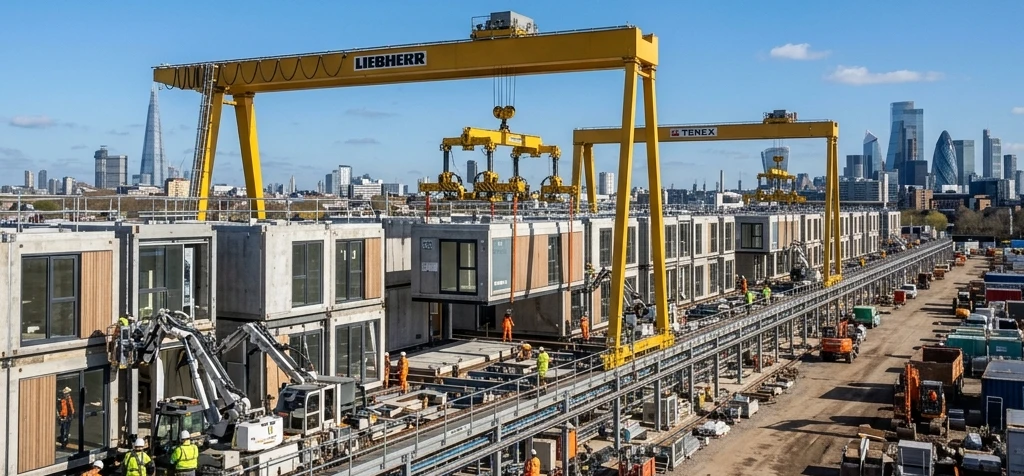
A television loses value the moment a customer buys it, and a car loses value the moment a driver steers it off the dealership lot. These items function as consumer goods. Industrial systems produce them in high volume, and their prices fall over time as physical parts wear down. The American residential housing market rejects this model. It treats shelter instead as a financial asset that grows in value every year.
That growth requires scarcity. A consumer good cannot gain value if a factory produces an unlimited supply, meaning the system protects the financial asset by restricting new production.
Tokyo demonstrates an alternative reality. The Japanese system treats housing as a depreciating physical good, where a building acts much like a consumer appliance. It has a limited lifespan, and a demolition crew tears it down when it wears out. By forcing shelter to operate this way, the Japanese regulatory system optimizes for high-volume production rather than asset appreciation, resulting in permanent affordability.
Protecting Value versus Producing Volume
New York City illustrates the asset protection model, where local zoning rules function as a defensive perimeter. The system allows neighborhoods to block new construction through long review processes. When a developer proposes a new apartment building on an empty lot, the neighborhood association objects and the city council demands environmental reviews. Years pass, and the project dies.
Every blocked apartment building protects the financial value of the existing homes nearby. The scarcity is intentional, because it guarantees that the people who already own property will see their net worth increase.
Tokyo removes this defensive perimeter by allowing the national government to set uniform zoning rules. A builder looks at a plot of land and understands the boundaries, and if they follow those basic rules, the construction crew can break ground. Local neighborhoods hold no power to halt a project just to protect their views or their property values.
This national standard prioritizes the high-volume deployment of shelter over the financial protection of local property owners, allowing supply to match demand. A skyline grows in response to human need rather than freezing in response to neighborhood politics.
Preservation versus Replacement
The asset protection model relies on freezing the physical environment. New York designates large sections of the city as historical landmarks and places complex rules on demolition, which preserves the existing architecture. Visitors admire the brownstones and the pre-war facades.
This preservation freezes the housing supply in place, meaning an old building cannot be replaced by a taller building that holds more people. A neighborhood locks its population capacity at the level of a previous century. The stone remains beautiful, but the people have nowhere to live.
Japan treats a building as a temporary physical structure. The tax code depreciates a wooden house rapidly, and the average Japanese home gets demolished and replaced within a few decades. This rapid physical replacement prevents the city from freezing in time.
When land values rise, builders tear down old detached houses and replace them with multi-family buildings so the physical environment adapts to population pressure. The street changes shape. A neighborhood absorbs new residents organically, because the architecture treats permanence as an obstacle.
Mandating Consumption versus Lowering Barriers
A system engineered for scarcity forces people to consume more than they need. For decades, New York mandated large minimum apartment sizes, which prevented builders from creating small spaces for individual renters.
It forced individuals to pay for large apartments or share spaces with roommates. The regulatory environment artificially raised the cost of entry into the housing market, meaning a young worker starting a career could not afford the minimum mandated floor plan.
Tokyo allows builders to create very small apartments, and these compact spaces lower the financial barrier to entry. A young professional or an individual worker can rent a private space without sharing costs, because the system offers a wide range of physical products to match different income levels.
A small apartment operates like an economy car. It provides the basic function at a low price point, offering the renter a locked door and a private bathroom. The market entry barrier drops to a level the working class can reach.
Price Controls versus Inventory Saturation
When a system fails to produce enough supply, governments try to control the price. New York attempts to protect renters by freezing rents on older apartments, and it caps the amount a landlord can charge after a renovation.
This creates a predictable physical outcome. The roof leaks, the boiler breaks, and the plaster cracks. A renter watches snow blow through a gap in the bedroom wall. When the cost to repair the damage exceeds the legal rent limit, the owner locks the door and leaves the apartment empty, leaving units vacant while demand continues to grow.
Tokyo protects renters by saturating the market with the rapid deployment of new inventory, and high construction volumes keep prices stable. When a renter has dozens of new buildings to choose from, landlords cannot raise prices without losing tenants.
The abundance of physical shelter provides the protection that price controls attempt to simulate. A landlord fixes the broken boiler because a tenant can easily move down the street, proving that the sheer volume of production disciplines the market.
A consumer good remains cheap because the factory never stops running. The American system shut down the factory to protect its assets, but Tokyo proves that affordability returns the moment the factory turns back on.