
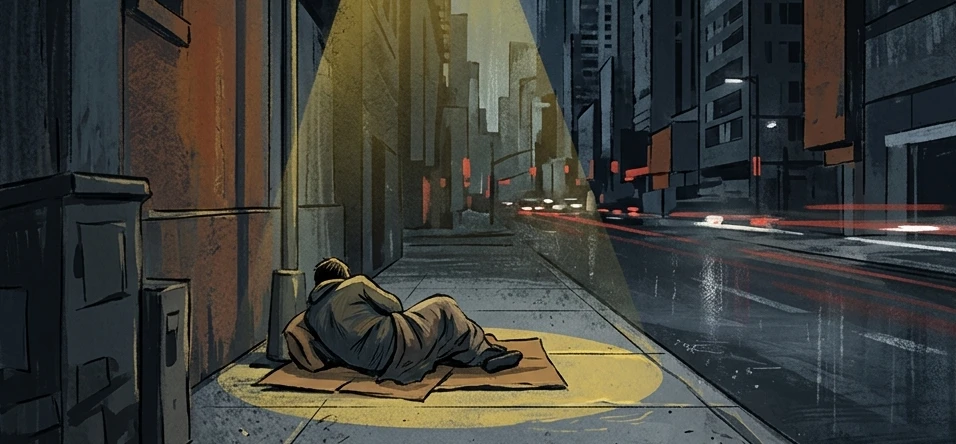
A shirt costs eight dollars while a kilogram of rice costs less than two. Both are produced in quantities so large that scarcity has essentially ceased to be a meaningful concept for most of the world's population. The industrial systems that produce food and clothing run on feedback loops tuned for volume and cost reduction. When demand rises, production scales up, prices fall, and the commodity becomes accessible.
Shelter does not work this way. And understanding why requires acknowledging something the policy debate in Washington seldom addresses.
The Asset Trap
Housing fails to behave like a commodity because the market does not treat it as one. A shirt loses value the moment someone buys it. A house, in most functioning economies, gains value over time. That appreciation functions as the primary product the market sells to investors, pension funds, and homeowners who depend on their property as a retirement vehicle.
For appreciation to occur, scarcity is required. A commodity that could be mass-produced at low cost and dropped anywhere a person needed it would immediately collapse the asset value of every existing building nearby. So the market does not produce shelter that way. Zoning laws, permitting timelines, neighborhood opposition, and land costs all slow supply to a pace that protects existing asset values. The scarcity operates as intended.
This creates a structural ceiling on every policy that attempts to solve homelessness by purchasing housing units from the residential market. California spent roughly $600,000 per unit building permanent supportive housing in Los Angeles between 2018 and 2023. That figure reflects what happens when a government tries to buy its way out of an asset market. It pays asset prices for a social service.
The Isolation Failure
The Housing First model, which dominated federal policy for the better part of two decades, correctly identified that people experiencing chronic homelessness needed housing before they could address addiction or mental illness. The logic was sound but the engineering was not.
Placing a person who has spent years on the street into a private apartment in an unfamiliar building, surrounded by neighbors who do not know them, and checking in once a week via a case worker, reproduces the conditions that contributed to the crisis. Human beings require relational continuity to regulate their behavior. A room or apartment alone does not provide that. What it does provide is four walls and a locked door, which for a person whose nervous system has been calibrated by years of outdoor survival and social chaos, can function less like a refuge and more like a pressure chamber.
Eviction rates from permanent supportive housing in California run between 30 and 50 percent within the first two years for tenants with the most acute needs. The apartments remain while the people cycle back out.
The Federal Pivot and Its Flaw
In June 2026, the U.S. Department of Housing and Urban Development in Washington, D.C. announced a significant shift in its annual funding competition for homelessness programs. The total Continuum of Care pool sits at roughly $4 billion per year, enough to fund the full operation of a mid-size city's public works department. Of that amount, the administration redirected approximately $1.3 billion away from long-term permanent supportive housing toward short-term programs lasting up to two years, with mandatory job training, mental health treatment, and substance use programs attached.
The Cicero Institute, whose policy writing influenced the shift, argued correctly that Housing First had failed to produce lasting stability. The critique landed, but the proposed correction did not.
Mandatory treatment delivered inside a temporary camp does not treat a psychiatric condition. A misdemeanor charge for sleeping outdoors in Texas or Missouri does not repair a dopamine system damaged by years of methamphetamine use. The legal tool targets the visible behavior, which is the person lying on the sidewalk. The biological condition, which is the reason the person returned to the sidewalk after the previous intervention, remains untouched.
Short-term camps also do something that the policy documents rarely measure. They sever the social bonds that people build on the street. These bonds are often the only relational structure a chronically homeless person has. Strip them away through a camp placement that ends in 24 months, and the person re-enters the street with less social capital than they arrived with.
The Engineering Alternative
A different approach starts from a different set of physical constraints.
The residential housing market is inaccessible at scale. So the engineering solution does not use it. Surplus commercial real estate, the kind that emptied out when office tenants abandoned downtown buildings after 2020, sits available in most American cities at dramatically lower cost per square foot than residential construction. Adaptive reuse of a distressed office tower or a shuttered department store does not require new land acquisition or standard residential permitting because the building already exists.
The Systemic Dignity Infrastructure (SDI), an open engineering specification developed through consultation with AI reasoning systems and over a decade of real-world experience with unsheltered populations, formalizes this approach into a three-layer physical architecture.
SDI Blueprint: https://bikepaths.org/sdi
The first layer addresses the biological emergency. A person arriving from the street is not yet in a condition to navigate a residential environment. Their sleep patterns, eating rhythms, and nervous system responses have been shaped by years of outdoor survival. The building addresses this with a ground-floor intake zone that provides a safe physical space where arriving residents receive clinical care, hygiene facilities, nutrition, and 72 hours of biological stabilization before they move upstairs. The SDI specification calls this layer the Material Dignity Infrastructure.
The second layer addresses the social architecture. An apartment block that isolates residents from each other reproduces the loneliness that precedes relapse. The SDI prototype caps each residential community at 150 people, a figure derived from anthropological research showing that human beings can maintain stable relational bonds with roughly that many individuals before the social network becomes unmanageable. Within that community, permanent staff members live alongside residents, preserving continuity and relational recognition through the transition period. The SDI calls this the Relational Dignity Infrastructure.
The third layer addresses the economic gap. A person leaving chronic homelessness faces what the specification calls a Return Deficit, the gap between current earning power and the cost of independent market tenancy. A cooperative micro-economy within the building allows residents to begin accumulating income and work history before they are expected to pay market rent elsewhere. A funding guarantee backs the tenancy transition so that a lost job does not send the person back to the street.
The prototype specification targets a 185,000-square-foot adaptive reuse building capable of housing 348 residents across three communities, at a total capital cost of $36.9 million. That figure is approximately $106,000 per resident bed, compared to Los Angeles's $600,000 per unit for new construction. The cost difference is the size of a substantial family home.
What the Policy Is Buying
When HUD redirects $1.3 billion toward short-term camps and mandatory treatment programs, it purchases a revolving door. The evidence from Texas and Missouri already suggests that model will produce the same outcome as the last one. A population cycles through interventions and returns to the street.
The residential market cannot be pressured into mass-producing cheap shelter any more than a car manufacturer can be pressured into giving away vehicles. The incentives point in the opposite direction.
The SDI approach exits the residential market. Surplus commercial buildings get converted into permanent social infrastructure using a physical architecture that addresses biological stabilization, relational continuity, and economic reintegration in sequence. Each layer produces the conditions the next layer requires.
A shirt is cheap because the system that produces shirts was engineered for volume, not appreciation. Shelter will remain expensive and scarce for as long as the systems producing it are optimized to deliver the opposite.