
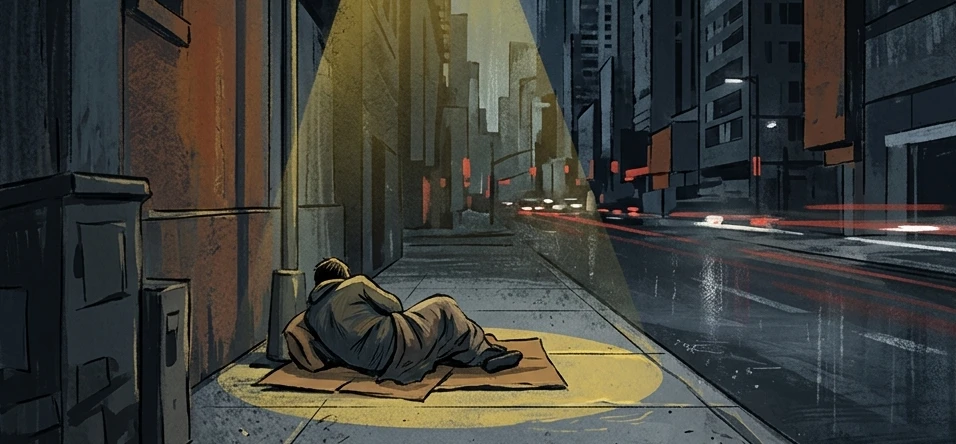
The most common objection to this system is the cost. A 2,000-unit tower presents significant expenses. Clinical teams will operate in the field for 12 to 24 months. These teams prepare the site before occupancy. Phase Zero includes stabilization wards that ensure safety. Thermal drones will map the area accurately. Acoustic isolation meets medical specifications precisely. Each pod will maintain a steward for permanent oversight.
Series: Urban Survival — What It Costs to Do Nothing — Part 10 of 11
The number is substantial and the objection remains valid. It focuses on the cost of action and overlooks the price of inaction.
This document includes both required elements.
What the City Is Already Spending
A person cycling through the homelessness system without resolution does not cost the city nothing. They generate costs continuously, across multiple city and county departments, in a pattern that is now well documented.
A single visit to a hospital emergency room for a homeless person costs thousands of dollars. Individuals in Stage Two and Stage Three depletion visit emergency rooms repeatedly. They seek treatment for infections from untreated wounds, hypothermia, cardiac events, and psychiatric crises. Each visit incurs significant costs and none address the underlying conditions that prompt the visits.
A psychiatric hold causes involuntary short-term psychiatric detention. Each episode incurs similar costs and provides the same outcome. Patients experience temporary stabilization before returning to the streets. The conditions that triggered the crisis remain unchanged.
A police sweep of an encampment demands officer time, equipment, disposal of abandoned property, and administrative effort. Sweeps displace encampments but do not decrease their numbers. The same individuals return within weeks to a new location, prompting another sweep.
Researchers measuring the total cost of one chronically homeless individual have reported substantial expenses. This individual cycles through emergency rooms, psychiatric holds, and jail for minor offenses. They also re-enter shelters multiple times over the years. The annual cost to the city and county ranges from $30,000 to $150,000. This variation depends on how often they use city services. These figures include actual expenditures from audited fiscal records.
The system in this series projects a reduction in emergency service costs. Each resident could save at least $40,000 per year after Phase Zero stabilization and permanent housing are established. This projection remains conservative and it builds on documented reductions in emergency service usage. These reductions occur when individuals transition from chronic street exposure to stable, supported housing.
The Water Pump That Pays for Itself
Imagine a village lacking a clean water source. Each day, villagers toil to transport water from a distant river. This labor produces results; water arrives. Yet, the effort consumes time and energy better spent on other tasks. Carrying water burdens every person daily. This cost never accumulates into a single figure, leading to the illusion of zero impact.
An individual suggests constructing a well. This well incurs a capital cost. It demands materials, labor, and time for construction. The expense is clear and precise. An immediate objection arises: the well is costly.
The objection is correct that the well is expensive. It ignores the cost of carrying water, which is also expensive but distributed invisibly across a decade of days.
The city's spending on homelessness acts like water-carrying. It flows daily through emergency rooms, police departments, public health systems, and courts. These amounts are real but never compiled into one visible figure. The system described in this series serves as the well. It carries a visible capital cost. The system projects a return on that capital within 29 to 45 months of full operation.
The Capital Recovery Timeline
The system delivers 2,000 units in one building, acquired through receivership at a cost below market construction price. Five simultaneous operations include clinical field teams and legal pathway activation. The housing surplus event creates demand for action. Environmental compliance enforcement and architectural stabilization also play crucial roles. Coordinated capital deployment is necessary to execute these operations over a defined period.
The projected breakeven point occurs 29 to 45 months after starting full operations. At that time, the reduced emergency service costs contribute to overall savings. The elimination of listed expenditures also aids financial recovery. These savings cover the capital cost of the system.
After reaching the breakeven point, the city spends less overall than before. This reduction does not apply to homelessness services. The decrease occurs across all departments that cover the consequences of untreated homelessness.
The fiscal argument is clear: the system requires investment for construction but reduces operating costs. The current system, in contrast, incurs annual operating expenses indefinitely. It lacks resolution and never reaches a breakeven point.
What the Objection Gets Wrong
The fiscal isolation fallacy, the name this series gives to the objection that the system is too expensive, makes one defined error. It counts the capital cost of the system and compares it to zero. It assumes that doing nothing costs nothing.
Inaction incurs costs ranging from $30,000 to $150,000 per person annually. This amount multiplies by the number of individuals in the system. As the system continues without resolution, these costs accumulate over years. The total becomes substantial and yet, this figure remains hidden. It disperses across various departments and fiscal years, lacking a unified presentation.
The system assembles the elements and the fiscal audit, required by metric three of the eight verification metrics, focuses on cost reduction. This metric demands a decrease of at least $40,000 in emergency service costs for each resident annually. This process makes the previously hidden costs visible and comparable.
What Money Cannot Answer
This post has made the fiscal argument because the fiscal argument is necessary and frequently decisive in policy decisions. But the group that has developed this system does not believe the fiscal argument is the most important one.
The most compelling argument appears in Part 1: How It Feels to Be Homeless. It centers on the individual enduring hardship. The body presses against the concrete hour after hour throughout each night. This struggle mirrors the exposure death spiral detailed in Part 2: The Spiral That Nobody Stops. It illustrates a person in Stage Three depletion. Their brain retreats from external stimuli. They remain seated in the rain, unable to move due to biological exhaustion.
If the system costs more than the current system, its case remains strong. The current system causes preventable deaths in cities with robust economies. This situation reveals a failure of moral engineering. No financial argument should justify this ongoing tragedy.
This fiscal argument stands as fact. It eliminates the final objection for those unconvinced by the individual on the ground.
Series: Urban Survival - Tomorrow: Part 11: How We Know If It Works