
Excessive consumerism, greed, and lust for wealth and power are destroying the earth. These things lead to overproduction, overconsumption, and pollution, which are all major contributors to this destruction. There are a number of things that [...]
Imagine a world where people buy only what they truly need. No extra clothes filling closets. No unused gadgets gathering dust. No waste piling up in landfills. This is the vision of minimalist living. It focuses on necessities rather than excess. [...]
It's not easy to be accountable to no one. We are social creatures, and are hardwired to seek the approval of others. However, there are a few things you can do. First, you must be clear about your values and what is important to you. Once you know [...]
People often think and believe only homeless people live outdoors, but in fact for some it is best to be outdoors all the time. Spending time outdoors is beneficial for health. Studies show spending more time outdoors lowers rates of obesity, heart [...]
Living outdoors differs fundamentally from camping. Camping is a temporary visit; living is a sustained occupation. The difference lies in infrastructure. When one transitions to a long-term existence in the wild or on the margins of society, the [...]
In the lexicon of survival and outdoor living, the focus overwhelmingly centers on the hardware: knives, fire starters, tents, and water filters. These serve as the tools of biological preservation. Yet, history is replete with examples of [...]
The question of what one "needs" to live stands as a philosophical inquiry at the foundation of human freedom. In modern society, an economic engine that relies on confusion intentionally blurs the line between biological necessity and cultural [...]
In the shadow of the dominant market economy, an older, more resilient system persists: the gift economy. While the market relies on transaction and contract (I give you X, you give me Y, and we are done), the gift economy relies on relationship and [...]
The modern economy is designed to obscure a fundamental truth: money is merely a stored form of life energy. When we spend money, we are trading the hours of our lives we spent earning it. Therefore, the skill of living comfortably without spending [...]
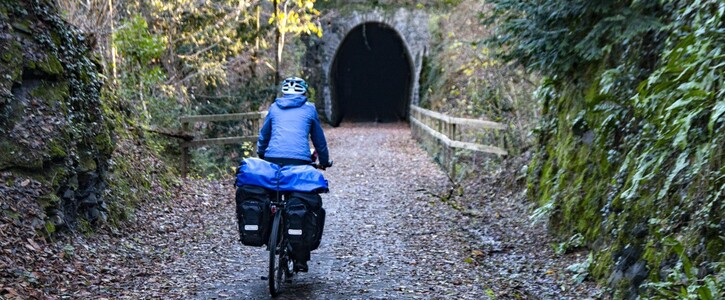
The physical dimension of riding a bicycle across a continent is often the primary focus of preparation, yet it is the psychological dimension that typically dictates the success or failure of the journey. The legs adapt relatively quickly to the [...]
Riding a bicycle across a continent places the human body and the machine under sustained, cumulative stress. It is an ultra-endurance event that spans months, not hours. Therefore, the approach to conditioning and maintenance must shift from "peak [...]
Crossing a continent on a bicycle is a logistical puzzle as much as a physical challenge. The distance, roughly 3,000 to 4,000 miles across North America, renders daily improvisation unsustainable. Success requires a strategic framework that [...]