
Although society often pretends that merit alone determines success, the reality is that the modern workplace financially rewards physical beauty. The market offers a very real economic advantage to people who happen to match a specific, narrow standard of youth and facial symmetry. This financial advantage operates as the beauty premium.
Conversely, because a measurable penalty exists for people who look different from the average, people often experience a noticeable loss in income or professional standing when the natural aging process begins to signal a decline in their perceived economic value. Due to this intense pressure, many individuals buy cosmetic procedures simply to protect their financial security within a highly competitive job market. Physical appearance operates as a concrete economic asset, just like a college degree or a professional certification.
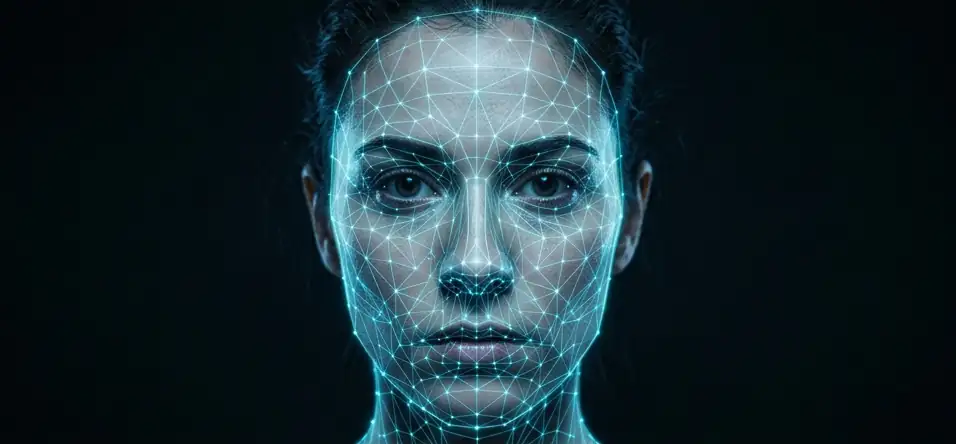
Digital communication changes our basic expectations for human appearance because facial filters and image editing applications create fake geometric averages that standardize facial shapes across entire populations. Continuous exposure to this fake imagery shifts our expectation of what human beings should actually look like. When the digital standard becomes the required physical standard, people force their own biological reality to match a synthetic digital image.
The medical cosmetic industry grows continuously by turning normal, healthy biological changes into terrifying diseases. While doctors routinely frame an uneven face as a mechanical defect they can easily fix, the industry frames natural aging as a sickness that requires urgent medical treatment. Normal skin texture is treated as a flaw.
Because the industry makes money by exploiting deep physical insecurity, it creates a permanent cycle where consumers must buy continuous treatments just to maintain their appearance and their social standing. These aesthetic demands fall most heavily on women, because a woman's social value remains strongly tied to her physical appearance and youth. A man's societal value is spread much more broadly across his wealth, his competence, and his status markers.
Although both genders experience aesthetic pressure, the cosmetic industry primarily targets female buyers. This intense focus continuously reinforces historical gender inequalities.
The Personal Choice to Modify the Body
Elective surgery is a bold exercise of personal choice. When individuals use advanced medical technology to make their outside appearance match their internal identity, the decision represents a conscious act of self-determination. The individual takes control away from genetics.
Modifications range from helpful choices to deeply harmful behaviors. While gender affirmation procedures help people resolve severe distress, a psychological disorder can drive continuous and unnecessary surgeries until people develop a dangerous dependency on these procedures.
They lose their objective awareness of what they look like. Psychologists call this perceptual drift, which is a condition where the individual can no longer tell how far they have moved away from normal human biology.
In the past, body alterations helped build strong group cohesion because tribal tattooing and piercing signaled status and group belonging to everyone in the community. Modern cosmetic surgery is highly individualized and consumer driven, as it seeks to conform to a universal standard of digital beauty rather than signaling specific tribal loyalty. Modern modification signals economic class, and it enforces rigid conformity.
The Space Between Choice and System
Individual choice cannot exist outside of large societal rules. Although a person makes a choice when purchasing a cosmetic procedure, that choice is powerfully shaped by economic structures that financially reward the procedure. Because society dictates the optimal standard of beauty, the individual only decides whether to comply with that massive structural demand.
Standard biological signals communicate our age and our emotional state. Synthetic changes disrupt these deep evolutionary signals. Medical treatments freeze facial expressions and alter bone structure, which profoundly impacts human interaction because the evolutionary tools we use to read biological signals completely fail when they look at a fake face. Social reading and empathy are fundamentally broken.
Historical societies controlled body modification through religious and tribal authority. Because modifications were rare, painful, and permanent status markers, they carried profound social weight. Contemporary culture controls modification through market forces and digital algorithms.
The modern era makes surgery available to everyone, but it makes everyone look identical. While diverse subcultures still use extreme modification to signal rebellion, the mainstream uses modification to achieve universal conformity.