
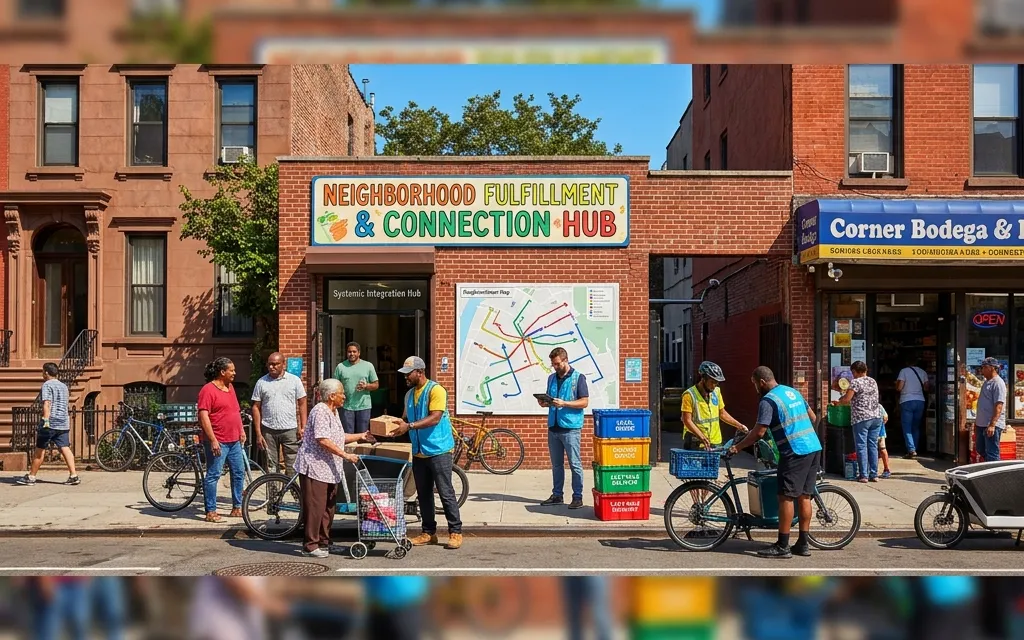
Mayor Zohran Mamdani recently launched a seventy million dollar initiative to establish a network of five municipal grocery stores across New York City, promising a thirty percent reduction in checkout prices. This highly publicized strategy attempts to solve systemic food insecurity by mimicking the inefficient mechanics of a private supermarket chain. An automated distribution model offers a mathematically superior alternative that abandons the physical storefront fully. By shifting the focus of government away from retail management and toward algorithmic logistics, the city can implement a targeted distribution network. This model relies upon real-time data collection and automated feedback loops to deliver sustenance straight to vulnerable populations without replicating the massive overhead costs of traditional commercial pricing structures.
The Architecture of Zero Overhead
Building, renting, and staffing five public storefronts in high-density urban neighborhoods consumes millions in taxpayer dollars before a single transaction occurs. The Mamdani initiative forces the government to absorb the exorbitant costs of commercial leases, utility maintenance, and front-facing retail labor to offer a partial discount on consumer goods. An algorithmic distribution program bypasses this retail barrier fully. The government uses its immense scale to bulk-purchase a narrow catalog of shelf-stable and fresh staples from agricultural producers and wholesale hubs like the Hunts Point Market. Instead of stocking shelves, the city relies upon automated fulfillment centers. Goods arrive from farms, undergo immediate algorithmic sorting into pre-packed staple boxes, and travel to existing community spaces for automated pickup. This sequence eliminates the massive costs of inventory management, product spoilage, and retail overhead, making it drastically cheaper for taxpayers than subsidizing physical supermarkets.
The Consumer Reality
The municipal grocery plan ignores the economic reality of poverty. Only for political signaling does any value exist in spending seventy million taxpayer dollars constructing physical stores. Brick and mortar retail stores are inherently expensive to maintain and staff. The plan forces poor residents to travel across town to purchase some food items at a thirty percent discount. On the other hand, by abandoning retail overhead completely, the government spends drastically less money while delivering free food straight to the community. When the city eliminates the massive costs required to sustain brick-and-mortar operations, it can allocate that capital to distribute fresh staples at zero cost to the consumer. Instead of stocking shelves, an automated system allows residents to use a basic text message to log their weekly nutritional needs for home delivery or local pickup. Because this distribution pipeline relies fully upon centralized tracking and central logistics, it eliminates the shrinkage, theft, and localized fraud inherent to physical storefronts. In the end, Mamdani's expensive retail model is mathematically inferior to a free, automated distribution network.
The Political Barrier to Efficiency
If an algorithmic distribution system operates with superior logistical efficiency and delivers free food at a lower aggregate cost to taxpayers, the primary barrier preventing municipal adoption involves political signaling. The Mamdani initiative persists because opening a physical municipal store creates a highly visible, symbolic community anchor that politicians can stand in front of for a ribbon-cutting ceremony. A highly efficient, invisible logistical pipeline that subtly distributes free food via text message alerts and bodega integration provides zero symbolic political capital. Politicians continuously choose expensive, highly visible retail interventions over invisible systemic efficiency, forcing taxpayers to fund the theatrical performance of government instead of engineering the mathematical resolution of poverty.