
Walk into any grocery store today and you will feel the sharp pain of prices rising at the checkout counter. A dozen eggs costs more paper money now than it did five years ago. Ground beef costs more. Bread costs more. The receipt at the bottom of the bag carries a number that climbs higher every single year, and the immediate assumption most people reach for is that the farmers who grow the wheat and raise the cattle are demanding more wealth from consumers just to keep their own operations running.
This assumption feels true during the moment a person hands over their payment, because the numbers printed on the receipt keep getting bigger. The problem with this assumption lives inside the way we measure the cost of things.
The Shrinking Ruler
Imagine a carpenter who needs to measure a wooden board every morning. The board sits on the same workbench, and the wood never changes size. The carpenter pulls out a tape measure and stretches it along the surface of the board, and the tape reads ten inches. The next morning the carpenter measures the same board and the tape reads eleven inches. The morning after that the tape reads twelve. The carpenter begins to worry that the board is growing longer every day, because the numbers on the tape keep climbing.
The board remains the same size it has always been. The tape measure shrinks instead. Each morning, the inch marks on the tape are printed a little closer together than they were the day before, so more marks fit along the same physical distance. The wood sits on the bench without changing at all, while the shrinking ruler makes it look longer every time someone measures it.
This is what happens when we measure the cost of food using paper money printed by a central bank. The food sits on the shelf without changing, but the ruler we use to measure its price keeps shrinking. Each time the central bank prints new currency and pushes it into the economy, every existing dollar becomes a slightly smaller unit of purchasing power, and it takes more of those smaller units to buy the same physical object that has not changed.
The Quiet Removal
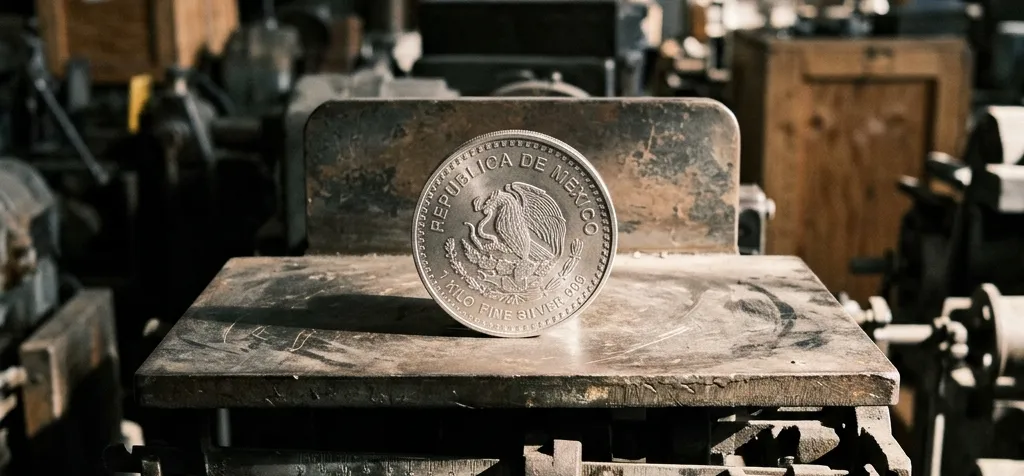
Most readers do not realize that the very definition of American money changed during the 1960s through a sequence of political decisions that stripped physical value out of the coins circulating through every American wallet. Before this transition, the dimes and quarters that people carried in their pockets contained 90 percent physical silver. A person holding ten dimes in their hand was holding real metal that required real labor to pull from the earth, refine in a factory, and stamp into coins at a government mint. The money itself carried physical weight and physical value because silver cannot be created out of nothing.
By the early 1960s, industrial demand for silver in photography, electronics, and manufacturing was consuming the metal faster than mines could produce it. The market price of silver began climbing toward the point where the metal inside a dime was worth more than the dime itself. Citizens noticed this, and they began pulling silver coins out of circulation and saving them, because the metal in the coin was becoming more valuable than the number stamped on its face. This behavior follows a principle economists have observed for centuries. When a government circulates two types of money side by side and one holds more physical value than the other, the public hoards the valuable money and spends the cheap money. The valuable coins disappear from cash registers and the cheap ones remain.
A popular story claims that President John F. Kennedy tried to preserve silver-backed money through Executive Order 11110, signed in June 1963. The historical record shows the opposite. That executive order was an administrative measure that delegated authority to the Treasury Secretary to issue silver certificates during the transition away from silver-backed currency, not toward it. Kennedy signed Public Law 88-36 on the same day, which repealed the Silver Purchase Acts and began the legal process of retiring silver from the monetary system. The movement away from physical money was already underway before Kennedy was assassinated in November 1963.
After Kennedy's death, President Lyndon Johnson signed the Coinage Act of 1965 on July 23 of that year, completing the removal. The government replaced 90 percent silver dimes and quarters with a sandwich of cheap copper and nickel that looked similar on the outside but contained almost no precious metal on the inside. A dime minted in 1964 held genuine physical silver worth real labor. A dime minted in 1966 held a few cents worth of industrial copper dressed up to look like its predecessor. The half dollar was reduced from 90 percent silver to 40 percent, and by 1971 the remaining silver was stripped from that coin as well.
What the public lost was their connection to a fixed physical measuring stick. While silver coins circulated, the government could not print unlimited money because every new coin required a matching quantity of physical metal from the earth. The silver acted as a physical brake on the printing press. After the silver was removed, the government was free to create as much new currency as it wanted without mining a single ounce of anything. The resulting currency was structurally designed from the beginning to lose value over time, because a government that controls an untethered printing press can fund its operations by quietly draining the savings of its own citizens instead of raising visible taxes. The shrinking ruler was now untethered from physical reality, and it has been shrinking ever since.
The Hamburger Test
To measure the true cost of food accurately, a person needs a physical object that nobody can print into existence. Silver provides a reliable tool for this job because extracting silver from rock requires real human labor, large drilling equipment, chemical processing, and industrial energy costs. The supply of silver grows slowly because the earth only releases it through difficult physical work.
In 1964, one dollar of face value in American silver coins contained a specific physical weight of metal equaling 0.7234 troy ounces of fine silver. During that same year, a standard fast food hamburger at a chain restaurant cost about fifteen cents. A person carrying one dollar in silver dimes could walk into a restaurant and buy almost seven hamburgers with the physical metal in their pocket.
Now apply this identical physical measuring stick to the modern world. In September 2026, the market price of one troy ounce of silver sits near sixty-seven paper dollars. That identical 0.7234 ounces of silver from the 1964 dollar is now worth roughly forty-eight paper dollars at current trading prices. A standard hamburger at a fast food chain costs approximately two dollars and nineteen cents in 2026 pricing. This means the same physical piece of silver that bought seven hamburgers in 1964 now buys twenty-two hamburgers in 2026.
The food got cheaper. Measured against real physical metal that cannot be printed, a hamburger costs less human labor to produce today than it did sixty years ago, because modern farms use GPS-guided tractors, automated grain harvesting, and industrial cattle feeding operations that produce far more food per hour of human effort than any 1964 farmer could have imagined.
The harsh reality is that this efficiency gain did not come for free. The modern farmer had to borrow enormous sums of paper money to buy those GPS-guided tractors, those automated grain systems, and those industrial feeding operations. The loans are denominated in the same shrinking paper currency, and the interest payments are fixed in nominal dollar terms that grow heavier as the currency loses value. The farmer raises the paper price of food not out of greed but out of the raw need to service debts that were issued in a currency designed to collapse. The farmer is trapped inside the same shrinking ruler as the consumer.
When food prices climb at the grocery store, the public directs its anger at the farmer, the rancher, and the grocery chain. The government encourages this misdirection because it draws attention away from the printing press. Politicians stand in front of cameras and promise to investigate price gouging by food producers while the central bank continues to print new currency behind closed doors. The producer becomes the visible target for public frustration while the institution creating the problem remains invisible.
Both the farmer and the consumer are caught inside a system that punishes them for the same mechanical failure. The farmer works harder, invests more capital, and produces more food per acre than at any point in human history, and still cannot outrun the collapsing currency. The consumer works a full shift and brings home a paycheck that buys fewer groceries every month, and blames the person growing the food instead of the institution shrinking the money.
The Labor Crisis
The crisis reveals itself only when we look at the human labor required to acquire that silver.
In 1964, the federal minimum wage was $1.25 per hour. A worker earning minimum wage labored for forty-eight minutes to earn one dollar in silver coins, which contained 0.7234 troy ounces of physical silver. That forty-eight minutes of labor purchased almost seven hamburgers.
In September 2026, the federal minimum wage remains at $7.25 per hour. This number has not changed since 2009. The same 0.7234 troy ounces of silver now costs roughly forty-eight paper dollars on the open market. A worker earning the current federal minimum wage must labor for six hours and thirty-seven minutes to earn enough paper money to buy that identical piece of silver.
Follow the numbers carefully to see what this means at the grocery store. If forty-eight minutes of labor bought almost seven hamburgers in 1964, how many does it buy today? At the modern minimum wage, forty-eight minutes of labor earns five dollars and eighty cents. At a price of two dollars and nineteen cents per hamburger, that same forty-eight minutes of human effort now buys less than three hamburgers. The worker lost more than half of their food purchasing power.
This massive loss happens despite the fact that the food itself became three times cheaper to produce in physical terms. The modern farmer uses advanced machines to grow food with a fraction of the human effort required in 1964. This leap in agricultural efficiency should have made the worker wealthier. Instead, the worker grew poorer.
The physical metal did not change. The food became easier to grow. What changed is the value of human labor when it gets converted into a shrinking paper currency. The central bank printed paper money so quickly that it drained the value of the worker's labor faster than the farmers could lower the physical cost of growing the food. The efficiency of modern farming hides the full severity of the theft, keeping the price of a hamburger just low enough that the public does not realize their paper ruler has collapsed.
Where the Wealth Goes
When a central bank prints new currency, that freshly created money enters the economy through a specific door. It does not appear in the pockets of working people first. New money flows into the financial system through government bond purchases, bank lending programs, and institutional credit lines. The governments and large financial organizations standing closest to this door receive the new money before prices have adjusted upward to reflect the increased supply of currency. They spend this new money at yesterday's prices, capturing real purchasing power before the rest of the economy feels the effects.
By the time the new currency filters down through the economy and reaches the wages of ordinary workers, the prices of goods have already risen to absorb the increased money supply. The worker receives a paycheck denominated in the same paper currency, but each unit of that currency now buys less than it did before the new money was printed. The worker labored for the same number of hours but received less real purchasing power in return.
This process transfers wealth from the people who receive the new money last to the people who receive it first. Governments benefit because they can pay off debts accumulated in older, more valuable dollars using newer, cheaper dollars. Large banks benefit because they lend the new money out at interest before its purchasing power declines. The working person at the end of the chain absorbs the full cost of this transfer through rising prices and stagnant real wages, and most never understand the mechanical cause because the shrinking ruler makes the problem look like expensive food rather than cheap money.
Stepping Outside the Shrinking Ruler
A person cannot stop a central bank from printing new currency. The mechanism operates at a national scale far beyond the reach of any individual consumer. What a person can do is change the container they use to store the value of their labor between the moment they earn it and the moment they spend it.
When a worker earns a paycheck and deposits the money into a savings account denominated in paper currency, every new round of printing by the central bank quietly drains the purchasing power sitting in that account. The numbers on the bank statement remain the same, but the real goods those numbers can buy shrink over time.
Moving surplus labor into physical containers changes this equation. A person who buys a small piece of productive farmland is holding something that cannot be printed. The land grows food regardless of what happens to the paper currency, and the physical output of that land retains its value because human beings need to eat every single day. A person who buys physical silver or gold is holding a fixed quantity of metal that required genuine industrial labor to extract from the earth, and no central bank can create more of it by pressing a button.
Physical tools, practical trade skills, and productive equipment also sit outside the reach of paper inflation because their value comes from the physical work they can perform rather than from a number printed on a government note. A welder holding a paid-off welding rig owns a machine that produces real economic output regardless of whether the paper dollar shrinks by five percent or fifty percent in a given decade.
Where This Road Ends
A shrinking ruler does not shrink forever. It reaches a mathematical limit, and the system built on top of it breaks.
In fiscal year 2026, the United States government collects approximately 5.6 trillion paper dollars in total tax revenue. Out of that total, roughly one trillion dollars goes to paying interest on the national debt. This means the government currently spends about twenty cents of every tax dollar just to cover the cost of borrowing from previous years. That one trillion dollars in annual interest buys nothing for the public. It builds no roads, funds no schools, and feeds no families. It pays the cost of past spending that was financed by printing money instead of collecting taxes.
The national debt continues growing because the government runs a structural deficit of nearly two trillion dollars every year, spending far more than it collects. Each year the deficit adds to the total debt, and each year the interest payments on that growing debt consume a larger share of the tax base. The trajectory is a mathematical curve that bends upward with increasing speed. At the current pace, interest payments will consume a third of all tax revenue within a decade, and the government will be forced to print even more money to cover the gap, which accelerates the shrinking of the ruler, which drives prices higher, which increases the cost of government operations, which increases the deficit further.
This entire process feeds on itself in an accelerating spiral. The breaking point arrives when confidence in the currency collapses faster than the central bank can manage it. Historically, this collapse does not happen gradually. It happens in a sudden break, like a rope that stretches slowly for years and then snaps in a single moment when one more pound of weight is added. Foreign governments holding trillions of paper dollars in reserve begin selling them in exchange for physical commodities, and the sell-off triggers a cascade that no central bank can contain.
The Revaluation
When a currency collapses and a new monetary system must be created, the government is forced to anchor the replacement currency to something physical that the public and foreign governments will trust. The United States has done this before.
In 1933, President Franklin Roosevelt signed Executive Order 6102, which made it illegal for American citizens to hold gold coins, gold bullion, and gold certificates. The government required citizens to surrender their gold to the Federal Reserve at the official price of 20.67 paper dollars per ounce. After the gold was collected, the government revalued it overnight to 35.00 dollars per ounce, an instant jump of 69 percent. The citizens who surrendered their gold received 20.67 dollars per ounce in paper money that was now worth less, while the government holding the physical metal gained the full benefit of the revaluation. This was a direct transfer of physical wealth from the public to the government, executed by decree in a single day.
In a modern systemic reset, the mathematics are far more severe. The current paper price of physical silver and gold is held down by a massive market of digital contracts and paper derivatives that represent metal nobody has actually mined or refined. These contracts trade hundreds of times more metal on paper than exists in physical form. As long as the paper market functions, it suppresses the price of the real metal sitting in vaults and safety deposit boxes. When the paper system breaks, and the market is forced to settle in physical metal instead of paper promises, the price of that metal must gap upward by multiples to reflect the actual scarcity of the physical supply.
Gold is the primary physical reserve asset held by central banks around the world. Any new currency basket created during a reset will anchor primarily to gold because it is the only metal that central banks already hold in large quantities and that foreign governments universally accept as a settlement asset. When the new currency must be backed by gold to restore international trust, the price of gold must be revalued upward to a level high enough to cover the enormous volume of paper currency already in circulation. The revaluation will not be a gradual market climb. It will be a single overnight decree, just as it was in 1933, multiplying the official price by whatever factor the mathematics demand.
Silver moves together with gold during these events, but it moves differently. Silver is a much smaller market than gold, and because industrial demand for silver in electronics, solar panels, and medical equipment remains constant regardless of the monetary system, physical silver becomes scarce faster than gold when investors begin converting paper currency into hard metal. During past monetary crises, the ratio between the price of gold and the price of silver compresses rapidly, meaning silver accelerates faster than gold in percentage terms. A person holding silver during a revaluation event historically gains more in relative terms than a person holding gold, because the smaller market amplifies the price movement.
In September 2026, one ounce of physical silver trades near sixty-seven paper dollars. In a currency reset where gold is revalued to anchor a new monetary system, silver follows that revaluation with an accelerated multiple. A five-to-one multiple would carry the price of silver above three hundred paper dollars per ounce. A ten-to-one multiple would carry it above six hundred. These numbers sound extreme to a person who has spent their entire life measuring value with a shrinking ruler. To a person who understands the physical math, they are the predictable outcome of sixty years of untethered printing compressing into a single correction event.
The separation between paper measurement and physical reality provides the only accurate lens for understanding what is happening to the cost of living in 2026, and the only reliable protection against a system that was designed to quietly transfer the value of human labor away from the people who perform it. The shrinking ruler will eventually snap. The question facing every working person today is whether they will be holding paper or metal when it does.