
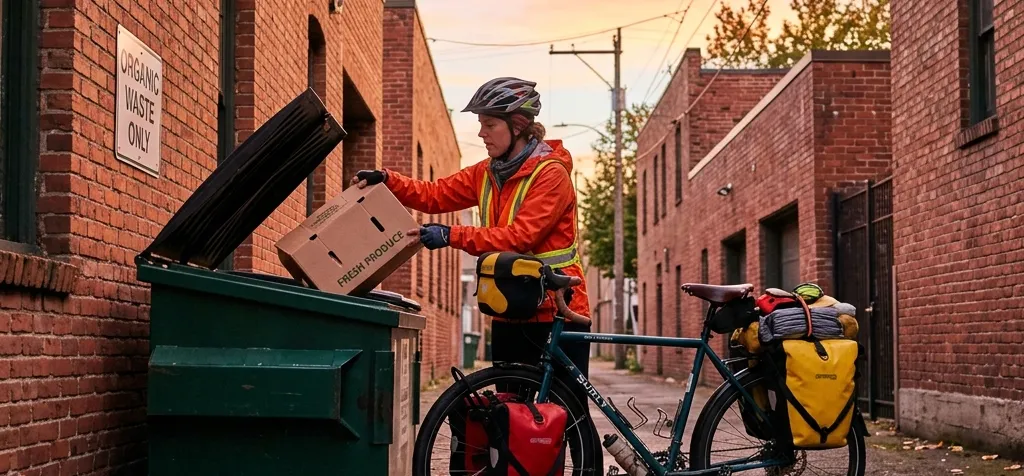
A touring cyclist carries everything on two wheels. Shelter, tools, food, and clothing all ride on one frame, exposed to the open air whenever the rider stops moving. Shopping inside a traditional retail store forces the rider to walk away from that bicycle and leave it locked to a post on a public sidewalk. That separation creates the greatest physical risk in nomadic travel. A different approach to gathering daily supplies keeps the rider close to the bicycle at all times, cuts spending, and recovers time lost in store aisles.
The Danger of Traditional Retail
Walking into a retail store means walking away from the bicycle. When a traveler carries all of their survival equipment on a single frame, entering a building means leaving the loaded rig exposed on the street. A cable lock offers little protection because even common bolt cutters sever it in seconds. A hardened U-lock resists cutting tools much longer, but it only protects the frame itself. Soft-sided panniers, handlebar bags, and anything strapped to the rack remain exposed. A thief does not need to steal the heavy metal frame when they can unclip a soft bag and walk away with hundreds of dollars worth of gear in under five seconds.
Many travelers try to solve this problem by rushing through the store or asking strangers to watch their equipment. Other riders suggest parking in clear view of external security cameras. These defensive tactics depend heavily on luck. Cameras are not always present on the exterior of every building, and even when they are, they often fail to deter a fast opportunist who grabs a bag and disappears around a corner. The footage may help with a police report later, but it does not prevent the loss. A stronger approach avoids the interior of the retail building whenever possible.
Intercepting the Surplus Supply
This specific provisioning strategy relies heavily on the massive waste streams found exclusively in developed nations. While wealthy industrialized countries throw away staggering amounts of usable inventory every day, developing nations operate much leaner supply chains where almost nothing goes to waste. A traveler riding through poorer regions relies on traditional open markets where the bicycle naturally stays visible. Inside wealthy consumer nations, modern commercial grocery supply chains constantly produce massive quantities of usable surplus goods on a highly predictable daily schedule. Grocery stores and bakeries rotate inventory on set days. Employees discard unsold but sealed products into large outdoor bins located behind the main building. The timing of these rotations varies by location. Some stores clear shelves in the early morning before the next delivery truck arrives. Other locations dump surplus late at night. A traveler who spends a few days observing the pattern at local businesses can build a reliable mental map of which locations produce usable surplus on which days and at what time.
Retrieving surplus requires common sense and basic physical hygiene. Different retail chains use radically different standard procedures for discarding unsold inventory. Many commercial dumpsters sit on open parking lots with no fencing, while others remain locked behind gates on private property. A smart traveler always checks local trespass laws first. The physical preparation remains easy. The rider wears basic sanitary gloves and carries clean, dedicated bags to keep retrieved items away from anything contaminated. Treating the daily provisioning run like a practical treasure hunt keeps touring fun. The traveler parks the bicycle right next to the bin, sorts through the available contents, and rides away. Over time, this surplus strategy becomes a highly predictable daily loop that allows the rider to acquire sealed food without ever leaving the bicycle unattended.
Digital Ordering and Curbside Pickup
When surplus goods are unavailable or the rider needs a specific item that cannot be found in a bin, a smartphone can replace the traditional indoor shopping trip. Most large retail chains now offer free curbside pickup for orders that meet a minimum dollar threshold, typically between twenty and thirty-five dollars depending on the retailer. A nomadic cyclist can open the store application, select the specific items needed, and schedule a pickup window. The rider arrives at the store, collects the bagged order from an employee standing at the curb, and rides away without ever crossing the threshold. A smart traveler batches multiple days of needs into a single large order to clear the threshold.
This approach has a practical limit. A solo traveler on a bicycle often needs only a small quantity of supplies on any given day. Buying three or four days of food at once means carrying extra weight on the frame, which creates its own problems on long climbs and rough roads. The rider has to weigh the savings of batching against the physical cost of hauling the extra load.
Digital delivery to a remote location carries a steeper financial penalty. When a rider orders a single replacement part or a small quantity of food through a delivery application, the service fees and delivery charges frequently exceed the cost of the item itself. This makes on-demand delivery a poor daily strategy for a budget traveler. Where delivery does make sense is for specific, high-value items that cannot be found through surplus or curbside pickup. Replacement tires, specialty tools, or electronics can be routed to approved outdoor pickup points. Package lockers at gas stations, convenience stores, and some pharmacy chains allow the cyclist to retrieve a box by scanning a code, with the bicycle parked at arm's length. For general mail, many small post offices in rural towns offer general delivery service where the rider can see the bicycle through the front window during the brief transaction.
The Advantage of a Risk-Averse Lifestyle
Anti-consumption provisioning changes how a traveler moves through the physical world. Digital delivery services carry expensive fees for small orders, and curbside pickup works best when batched, which makes strategic scouting for surplus discards the single most practical daily approach for a budget-conscious touring cyclist. The rider stops acting as a traditional consumer walking into stores and starts intercepting usable goods flowing out of the commercial waste stream. This lifestyle demands flexibility, local awareness, and a willingness to adapt daily plans around the surplus schedule of nearby businesses. It delivers three practical advantages. The bicycle stays protected because the rider never walks away from it. Daily spending on food drops significantly on days when surplus provides the majority of calories. The hours that indoor shopping would have consumed become available for riding, resting, or planning the next leg of the route. Finding daily supplies transforms into an enjoyable part of the journey rather than a stressful gamble against theft.