Cycles of Change

Knowledge - Spirit - Culture - Growth

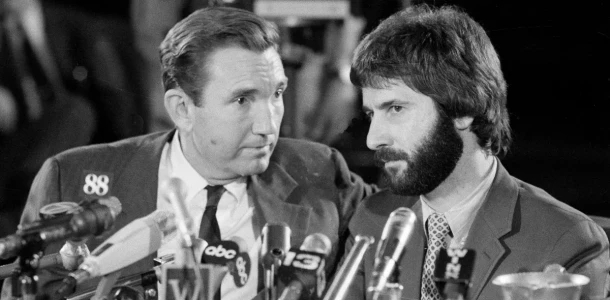
The 2024 presidential election cycle witnessed two assassination attempts against a major party candidate within two months of the election. This historical fact raises questions about the relationship between political rhetoric and violence. The concept of stochastic terrorism provides a framework [...]
Significant transformations in the global financial landscape have altered the methods by which people preserve their earnings. For thousands of years, precious metals such as gold and silver served as the primary measures of stored value. These assets provided a tangible link between physical [...]
The concept of human rights represents the historical unfolding of a specific philosophical and legal consensus regarding the inherent value of the individual. This progression is not linear or inevitable, but reflects a series of cognitive and social revolutions that expanded the definition of who [...]
The stability of a pluralistic society depends upon the maintenance of a "sacred canopy," which is a shared system of meaning that provides a sense of cosmic order and social security. A primary threat to this canopy is the institutional encouragement of religious mockery. This converts satire from [...]
Democracy is a dynamic system for staying strong. It works through the steady renewal of public trust and the fair split of power. Cycle theory states that mature societies face decay during a "Fourth Turning." This phase shows less social cooperation and more internal conflict. Success requires [...]
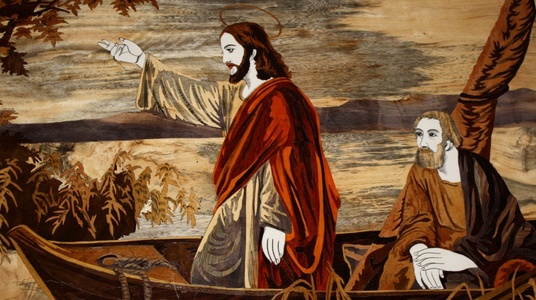
The concept of a being who is simultaneously fully divine and fully human represents one of the most enduring paradoxes in Western philosophy. While primarily a theological doctrine, the "Hypostatic Union" serves as a fascinating case study in metaphysics, epistemology, and classical logic. It [...]
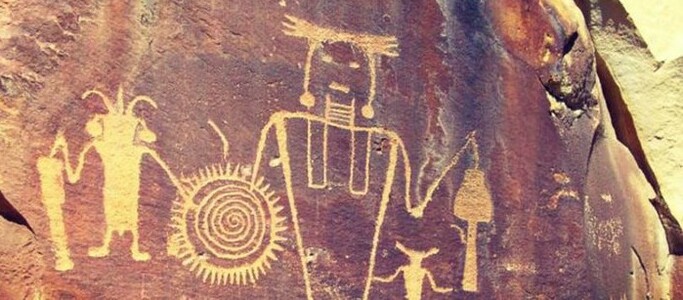
The Hopi people of northeastern Arizona preserve one of the oldest continuous spiritual traditions in North America. Among their teachings, the concept of Koyaanisqatsi stands as a stark warning (Waters, 1963). The word translates directly as "life out of balance." In its complete meaning, it [...]
Major world religions provide moral frameworks that guide individuals and societies. Principles found in Christianity, Islam, Hinduism, Buddhism, and Judaism offer similar views on right and wrong. These traditions provide rules for living a good life and solving moral problems. Following these [...]
The development of Western thought demonstrates a persistent effort to synthesise transcendental truths with human reason and social governance. Over two millennia, a succession of major thinkers has shaped the legal and moral frameworks that define modern civilisation. This progress is not a [...]
The Church of the Holy Sepulchre in Jerusalem is a sacred place for Christians. It marks where many believe Jesus was crucified and buried. For hundreds of years, keeping this site safe has relied on a special plan. Two Muslim families, the Nusseibehs and the Joudehs, are the keepers of the church [...]
In the architecture of global finance, the United States Treasury market serves as the bedrock of risk-free collateral. It is the foundation upon which nearly all other asset classes are priced. However, this purported stability relies on a singular, fragile assumption: that the issuer possesses [...]
The architecture of global reserves is reverting to physical settlement. For decades, the US Treasury bond served as the primary instrument of sovereign savings. This era is concluding. In 2024, central banks acquired one thousand and forty-five metric tons of gold. This marks the third consecutive [...]