
The foundation of everything in this guide is kefir, not the flavored, pasteurized kefir sold in bottles at supermarkets, but living kefir made fresh every day from a small cluster of grains and whatever whole milk is available locally. Understanding kefir is where everything else begins.
Kefir grains are not grains like wheat or rice. They are small, soft, irregular clusters of bacteria and yeast living together in a matrix made of proteins and carbohydrates. They look a little like soft cauliflower florets. When you place them in fresh whole milk and leave them at room temperature, the bacteria and yeast consume the lactose in the milk and produce lactic acid, carbon dioxide, and a small amount of alcohol. This process is called fermentation. It transforms the milk into a thick, slightly sour, slightly fizzy drink that is far more nutritious and digestible than the milk it came from, and that resists spoilage far longer than fresh milk would on its own. This is not new technology. Humans across Central Asia, the Middle East, and Eastern Europe have been making kefir for thousands of years precisely because it solves the problem of keeping milk useful without refrigeration.
For a cyclist without a refrigerator, this matters enormously.
Maintaining kefir grains on the road without refrigeration requires understanding one simple rule: the grains must always be in contact with fresh milk. They are living organisms, and they need to eat. If they are left in the same milk for too long without being fed fresh milk, the fermentation goes too far, the environment becomes too acidic, and the grains weaken and eventually die. The goal is to keep them in a continuous cycle of fresh milk, fermentation, and harvest. This is not difficult, but it requires consistency.
The cyclist needs to find kefir grains before the journey begins. The easiest way is to get them from someone who already makes kefir at home. Many cities have local groups who share them freely. Fermentation hobby communities online can help the cyclist find someone nearby willing to share a small portion of their active grains. If no local source is available, grains can be ordered dry through the mail from sellers who ship them. Dry grains are not alive in the usual sense. They need to be woken up before they work properly. The cyclist places them in fresh milk and changes the milk every twenty-four hours. The first few batches of liquid will not smell or thicken right. The cyclist pours them away and starts again each day. After several days of this routine, the grains become active and the kefir begins to form correctly. If grains die during travel, the cyclist must find fresh ones through a local contact or order them again.
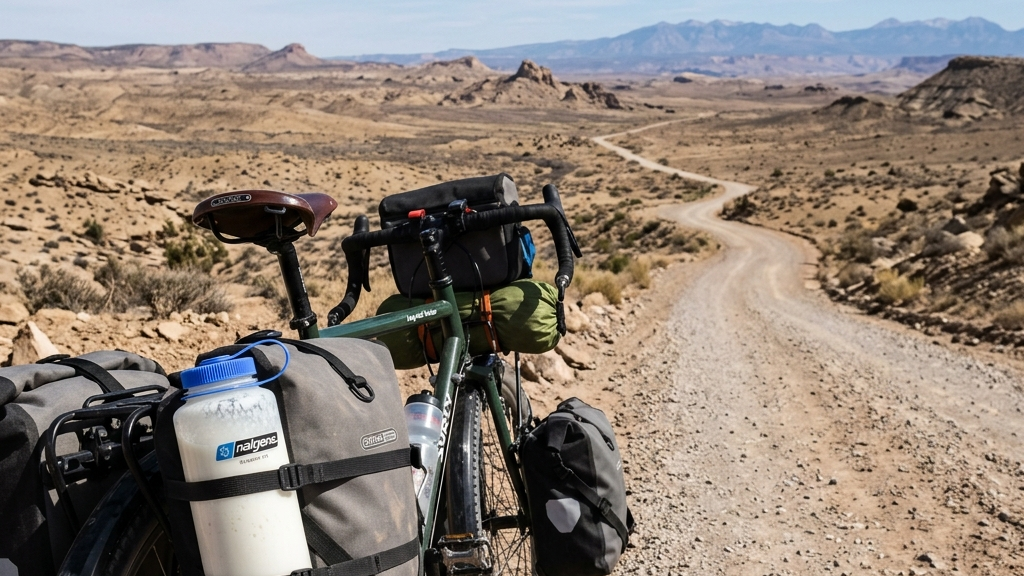
The equipment required is minimal. A single small container with a lid, holding approximately one cup, is sufficient. Many cyclists use a wide-mouth bottle that can be cleaned easily and sealed securely. As the kefir ferments, it produces gas inside the container. This gas builds pressure. A hard plastic bottle like a Nalgene handles this pressure without breaking or leaking. A tight lid stops liquid from escaping when the container is packed deep inside a pannier.
The daily procedure is straightforward. In the morning, the cyclist opens the container slowly to let the built-up gas escape. Most of the kefir that has fermented overnight gets drunk, but the grains must not be swallowed. They will be visible as soft clusters at the bottom or floating near the top of the container. The cyclist pours off or drinks the fermented kefir carefully and leaves the grains behind. Fresh whole milk goes in immediately after. The container must not be filled all the way to the top because the gas needs room to expand during the next fermentation. The lid goes back on tightly and the container sits somewhere at room temperature. By the following morning, a new batch will be ready.
In temperate climates, where temperatures are typically between 15 and 25 degrees Celsius, fermentation takes approximately 12 to 24 hours. In warmer conditions, fermentation is faster. In cooler conditions, it is slower. The cyclist should learn to read the kefir by its thickness, smell, and slight fizziness rather than by the clock alone. Properly fermented kefir smells pleasantly sour, like yogurt, not unpleasant or rotten. If it smells wrong, trust that signal.
On riding days, the container can be carried in a frame bag or pannier. The movement of cycling does not harm the grains. In fact, gentle agitation can slightly accelerate fermentation. The container should be kept away from direct sunlight and excessive heat, both of which can damage the grains.
When the cyclist reaches a market, the first purchase is always fresh whole milk. This is non-negotiable. The grains come first. Everything else in the diet depends on maintaining this living culture. Full-fat whole milk is preferable because the fat content supports the health of the grains and produces a richer, more nutritious kefir. If only lower-fat milk is available, it will work, but the kefir will be thinner and slightly less nutritionally dense.
During long empty stretches without fresh milk, sealed foil milk cartons work well because they need no refrigerator. Unsweetened evaporated canned milk also works, but the cyclist must mix it with clean water first. The cyclist pours one cup of evaporated milk and one cup of water together. This makes the milk thin enough for the grains. Evaporated milk straight from the can is too heavy and damages the grains. The cyclist must never use sweetened condensed milk because the extra sugar ruins the process.
Dry milk powder lasts longest in the panniers. The cyclist must mix the powder thoroughly with clean water before adding the grains. Most milk powder has no fat, which prevents it from spoiling in the heat. Whole milk powder spoils quickly on the warm road. Kefir made from fat-free powder feels thinner in the mouth. If the grains eat only fat-free milk for weeks, they become weak. The cyclist must provide fresh whole milk at the next market so the grains recover their strength.
If the cyclist takes a rest week and has a refrigerator nearby, the grains can rest inside it. The cyclist places them in fresh milk and puts the container in the cold. Cold does not kill healthy grains. It only slows them down. They can stay refrigerated in fresh milk for up to two weeks without harm. When the cyclist returns to the road, the first batch needs extra time to ferment completely. The grains may need one full cycle to wake back up before the kefir tastes right.
If there is no refrigerator during a rest week, the cyclist keeps the grains in a cooler spot and changes their milk every twenty-four hours. The extra kefir produced can be drunk or poured away. The grains stay healthy as long as they have fresh milk regularly.
Each morning after drinking the kefir, the cyclist stirs in a small amount of a spice blend kept in a sealed pouch. The blend does two things at once. It makes plain kefir more enjoyable to drink every day for many months on the road. It also helps the body recover from the riding by reducing soreness and settling the stomach.
The blend uses four parts ground cinnamon, two parts ground turmeric, two parts ground ginger, one part ground clove, and one part ground black pepper. Every spice in the blend earns its place.
Cinnamon is the main flavor. It is warm and familiar. It helps the body use the energy from food more evenly across the day. This matters especially for cyclists who are carrying extra body weight, because steady energy through the day makes the riding easier and the hunger more manageable.
Turmeric gives the blend its yellow color. It contains a substance that fights soreness in the muscles and joints. The body has trouble using this substance on its own, which is why black pepper is in the blend. Black pepper contains a compound that helps the body take in turmeric far more effectively. Without the black pepper, most of the turmeric passes through without doing anything useful.
Ginger helps the stomach stay calm during long days of riding. It reduces nausea and settles digestive discomfort. Cyclists who ride many miles a day in heat and varied terrain often find their stomach becomes unsettled. Ginger reliably addresses this.
Clove is used in small quantity because its flavor is strong. It has properties that fight damage inside the body at a cellular level. One part in the blend is the right amount.
The daily dose is half a teaspoon stirred into the morning kefir. The fat in whole-milk kefir helps the body take in the beneficial compounds from the turmeric and clove. No extra oil is needed. The kefir itself carries the spice blend into the body.
The blend should be mixed in large quantity before travel begins and kept in a small sealed bag. All five spices are dry, light, and stable. They need no refrigerator and stay good for many months if kept away from moisture and direct sun. All five are sold in markets across most of the world for very little money.
Beyond kefir and the spice blend, the cyclist's diet is built on a small number of additional foods purchased daily or carried for days when markets are not accessible.
Canned mackerel or sardines are the second most important item. These small oily fish provide everything the body needs to build and repair muscle. They also contain healthy fats that protect the heart and keep the joints moving well, along with vitamin D, iron, and zinc. These are things that kefir and dairy alone cannot supply in the right amounts. Canned fish needs no refrigerator until it is opened. It is sold in markets across most of the world and is usually one of the cheapest ways to get protein. When mackerel is not available, sardines do the same job just as well.
Cottage cheese is the third priority. It is high in a type of protein that digests slowly and keeps the body feeling full for a long time. When the stomach is full, the body sends a signal to the brain to stop wanting food. This matters a great deal for a cyclist who is trying to lose body fat while still riding thirty miles each day. Cottage cheese spoils faster than kefir or canned fish, so it should be bought and eaten within one day of purchase. On days without market access, canned fish covers the protein needs alone.
Oats are the fourth priority. They fuel the riding. The muscles burn through stored energy when the legs are working, and oats put that energy back. Without enough oats or similar starchy food, the body starts breaking down muscle instead of using stored fat, which defeats the whole purpose of eating this way. Rolled oats can be soaked directly in kefir for ten minutes without any cooking. No stove, no fuel, no equipment is needed. After ten minutes of soaking in kefir, the oats are soft and easy to digest. This makes oats one of the most useful foods in the entire diet for a cyclist who carries everything on the bike.
Fresh produce is the fifth priority and should be purchased whenever available. Any fruit or vegetable serves the purpose. Citrus fruit, tomatoes, leafy greens, bananas, and apples are common examples. The specific item matters less than the habit. Fresh produce provides Vitamin C, dietary fiber, potassium, and a range of micronutrients that the core dairy and fish diet does not supply in sufficient quantities. The cyclist should buy whatever fresh produce is cheapest and most locally available each day.
When fresh produce is not available, the cyclist takes a small daily dose of Vitamin C in any form sold at a pharmacy or market. It comes as powder, tablets, or capsules in most countries. The body needs about 90 milligrams each day, which is a very small amount. Most products sold contain more than this per serving, which is fine and not harmful. On days when the cyclist has eaten some fresh fruit or vegetables, half a normal dose is enough. The brand and form do not matter. The cyclist should pick whatever weighs least and costs least in the area where he is riding.
This diet helps the body lose fat through a simple idea. The body burns fat when it uses more energy than it takes in from food. Thirty miles of cycling each day burns a large amount of energy. By eating moderate amounts and not overeating, the body draws the extra energy it needs from stored fat. The high amount of protein in this diet, coming from kefir, cottage cheese, and canned fish, stops the body from breaking down muscle while the fat is being lost. The fat in whole-milk kefir and oily fish helps the body function well and keeps the joints healthy. None of the fat in this diet should be avoided or restricted.
The one-week-on, one-week-off riding schedule means the body needs more food during riding weeks and less during rest weeks. During rest weeks, the cyclist should eat somewhat less, especially fewer oats. Protein from kefir, fish, and cottage cheese should stay the same during rest weeks to help the muscles recover. The spice blend and Vitamin C stay part of the daily routine every day of the week.
Water is essential on every riding day. When the body burns fat, it produces waste products that the kidneys must flush out through urine. Without enough water, the kidneys struggle and the muscles cramp. The cyclist should drink water steadily throughout each riding day and not wait until thirsty.
This diet is not complicated. It runs on foods found in most markets around the world. One small container, one small spice pouch, and one daily routine are all the management it needs. The kefir grains make fresh food every morning from whatever local milk is available. The spice blend makes it enjoyable and supports recovery. The canned fish fills the nutritional gaps that dairy alone cannot cover. The oats fuel the miles. The fresh produce and Vitamin C keep the body's smaller needs met. The cottage cheese keeps the hunger under control.