
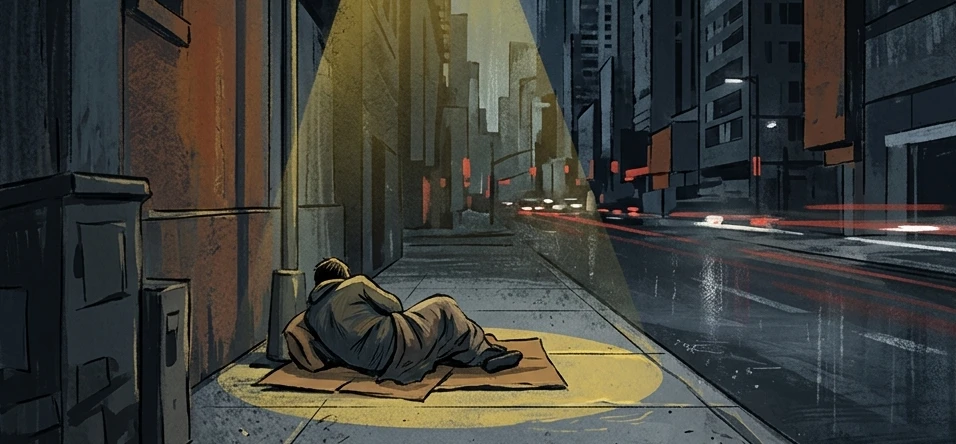
Most housing offers to people in encampments are not genuine. They mimic the form of an offer. They use language that suggests assistance and creates an illusion of choice. When individuals evaluate the actual proposals, they reveal a harsh reality. The offer demands they surrender everything they possess. In return, it promises something uncertain and unproven. There is no assurance that it will be safe. It lacks guarantees of permanence or fulfillment of its claims.
Series: Urban Survival — What a Real Offer Looks Like — Part 6 of 11
Refusing that offer is not irrational. It is the correct response to the information available.
To grasp why encampment residents decline housing, examine the details of standard offers. Investigate what a genuine offer truly includes.
What the Standard Offer Asks
A person in an encampment has created a life within its limits. They identify trustworthy individuals and those who cannot be trusted. They possess a defined location and maintain a social structure. Many have a dog, a partner, or a cart that holds their possessions. These items represent continuity with their past selves, including photographs, tools, clothes, and meaningful objects.
The standard shelter offer asks the person to leave all of this behind immediately.
The dog cannot join and the shelter prohibits animals. The partner cannot share a space; the dormitory divides by gender or individual assignment. The cart cannot remain; there is no secure storage. What little storage exists has a history of theft that residents will confirm. The offer stands as is and trust that what replaces what you lose will hold value.
From the viewpoint of someone who has faced broken promises from institutions, this request is unreasonable. Many long-term encampment residents share this experience. The outreach worker asking them to trust the shelter wants them to rely on nonexistent evidence. Their past experiences serve as proof. Those experiences indicate the system does not keep its word.
They remain and they do not choose the concrete and the offer lacks authenticity.
The Three Barriers That Are Not What They Appear
Field research across several cities identified three objects present in encampment refusals. These objects include pets, partners, and possessions.
These are sometimes called the Three Ps and they are sometimes dismissed as secondary concerns that people use to avoid engagement. This interpretation is wrong and it has cost cities significant resources in failed outreach.
A pet on the street is not a lifestyle choice. It serves as an alarm, provides warmth, and inspires mornings. It represents a bond that endures when others fade away. Surrendering a pet is not a small inconvenience. It equates to losing a crucial human relationship. Many people endure harsh conditions rather than part with a dog. This response reflects their understanding of the stakes involved.
A partner in the encampment forms a survival relationship. Two people can alternate sleep and watch duties. They can pool resources to support one another. They provide essential social stability in a challenging environment. Separating partners during shelter intake forces people to surrender their survival structure for an untested option.
Possessions in the cart represent identity. For someone who has lost housing, employment, and social status, these objects hold significance. They often serve as the final remnants of a prior existence. Regularly losing them in shelters without secure storage erases more than belongings. It strips away proof of a different life.
A real offer addresses all three. Not as an act of generosity. As a precondition for the offer to function.
What a Real Offer Contains
A genuine housing offer for a Group Two resident differs from the standard offer. This group includes those who are encamped but reachable. They represent about 35 percent of the unsheltered population. The features of this offer highlight its distinct value.
The room bears a name and it is not just a bed in a dormitory assigned at arrival. Instead, it is a room with a number. This number identifies a defined person before they enter. The room stands ready for their arrival. Their name rests on the door.
The individual stores the cart and it remains in their possession. It is not searched without permission. It does not sit in a shared space. The cart might disappear overnight and the cart is kept securely under the person's control. They can retrieve it whenever they need.
The pet resides in a kennel on site. It does not go to a distant shelter. It stays close and is not abandoned. The space is adjacent to or within the facility. This arrangement allows the person to see and care for the animal.
The partner shares the space and they remain together at intake. They do not occupy separate floors or units. They reside in the same area.
The keycard issues today and it does not follow an intake interview. It does not wait for a background check to clear. It does not depend on a case manager appointment next week. Today is the day and the person grips the card in their hand. The conversation about next steps begins now.
These details constitute the system of a genuine offer. Each detail eliminates a rational barrier to acceptance. When all details appear simultaneously, field data reveals that acceptance rates among Group Two residents during a crisis exceed 55 percent. This crisis occurs when their circumstances become severe enough for them to consider a change.
When any one of them is missing, the offer collapses back to the standard offer and the person remains in the encampment.
The Relationship That Makes the Offer Possible
A real offer does not work when delivered cold. The outreach worker who knocks on a tent with a housing offer has no history with the person inside. The offer, however genuine, lands in the same category as every other institutional promise the person has heard and seen broken.
The clinical teams in this system begin their work 12 to 24 months before a housing unit opens. They establish a presence in the encampment. They learn and remember names and they fulfill small commitments like medical care, food, and legal assistance before making any housing offers. They construct, methodically and without pressure, the evidence base needed for individuals. This base helps them evaluate whether this offer differs from previous ones.
When a crisis window opens, a health event occurs or a loss strikes. At this moment, encampment conditions become untenable. The person already trusts someone who can act. They can say: the room awaits. The cart sits stored and the dog has its space and come now.
The offer is valid and it has been earned.
Series: Urban Survival - Tomorrow: Part 7: When Persuasion Cannot Reach