
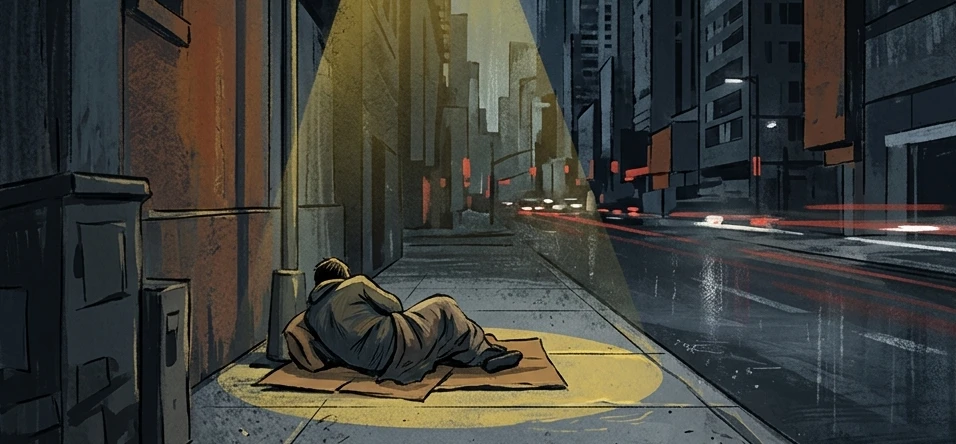
There is a sequence to recovery that the body enforces whether or not the city acknowledges it. The body does not care about policy timelines or intake forms or housing availability. It moves through its own stages of damage and repair at its own speed, in response to its own conditions. A system that ignores this sequence does not eliminate it. It collides with it, and the body loses.
Series: Urban Survival — What the Body Needs Before the Key — Part 5 of 11
Part 2: The Spiral That Nobody Stops in this series described the descent, the three stages of biological damage that exposure produces over days and weeks. This document clearly describes the reversal. What does it take to actually stop the spiral? What does the body need before it can receive anything else?
The answer is called Phase Zero. It is the missing first step in almost every city's response to homelessness.
What Phase Zero Is
Phase Zero involves metabolic stabilization and this phase precedes any benefits from housing, treatment, or any intervention. It is vital for individuals in Stage Two or Stage Three depletion.
This space is not a waiting room. It is not a bureaucratic holding stage. It serves as a clinical and environmental process. In this process, the body receives the physical conditions needed to halt its emergency systems. These conditions allow the body to start its repair processes.
The body exposed to the outdoors continuously suffers like an engine stuck at high heat. An engine cannot be serviced when it runs too hot. You must cool it before any repairs and phase Zero lowers this temperature.
What the Body Requires
The reversal of the exposure spiral requires three things, in this order.
First is safety from threat: real, physical, architectural safety. A person who has slept outside for months interprets uncertain boundaries as potential breaches. A shelter dormitory with 80 people and no private space feels unsafe to this nervous system. It appears as a new environment filled with new threats. The alarm system remains active and the cortisol level stays elevated and recovery remains stalled.
The required space is small and twelve square meters suffices. The walls must be solid and the door needs to lock from the inside. Outside noise must fade to a level the brain perceives as quiet. When these conditions occur, the amygdala registers the silence. It recognizes the strong boundary and reduces its firing rate. The heart rate drops from over 100 beats per minute. It moves closer to a resting rate near 60. This shift marks the first measurable event of stabilization.
The second requirement is clean air and warmth. The lungs that have been breathing diesel exhaust and brake dust need filtered air. The skin that has been losing heat to concrete all night needs a stable ambient temperature. Both of these conditions allow the body to stop spending energy on processes that should be handled by the environment. When the air is clean, the respiratory system reduces its chronic inflammation. When the temperature is stable, the muscles stop generating emergency metabolic heat. These reductions in expenditure free up resources for repair.
The third requirement involves removing street clothing and providing clean, dry fabric. Street clothing carries the residue of the outdoor environment, including moisture and pollution. Changing clothing and washing the body in warm water refreshes the skin. This action signals stability and cleanliness. The sensory update travels to the brain and reduces the alarm state initiated by the quiet room.
The Three Stages of Stabilization
With these conditions in place, the body passes through three distinct phases over approximately 48 hours.
During the first six hours, the brain believes danger will strike at any moment. Cortisol levels remain elevated and as silence continues and no threats materialize, the amygdala lowers its emergency signals. Blood pressure decreases and blood vessels expand, allowing blood to flow back to the extremities. Cold hands and feet on the street gradually warm. The person starts to fall asleep.
From hour six to hour eighteen, the body enters a phase of thermal re-equilibration. It halts the production of emergency heat. The microscopic shivering that persisted for weeks stops. Sweat eliminates stored toxins through the skin. Breathing slows and deepens, powered by the diaphragm. This contrasts with the rapid, shallow breaths from chronic stress. Deeper breaths enhance oxygen flow to the blood. The kidneys begin to rebalance fluid levels in the tissues.
From hour eighteen to the end of the second day, the liver and digestive system recover. The brain releases growth hormones that repair muscle fibers and reduce swelling in the joints. The person sleeps soundly and upon waking, their cognitive function shows clear improvement. They can engage in conversation and they can evaluate options. They can decide on their next steps.
This is the moment when someone can receive a housing key. This moment does not occur earlier.
What Waking Up Requires
The transition out of Phase Zero is as important as the entry into it. A brain that has just completed 48 hours of deep repair is still sensitive. Loud noise causes the alarm system to reactivate. Heavy food introduced too quickly causes the stomach, which has been dormant, to react badly.
The person rising from Phase Zero requires a quiet room. They need indirect light and a calm presence at eye level. They seek reassurance that they are safe and free to leave. Warm broth, lightly salted water, and basic carbohydrates like rice water are necessary before introducing complex nutrition. They must sit up slowly and rise at their own pace. Walking within the room is crucial before stepping outside.
This transition secures the biological benefits of the 48 hours. Without it, the nervous system triggers its alarm state quickly. It reverts to stress within hours of exposure to street conditions. The gains vanish without proper management.
Why This Is Not Compulsion
Phase Zero is voluntary and this aspect is not a legal technicality. It serves as the biological foundation of the process.
Confining a person to an enclosed space disrupts stability. Compulsion releases cortisol, the stress hormone that triggers emergency survival mode. A person forced into Phase Zero fails to stabilize. Their condition worsens and the treatment backfires.
Phase Zero's voluntary nature is a clinical requirement, not a philosophical concession. The body resists stabilization unless the brain perceives safety. The brain must recognize the environment as secure for cooperation to occur. Trust is not an ethical choice here. It acts as a critical physiological input.
The outreach work described in Part 6: What a Real Offer Looks Like must precede the housing offer. Making the offer without prior connection proves ineffective. Builders must establish trust before presenting the offer. This relationship enables acceptance and paves the way for Phase Zero.
Series: Urban Survival - Tomorrow: Part 6: What a Real Offer Looks Like