
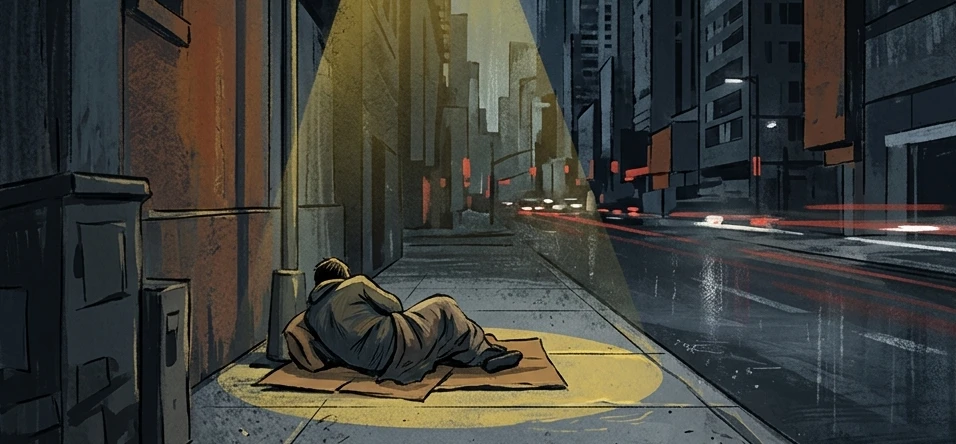
Part 6: What a Real Offer Looks Like described the person whose refusal of housing is rational, whose objections are real and whose barriers are concrete and removable. This post describes a different person. This person cannot be reached by better offers, longer outreach relationships, or more skilled persuasion. Not because they have decided against housing. The neurological faculty that would process the offer and produce a decision has been damaged by disease.
Series: Urban Survival — When Persuasion Cannot Reach — Part 7 of 11
Understanding this distinction is among the most important things this series will ask of the reader. Getting it wrong in one direction produces unnecessary coercion. Getting it wrong in the other direction leaves people to die on the street in the name of protecting their freedom.
What Anosognosia Is
Anosognosia originates from Greek, meaning not knowing the disease. This term describes a neurological condition where a brain illness impairs the area responsible for self-awareness. Affected individuals do not deny their condition. Denial involves rejecting received information and anosognosia means the brain never receives that information.
A useful comparison exists and a person with defined stroke damage may not recognize that their left arm is paralyzed. They can look at the arm. They can receive information about the arm. They will not perceive the paralysis. The brain region that registers that perception was destroyed by the stroke. This is not stubbornness and it results from a lesion.
Anosognosia in severe mental illness operates similarly. The illness impairs the prefrontal cortex, which governs self-monitoring and perception of one's condition. This damage disconnects the person from understanding their psychosis. They perceive their hallucinations as tangible. They interpret their thought disorder as logic. They view outreach workers as confused, threatening, or irrelevant. Within their altered reality, they reject the assistance offered.
This condition affects many individuals with untreated schizophrenia and bipolar disorder with psychotic features. Long-term outdoor exposure causes biological damage. Cortisol floods the body, while sleep deprivation worsens the situation. Nutritional deficits compound cognitive impairment and together, these factors create a person in profound danger. This individual lacks awareness of the existing threat.
Why Persuasion Fails This defined Cohort
Outreach models based on voluntary engagement assume that recipients can process the conversation. They must weigh the information against their experiences and make decisions. Most individuals can do this and those with anosognosia cannot.
This is not a failure of the outreach worker. It is not a failure of technique or time invested. Persuasion targets a defined faculty and if that faculty is absent, persuasion lacks a surface to land on. An outreach worker can spend 18 months building a relationship with someone in this cohort. Still, they may not achieve voluntary housing acceptance. This occurs not due to a failed relationship. Instead, a neurological condition hinders the relationship from generating the cognitive output needed for consent.
Recognizing this observation does not reflect pessimism. It accurately assesses the clinical situation. This analysis raises a critical question: what actions does a society take when a person cannot protect themselves or recognize their need for protection?
What Legal Instruments Exist and What They Are
Several legal systems exist in various jurisdictions to address this defined situation. The system described in this series references three, all of which operate in California and similar legal environments.
CARE Court, or the Community Assistance, Recovery and Empowerment Court, provides a civil process. Family members and outreach workers can petition the court. The goal is to connect individuals with a structured treatment plan. This process does not require institutionalization. It establishes a legal pathway for coordinated care. This pathway specifically assists people who cannot seek help voluntarily.
Assisted Outpatient Treatment, or AOT, follows akin principles across numerous US states. AOT connects individuals to community-based mental health services through a court order. It does not act as a prison sentence. Rather, it constitutes a court-supervised treatment plan provided within the community.
LPS Conservatorship, grounded in the Lanterman-Petris-Short Act, operates in California. This tool serves the most severe cases of mental health crises. It places individuals under legal guardianship for treatment. Strict clinical criteria determine when a person poses a danger to themselves or others.
All three of these instruments require judicial oversight. They are not decisions made by outreach workers or city officials unilaterally. A judge must review evidence, hear from the person, and make a finding before any compelled pathway is initiated. This oversight is the structural protection against misuse.
The Boundary That Protects Everyone
The key word in the previous section is defined. Legal instruments apply to a precise group. This group includes individuals who cannot make self-protective decisions. These individuals face threats of death or serious harm due to diagnosable conditions.
Group Two does not fit these criteria. This person refuses based on pets, partners, and possessions. Their neurology remains intact and they make a conscious decision to refuse. Applying a legal instrument violates their rights and it misuses the legal system.
Group Four does not fall under this category. The individual makes a genuine choice to live in community. This choice often differs from the majority's preference. Still, it remains a valid choice. Legal instruments do not confront choices. They handle situations where the capacity to choose is absent.
The clinical teams in this system operate in the field for 12 to 24 months. They aim to make accurate distinctions. Differentiating between Group Two, Group Three, and Group Four requires clinical skill. This skill demands time, observation, relationship-building, and documented evidence. Hastening this process results in misclassification and misclassification leads to harm.
The legal instruments operate alongside voluntary outreach. They do not replace it or precede it. For most of the Group Three cohort, a long-term clinical presence and a timely offer will encourage voluntary acceptance. The legal instruments target those who do not respond and whose biological condition worsens.
Who This Protects
Applying legal tools to the appropriate group requires judicial oversight. This must occur after thorough clinical documentation. It takes place when biological danger levels are reached. This process safeguards individuals from death they cannot prevent due to their neurological conditions.
It protects the integrity of the voluntary system. Outreach workers must avoid pressuring individuals. When they do, voluntary acceptance loses its value. The boundary that limits legal instruments to those in need also safeguards genuine voluntariness in the entire system.
The system supports two elements: maximum effort toward voluntary engagement and a legal pathway for those unable to engage. Each element reinforces the other and together, they encompass the entire population.
Series: Urban Survival - Tomorrow: Part 8: The People Nobody-Counted