
Sound money, based on the principles of Natural Law, promotes stability, fairness, and economic prosperity. In a sound monetary system, the value of money is anchored to tangible assets, such as gold, ensuring its intrinsic worth over time. This natural balance prevents excessive manipulation and [...]
In an environment of accelerating consumer stress, credit score declines, and falling retail sales, efforts to stabilize and hold property values may face significant challenges. Possible outcomes include: Housing Market Slowdown: With weakening consumer demand and declining retail sales, the [...]
Currency War III (CW3) refers to the current era of currency tensions and competitive devaluations among countries which began in 2010 following the global financial crisis. During this period, countries engage in measures to devalue their currencies to boost their exports and stimulate economic [...]
Herein lies the essence of the contrasting nature of silver, gold, and fiat currencies explained through a collection of thought-provoking analogies. These analogies shed light on the inherent characteristics and roles of these forms of wealth and monetary systems. They provide a clear and simple [...]
The common idea of Housing First assumes that providing a home is the only requirement for social integration. However, as Stephen Eide argues in Homelessness in America, this model often ignores the psychological and civic foundations of a community. True integration requires more than just a [...]
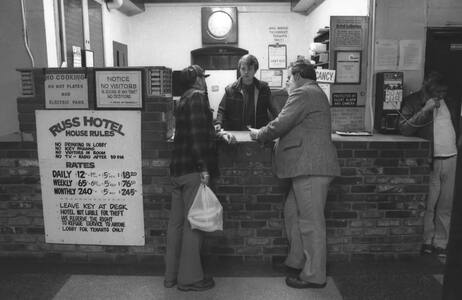
Historical records show that homelessness was a common occurrence throughout the late 19th century. Data from the late 19th and early 20th centuries indicates high levels of displacement despite a much smaller national population. Records from 1880 and 1890 reveal that city police stations served [...]
Financial trading with borrowed funds is a closed system where money is moved rather than created. A helpful example is a professional poker game. In a poker game, the total amount of money on the table stays the same. The house might take a small fee, but every dollar won by one player must be [...]
Paul Craig Roberts is an American economist who once worked inside the government. During the Reagan era, he served as an Assistant Secretary of the Treasury. After leaving his post, he became a strong voice against popular political ideas. He states that recent policies damage ordinary citizens. [...]
Foreign military battles often increase spending and reduce choice. In theory, committing domestic funds to foreign lines creates big risks. Expressing this view, Murray Rothbard strongly opposed defending distant lands like Taiwan from foreign, external attack. By avoiding wars, a nation protects [...]
Growing state offices often block trade and hurt choice. In classical theory, big agencies and complex, strict rules burden local markets. Under these difficult historical conditions, Frederic Bastiat argued that growing state actions always violate individual rights and free choices. Agreeing with [...]
Classical ideas support small government and free trade. Writing from nineteenth-century France, Frederic Bastiat vigorously defended free markets and competition. According to his famous text, the state must confine its sole action to protecting private property. When state power grows too large, [...]
Frédéric Bastiat published his most influential work in the final months of his life. This document remains a primary tool for understanding the mechanics of institutional failure. In the middle of the nineteenth century, Bastiat witnessed a fundamental shift in the nature of governance. He [...]