
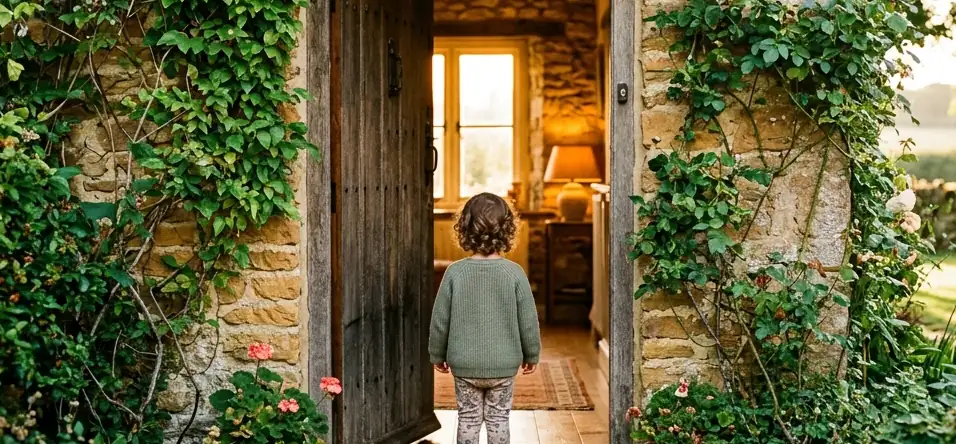
A child who has been let down by the adults in their life carries something invisible everywhere they go. It works like an alarm system wired into their bones that was built one disappointment at a time before running constantly without needing permission. Every adult who broke a promise or vanished without explanation added another wire to the system. By the time the child meets someone new, the alarm is already scanning before the first hello is finished.
Now imagine that a long-lost family elder appears. Someone who is older and completely steady while remaining genuinely warm. This elder carries no history of harm while wanting absolutely nothing from the child beyond showing up with an open hand and a patient voice. By any reasonable measure, this person is safe.
The alarm does not care about reasonable measures. It fires anyway, because every previous adult who showed up looking safe eventually proved dangerous. The alarm was built to protect the child, and it did its job well during a time when the danger was real. The problem is that the job has changed and the alarm has not changed with it. It keeps firing at ghosts from a different life, with different people, under completely different conditions.
When the Alarm Gets Too Loud
Something predictable happens when the alarm keeps firing at a person who means no harm. The child retreats into total silence. They intentionally avoid picking up the phone while stopping their responses to messages and refusing to show up entirely. From the outside this looks like the child has decided the elder does not matter to them.
The truth runs in the opposite direction entirely. The child went quiet because the elder mattered too much. If the elder were unimportant, staying casually connected would have been easy, because indifference takes no effort at all. Going silent costs the child the connection they actually wanted, and they pay that price because their alarm has convinced them the alternative is worse. Better to walk away now than to be hurt later. This is how someone thinks when they learned early in life to leave before being left.
The Reliability of the Sturdy House
Here is where the story turns into something worth celebrating, because a wise elder does something remarkable with that silence.
A lesser adult would take the silence personally. They would fill the gap with their own hurt feelings, say something like "I tried my best and got nothing in return," and walk away. That departure would confirm everything the child's alarm ever predicted. Every wire in the system would light up as if to say, "See, they always leave."
The steady elder reads the silence differently. They understand that the quiet is not aimed at them. It belongs to everyone who came before them, every adult who earned the child's distrust through years of broken commitments. So the elder does something that looks simple from a distance but requires real strength up close. They patiently keep the front door open.
They send a short message on a birthday. They share a small story about the family the child never knew. They check in briefly without asking for anything back. Each of these small acts carries the same quiet message repeated over and over again. There is no deadline for responding. There is no punishment for staying silent. The door will still be open tomorrow morning.
The Courage of the Blind Step
This is where faith enters the picture, and it is important to understand what faith actually costs.
Trust always requires a foundation of evidence. A person trusts someone after watching them prove safe over a repeated stretch of time. Faith has no evidence to work with. Faith is the word for what happens when a person steps forward despite having every reason to step back. The child's alarm system is screaming that this elder will eventually turn cold, because every previous elder turned cold. The child possesses zero proof that this time will be different.
Stepping through that open door anyway, responding to one message, laughing at one shared story, showing up to one family gathering despite the alarm ringing in their chest, that is faith. It represents a completely unrewarded risk. The child spends something they cannot get back, a piece of their own safety, on a bet that has failed before. Faith is what bridges the gap between a child who has been hurt and an elder who has not yet had the chance to prove they will not hurt them. Without that blind step, the door stays open forever and nobody walks through it.
What Grows After the Initial Step Forward
Faith brings the child through the door, but faith alone cannot keep them inside. Faith is expensive, and nobody can run on it forever. What keeps the child in the room is what happens next.
The elder keeps the fire going. Day after day the room stays warm. The elder does not change their tone when the child tests them. The elder does not flood the room with grand gestures designed to overwhelm the child's defenses. They simply remain consistent and deeply present by staying the exact same person on a Tuesday afternoon that they were on a Sunday morning.
Something shifts inside the child's alarm system when it receives steady, non-threatening signals from the same source over a long enough stretch of time. The alarm begins to register that this particular person has never produced a harmful signal. Not after weeks, not after months. The wires that were tuned to fire at every approaching adult begin to loosen around this one specific person. The child does not make a conscious decision to lower the alarm. The alarm lowers itself, recalibrated by accumulated evidence that contradicts the old pattern.
The first visible sign is almost invisible. The child reads a message and does not delete it right away. They mention the elder's name to a friend without attaching a warning. They respond to a check-in with a single word, then two words, then a whole sentence. These are test signals, the smallest possible offerings sent outward to see what comes back. When the elder receives each one calmly, without overreacting or demanding more, the alarm logs another piece of evidence in favor of safety.
The Steady Safety of the Warm Floor
One afternoon the child realizes the alarm has gone quiet around this person. They notice they can sit in the elder's presence without watching the exits. They catch themselves laughing at something the elder said and realize their guard dropped without them noticing. The alarm system has completed its long review and reclassified this elder from unknown threat to verified family.
This is the moment where faith hands the job over to trust. Faith was the unrewarded first step into the dark. Trust is the warm floor the child finds underneath their feet after enough days of walking through that door and finding the room still safe on the other side. Faith required the child to spend their own safety with no guarantee of return. Trust returns that safety to them, backed by a long record of evidence that this elder is exactly who they appeared to be from the beginning.
The Reward That the Elder Receives
The elder who kept the door open through months of silence gets to witness something extraordinarily rare. A child choosing to stay in a room they could have left at any time. The evidence, delivered patiently day after day, successfully replaced the old pattern that had been burned into the child's alarm system by years of disappointment.
The child's alarm still works. It still protects them from genuine danger, and it should. What has changed is that the alarm now contains an exception, a single entry marked safe, earned through the elder's steady presence and the child's brave, unrewarded first step through the door. The relationship that was always possible has become real, and the warmth that the child once feared would be taken away is now the warmth they come home to.