
A morning routine in a coastal fishing town moves with predictable quiet. In Gurzang, eight miles outside the southern Iranian city of Minab, a literature teacher named Yaghoub Yazdanpanah kissed his six-year-old daughter Fatemeh goodbye on the last Saturday of February. Fatemeh loved reciting classic Persian verses that she memorized after hearing them twice. Her father had enrolled her across town at the Shajareh Tayyebeh primary school, a licensed educational campus operating openly since 2015. On the first floor, young boys sat at wooden desks while preschool toddlers removed their shoes to sit on a colorful prayer carpet. Upstairs, elementary girls unpacked notebooks beneath a wall mural showing a young student reading in a field of yellow flowers.
By nine in the morning, regional education offices sent out a radio message telling teachers to dismiss classes early. Rumors spread that foreign warships had launched strikes across northern provinces, targeting government ministries in Tehran and coastal radar sites near Bandar Abbas. Teachers called parents, and dozens of families arrived on motorbikes to collect their children. Approximately fifty young pupils remained inside, waiting for rides from outlying farms. At twenty-two minutes past eleven, two Tomahawk cruise missiles detonated against the concrete roof fifty-four seconds apart. The ceiling collapsed into the prayer hall, leveling two-thirds of the building into powdered gypsum, twisted rebar, and crushed stone.
The Reality on the Ground
Local search crews from the Red Crescent and the Minab fire station arrived to find shattered concrete slabs covering the courtyard. One hundred and twenty children died inside the rubble, alongside twenty-six female teachers, seven visiting parents, a bus driver, and an unborn infant carried by an expectant instructor. Ninety-five additional townspeople suffered severe burns, deep shrapnel wounds, and skull fractures.
The municipal morgue at Hazrat Abolfazl Hospital possessed only six cooling drawers, forcing medical workers to call commercial fish distributors along the Strait of Hormuz. Refrigerator trucks designed for sea cargo parked outside the emergency entrance to hold small wrapped bundles. In the hospital mosque, doctors projected photographs of recovered shoes, cartoon backpacks, and embroidered socks so parents could identify missing sons and daughters without walking through crowded refrigerated trailers. For three days during Ramadan, volunteer crews dug through concrete by hand, searching for surviving family members under the desert sun.
The Failure in the Targeting Loop
Explaining this disaster does not require believing that pilots intended to strike children. The horror emerged from a breakdown in basic military procedure. Before 2014, the parcel of land had housed military barracks. Twelve years ago, provincial authorities rezoned the property for civilian community use, constructing the school and a neighborhood health clinic. The school had operated openly with public educational registration for over a decade.
When planners in Washington prepared an air campaign requiring more than one thousand strikes within twenty-four hours, military analysts faced immense pressure to produce targets on short notice. Instead of checking updated satellite photographs, the Defense Intelligence Agency pulled unverified coordinates recorded in outdated databases that predated the civilian redevelopment. Those numbers passed into the Maven computer system, a software package developed by Palantir to automate target identification. The program compressed hours of human verification into fifteen minutes, categorizing the school as a naval installation without cross-checking commercial maps or reviewing satellite passes from two months earlier that showed children playing soccer in the yard.
Dismantling the Safety Net
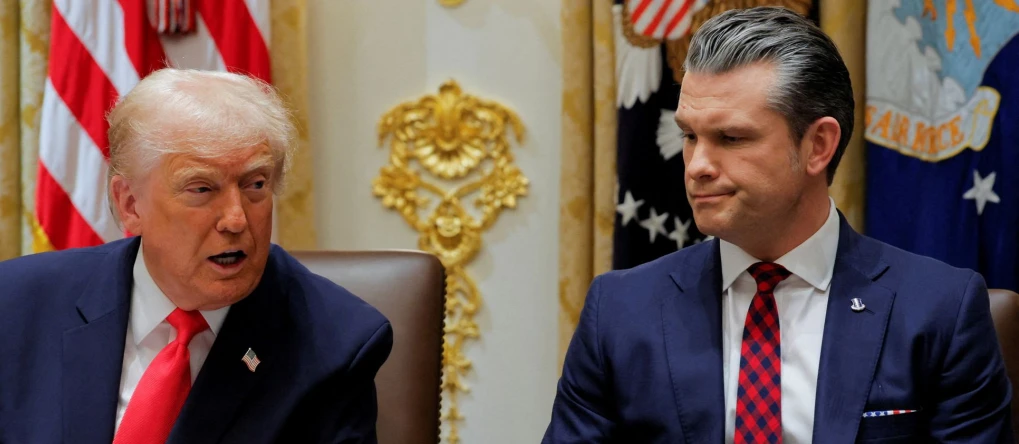
Faulty intelligence alone does not produce mass civilian death without deliberate policy choices that remove institutional safeguards. Early in 2025, War Secretary Pete Hegseth dissolved the Civilian Protection Center of Excellence and enacted a formal command stance demanding maximum lethality over legal restraint. Longstanding rules requiring commanders to verify living patterns around targets were set aside to speed up the launch rate.
When public reports revealed the carnage in Hormozgan province, official accounts shifted across contradictory explanations. White House statements asserted without evidence that Iranian forces had fired inaccurate munitions into their own town, despite missile fragments bearing Raytheon identification code 96214 recovered from the ruins. Military spokesmen alleged that hostile forces fired rockets from the school yard, yet United Nations inspectors and municipal fire teams found zero launch scars, zero ammunition depots, and zero military gear in the debris. At international conferences, senior leaders dismissed inquiries with casual remarks that armed conflict is naturally unpleasant.
The Broken Electoral Compact
This sequence of decisions represents a severe betrayal of civic trust. Millions of working-class families and faith-motivated voters supported an anti-interventionist platform because they wanted an end to foreign military adventures. Candidates promised to stop endless wars, protect human life, and keep the nation out of overseas quagmires. Voters trusted that pledge, expecting a foreign policy guided by prudence, moral restraint, and peaceful borders.
Instead of prudence, strategic command unleashed an unprovoked war of choice while stripping away the verification rules that protect innocent life. President Donald Trump and War Secretary Pete Hegseth chose speed over caution, replacing human verification with computer algorithms and dismantling the review boards that prevent catastrophic errors. The result was not strength or defense. The result was one hundred and twenty dead school children in a southern Iranian fishing district.
The Institutional Reckoning
Modern cruise missiles can travel hundreds of miles and strike within inches of designated coordinates. Yet ballistic precision is meaningless when the coordinates themselves are drawn from forgotten spreadsheets and unchecked algorithms. When technological power outpaces moral responsibility, the modern military apparatus behaves like an unguided freight train running down a dark track.
The people who approved this strike did not look at satellite pictures taken eight weeks before the assault, which showed yellow school buses idling by the curb and girls jumping rope in the courtyard. They looked at digital code numbers generated by automated systems that were rewarded for volume rather than accuracy. By removing human analysts from the review loop, military leadership created a system where catastrophic error was inevitable.
The Demands of Justice
True national honor does not hide behind disproven talking points. Correcting this failure requires clear public action. The Department of War needs to release the full, uncensored internal investigation detailing how outdated coordinates entered the final strike package. The officers and civilian officials who discarded mandatory civilian protection rules face an urgent requirement for formal inquiry and lawful accountability under military justice standards.
In addition, the United States government owes formal acknowledgment and state restitution to the surviving families in Minab, funding medical care for two hundred and eighty-three traumatized child survivors and rebuilding the community clinic leveled in secondary strikes. Precision guidance means nothing when the human mind directing the strike tool operates without caution, truth, or moral restraint. When an administration betrays its promise of peace, the sovereign public holds the ultimate responsibility to reject reckless force and demand an accounting for lives extinguished in their name.