
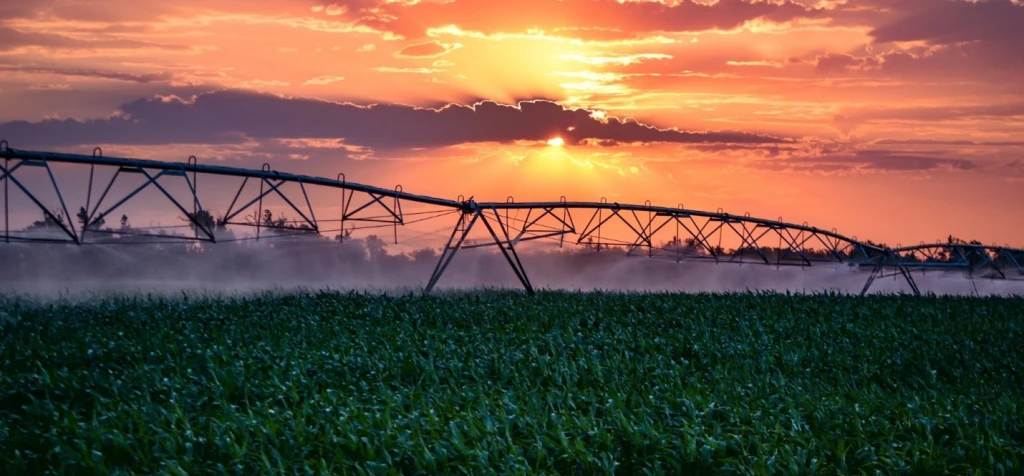
Driving past irrigated cornfields across western Kansas in late July presents a landscape of dazzling green. Center-pivot sprinklers rotate slowly across quarter-mile fields, throwing silvery arcs of water into hot afternoon air. Beneath the crops lies an ancient underground sea that makes this farming possible. Yet deep below the surface, the water table drops year after year, exposing the physical boundaries supporting the nation's breadbasket.
The Depletion of the Underground Plains
The Ogallala Aquifer underlies parts of eight Great Plains states, stretching from South Dakota down through Nebraska, Kansas, and the Texas Panhandle. This vast freshwater reservoir supplies roughly thirty percent of all irrigation groundwater pumped across the United States. In dry prairie regions where annual rainfall barely sustains shortgrass, the aquifer enables millions of acres of thirsty corn, soybeans, and feed crops to flourish.
Industrial extraction has outpaced natural rainfall recharge for more than half a century. In densely pumped districts of Kansas and the Texas Panhandle, the water level has plummeted by more than one hundred feet since deep well drilling accelerated. In several counties, commercial irrigation wells now draw air or spit muddy brine. Hydrologists point out that rainwater takes thousands of years to filter through gravel beds down to these depths. Pumping fossil water to grow animal feed operates like drawing down a retirement savings account without making fresh deposits. When the well runs dry, irrigated acres revert to dusty scrubland.
The Sinking Floor of the Central Valley
A parallel drama unfolds fifteen hundred miles west in the Central Valley of California. This long interior basin produces a major share of the nation's vegetables, tree nuts, and stone fruit. During prolonged droughts, surface water allocations from mountain snowmelt dry up, forcing fruit and nut growers to drill deeper wells into ancient clay layers.
Intense groundwater pumping has hollowed out underground aquifers so severely that the land surface has dropped. In parts of the San Joaquin Valley, the ground has subsided by nearly thirty feet, cracking concrete irrigation canals, buckling highway bridges, and damaging railway beds. In response, California passed the Sustainable Groundwater Management Act, legally requiring regional water basins to balance extraction with recharge by the year 2040. Meeting that statutory deadline will require taking hundreds of thousands of productive acres out of irrigated production. That coming retirement represents a fixed physical subtraction from the nation's fresh produce supply.
The Over-Allocated Waters of the Colorado
Water constraints tighten further across the desert southwest, where winter greens feed northern supermarkets. The Colorado River serves as the primary water pipeline for seven states and Mexico, supplying sprawling irrigation districts across southern California and Arizona. Yet the river's flow was divided on paper in 1922 based on unusually wet historical years that overestimated actual water volume.
Decades of regional drought have exposed that paper illusion. With reservoirs at Lake Mead and Lake Powell dropping to historic lows, federal regulators mandated sharp reductions in water withdrawals across lower basin states. As agriculture consumes the large majority of diverted river flow, farmers in Arizona and California face water rationing. When growers fallow fields to conserve water, supplies of winter lettuce, broccoli, and spinach shrink on supermarket shelves across the country.
The Erosion of the Soil Foundation
While water tables sink underground, the soil surface suffers matching exhaustion. Decades of deep plowing and continuous chemical feeding have depleted the living biology that gives topsoil its structure. Undisturbed prairie soil functioned like a damp sponge, rich in organic matter and capable of absorbing sudden cloudbursts. In contrast, intensively tilled soil packs into hard dirt that repels rain and washes away during summer storms.
Agricultural researchers estimate that American cropland loses between 1.5 and 2 billion tons of topsoil each year to wind and water erosion. That soil loss would fill a line of dump trucks circling the earth dozens of times. Synthetic fertilizers mask this slow degradation by feeding crops soluble nitrogen in irrigation runoff, keeping grain yields high while the underlying earth turns sterile. Cover crops protect topsoil from erosion, yet growers plant them on barely five percent of American cropland. As author Wendell Berry observed, soil remains the source and destination of all terrestrial life, and ignoring its health trades future survival for short-term harvest tallies.
The Disruption of Generational Weather Patterns
Agricultural calendars once relied on predictable seasonal rhythms inherited across generations. Farmers knew when spring ground thawed, how summer rainfall arrived, and when autumn frosts began. That climate consistency has fractured. Research published in Nature Climate Change demonstrated that southwestern North America endured its driest twenty-two-year stretch since the ninth century, marking the worst megadrought in twelve hundred years.
Global average temperatures broke consecutive records in 2023 and 2024, prompting the Department of Agriculture to shift its plant hardiness zone maps northward. While warmer averages alter planting dates, intense weather swings cause the sharpest disruptions. Sudden flash droughts dry out crops within weeks, followed by torrential downpours that flood root zones and erode bare topsoil. In February 2021, Winter Storm Uri swept through Texas, freezing citrus orchards and winter vegetables while knocking out regional electrical grids. Modern machinery and hybrid seeds cannot compensate when biological growing seasons decouple from reliable weather.
Facing the Physical Ledger
American agriculture has spent decades treating finite ecological assets as expendable revenue. Sinking water tables across the High Plains, subsidence fissures in California valleys, and thinning topsoil across the Midwest reflect physical accounts that chemical inputs cannot refill.
Preserving the nation's food security demands realigning agricultural production with natural limits. Transitioning from thirsty feed grains to drought-hardy crops, adopting continuous cover cropping, and restoring regional river basins require long-term public commitment. Respecting the physical boundaries of water and soil provides the only enduring foundation for feeding future generations before the wells run dry.