
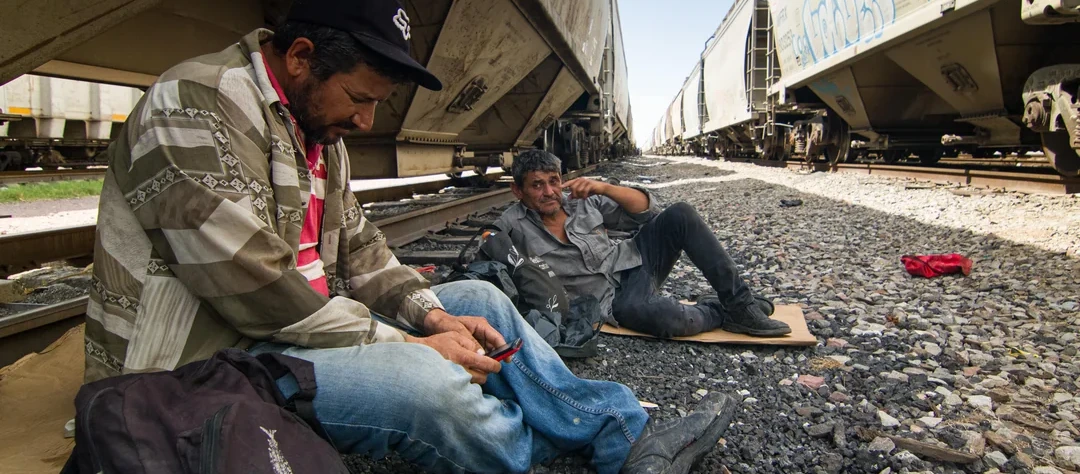
A traveler sitting on crushed ballast outside a freight yard in North Platte, Nebraska, no longer unfolds a creased paper booklet. Thirty years ago, that traveler leaned close to a flashlight beam. They squinted at tiny text to find where local switching engines parked grain cars. Tonight, a small glass screen lights up the dark gravel. With two fingers on a smartphone display, the traveler zooms out from orbit, pulling up color photographs taken from five hundred miles above the earth.
The satellite view shows everything the old paper pamphlets tried to describe in words. The pictures reveal every switch point, every crew shack, and every break in the chain-link fence. What once required weeks of walking along muddy drainage ditches now takes ten seconds on a consumer map app. The analog railroad, protected for generations by obscurity and physical danger, has dissolved under the glare of digital glass.
The Screen in the Gravel
Between 1988 and 2010, the physical Crew Change Guide served as the primary directory for freight hoppers across North America. The booklet packed thousands of yard layouts and division points into 154 photocopied pages. To use it, a rider had to interpret compressed lines of code. They cross-referenced street intersections and depot names with paper road maps.
That difficulty created natural friction. The work of finding the booklet and deciphering its shorthand forced travelers to learn the layout on foot. Beginners had to spend days sitting in dirt camps along riverbanks. They watched switching crews build trains and noted the shift patterns of yard patrol trucks.
Consumer mapping apps erased that learning curve. By 2016, riders waiting near the giant Bailey Yard in Nebraska could trace arrival tracks on screens before touching the gravel. Those near Northtown Yard in Minneapolis did the same. Clear imagery allowed anyone with a mobile connection to inspect freight cars resting on sidings. A novice could check whether a train carried covered grain hoppers or empty container wells while walking through a grocery store parking lot three miles away.
Eavesdropping on the Steel
Satellite mapping was only the first digital wave to wash through the rail yard. The second arrived through cheap radio tools and mobile data networks.
For decades, the radio channels used by train crews and yardmasters operated as closed circuits. To hear dispatch calls, an older traveler carried a bulky radio receiver, a metal antenna, and a paper frequency table. Modern software transformed that gear into a phone download. Digital audio feeds streamed railroad radio traffic across frequencies around 160 megahertz straight to consumer earphones.
At the same time, computer hobbyists built programs that decoded data sent between trackside signals and dispatch offices. A traveler sitting in a coffee shop in Roseville, California, could monitor automated trackside defect detectors fifty miles down the line. When a freight train rolled over a wheel scanner, the automated voice reported train length, axle count, and speed over open airwaves. The mystery of the schedule disappeared. A rider knew the train was arriving long before its headlights cut through the trees.
The Streamed Boxcar
The deepest cultural shift arrived when rail hopping met social media video platforms.
In the twentieth century, the freight-riding subculture depended on silence. Veteran tramps lived by an unwritten code, avoiding attention from railroad police and local deputies. They kept hidden camps, known as jungles, clean and quiet. They shared route intelligence only with trusted companions, knowing that loud behavior brought armed agents into quiet division points.
Streaming video dismantled that discretion. Across YouTube, TikTok, and Instagram, creators turned illegal freight rides into viral entertainment. Travelers equipped with small cameras and wireless microphones broadcast their journeys to thousands of followers. They filmed themselves climbing ladder rungs on rolling freight cars. They showed specific gaps in yard fences, and tagged the coordinates of secluded sleeping spots.
The videos presented a dramatic road adventure without showing the real physical cost. Young viewers watching screens in suburban bedrooms saw panoramic views of western river canyons. They did not feel the rough vibration of steel wheels on jointed rail or the freezing winds of mountain passes. Drawn by online clips, waves of unprepared novices arrived at rail hubs in cities like Eugene, Oregon, and Saint Roch in New Orleans. Many carried guitars and sleeping bags without understanding coupler slack action or yard safety.
The Hardened Perimeter
The explosion of online visibility produced an immediate corporate response. Major railroad carriers, facing heightened public scrutiny and safety liabilities, modernized their perimeter defenses.
Private railroad police forces, commissioned under federal statute, replaced random car inspections with networked surveillance technology. Security teams installed motion-activated infrared cameras along yard throat tracks. These systems beamed alerts to patrol trucks parked along access roads. In major intermodal terminals, remote aerial drones equipped with thermal sensors began flying over train roofs, spotting human heat signatures tucked beneath the overhangs of cargo containers.
Railroad carriers also made physical changes to their rolling stock. In the 2015 edition of the guide, Train Doc noted that rail companies were beginning to lock the access doors on Distributed Power Units, the unmanned locomotives placed in the middle or rear of long trains. For decades, cold riders had slipped inside these trailing cabs to find warmth and electric light. The locked steel doors shut off one of the last comfortable refuges on transcontinental routes. What video bloggers treated as a playground became a hardened industrial zone under constant electronic watch.
The Relic on the Shelf
The transformation of the railroad landscape mirrors a wider cultural transition. As physical barriers dissolve into software, the old skills of field navigation and personal discretion lose their practical value.
The printed Crew Change Guide now sits on bookshelves as a relic of a vanished era. Its 154 pages of dense abbreviations and hand-typed instructions no longer guide travelers through dark switching yards. The paper has become an artifact of an analog age, a record of thirty years when survival knowledge required paper, patience, and human trust. The trains continue to roll across the continent, but the secret world that moved along their flanks has been pulled into the light of the screen.