
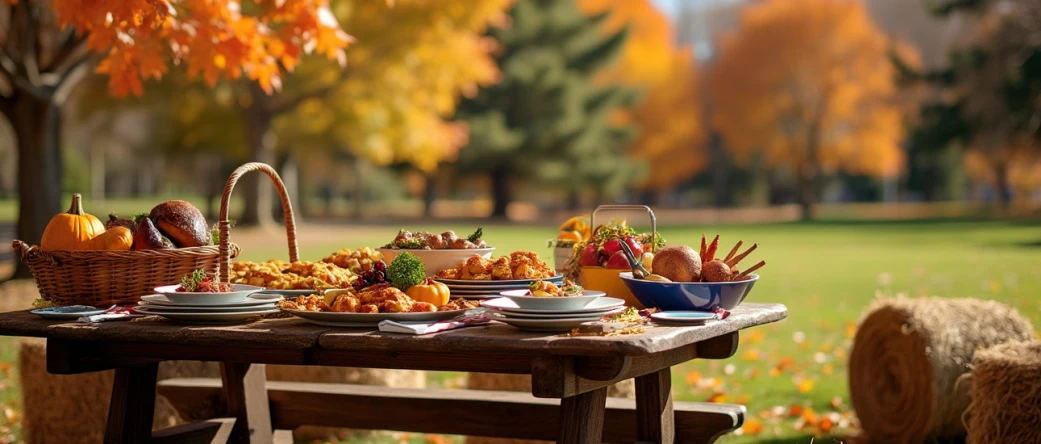
By late November across North America, hard frost seals the topsoil and strips the last dry leaves from the hedgerows. Fields that produced green beans and sweet corn stand bare under gray skies, reduced to broken stalks and frozen mud. For centuries, this shift in the weather signaled a sharp line between labor and survival. Gathering around an autumn table meant taking a sober inventory of what the soil had yielded, taken by men and women who knew the coming winter would test every ounce of food stored under their roofs.
Families walked down cellar stairs to inspect wooden bins stacked with russet potatoes, acorn squash, and jars of pickled beets. They checked salt-pork crocks, barrels of hard cider, and rows of dried sweet corn hanging from floor joists. What sat on the kitchen table on the fourth Thursday of the month represented the physical residue of months of calloused labor. Gratitude meant knowing the granary held enough weight to keep children fed until the spring thaws.
The Physical Accounting of Winter
Before rural electrification and mechanized grain silos, autumn work faced an unyielding deadline. A farmstead that miscalculated its winter needs paid for the error in physical suffering. If field corn rotted in early freezes or firewood remained unstacked in the woods, no amount of goodwill could prevent frostbite or hunger.
The harvest meal served as an economic audit. It forced households to tally yields against the four cold months ahead, measuring animal fodder against livestock headcounts and estimating cordwood cords against woodstove drafts. When neighbors sat together at midday, each plate of roasted fowl, mashed root vegetables, and corn pone testified to successful work completed before the ground turned to stone. The feast was earned through steady, unbroken effort from April to October.
The Illusion of the Solitary Homestead
Popular folklore often paints the early American settler as a lone frontiersman surviving on grit and rifle balls. That image collapses under historical scrutiny. No solitary household ever survived the seasonal hardships of the northern continent without continuous mutual assistance from neighboring farms.
Survival in rural communities was cooperative. Farmers banded together into threshing rings, moving machinery and work teams from property to property until every acre was cut, threshed, and bagged. Barn-raisings assembled fifty neighbors to erect a timber frame in one afternoon, turning weeks of solitary carpentry into an organized community effort. When illness struck a plowman during planting or a haymow caught fire, surrounding families brought their teams and seed corn to finish the fields without sending a bill. The harvest table reflected that mutual reliance, seating people whose survival depended on the neighbor sitting across the bench.
The Turn toward Commercial Consumption
Over the middle decades of the twentieth century, centralized supply chains severed consumers from the seasonal soil. Supermarket aisles, interstate trucking, and industrial processing plants turned fresh produce into a year-round commodity. Food appeared on shelves wrapped in plastic film, stripped of dirt, weather, and labor.
As physical connection to the harvest broke down, the character of the national holiday changed. Gratitude drifted away from mutual aid and became a passive emotional ritual centered on domestic overeating. Celebrations shrank into isolated living rooms, focused on television screens and promotional circulars. Within decades, Thanksgiving Eve and Thanksgiving Day turned into the starting gate for retail sales events, where crowds gathered before midnight outside big-box storefronts to purchase manufactured novelties. A festival born out of communal food security was repurposed into an engine of consumer debt.
Mutual Aid as Durable Wealth
Enduring economic security does not come from solitary accumulation or holiday discount shopping. Real wealth resides in local community ties that outlast economic downturns and supply shocks. When grain cooperatives, mutual aid food networks, and community cold-storage cellars function effectively, a rural district builds resilience against hardship.
Practicing genuine gratitude requires concrete stewardship. It demands investing surplus resources into community pantries, mentoring younger growers, protecting watershed topsoil, and maintaining fair commercial trade with regional farm operators. When families sit down to eat on Thanksgiving Eve, their real prosperity lies in the health and independence of the food system that feeds them. Hospitality proves its worth through shared grain and open doors, keeping rural traditions alive through quiet, intergenerational duty.