Cycles of Change

Engineering practical systems and exploring the physical world.

The opening years of the modern era have brought deep shifts across American life. Following the painful shocks of September 2001, cherished civic norms began a slow process of decay across the land. Public trust in core pillars of civic life has steadily declined across every major social group. [...]

Human thinkers long maintained a deep divide between two rival ways of understanding the world. For centuries, scholars treated the cosmos as an elaborate clock of separate pieces running under rigid rules. René Descartes and Isaac Newton provided the math foundation for this view during the [...]
The building inspection profession represents a critical intersection between engineering precision and regulatory governance. As modern construction becomes more complex, the role of the inspector has transitioned from simple oversight to a sophisticated exercise in structural risk management. [...]
Institutional neutrality in primary education functions as a baseline for social stability. Schools serve as the primary interface where children interact with complex social systems. When institutions maintain a consistent focus on academic and practical skills, they provide a stable foundation [...]
The stability of modern power depends upon the effective management of the information environment and the shaping of public belief. This process, known as perception management, involves the strategic coordination of government actions and media narratives to influence the emotions of the [...]
Modern civic thought faces a sharp divide between planned state rule and free human choice. Across global halls, backers of state planning want trained experts to steer trade, shop work, and daily life for the public good. In contrast, the old liberal view holds that true social peace grows from [...]
The development of a strong tech ecosystem in emerging nations requires a synthesis of individual skill and strategic building. A primary example of this path is found in the life of Rithy Thul, a Cambodian leader who transitioned from rural poverty to the forefront of national digital innovation. [...]
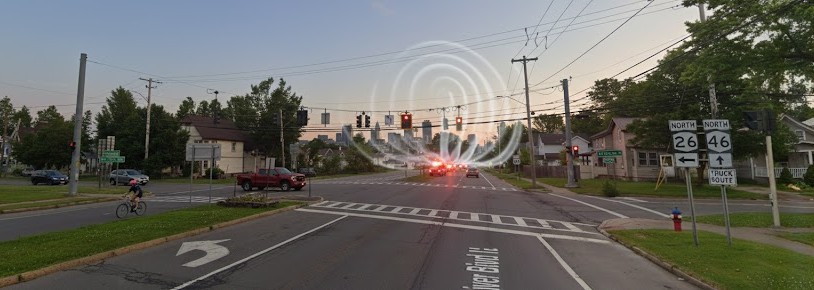
Modern city roads rely on traffic lights to guide cars and protect walkers across busy street corners. In most towns, these signals still run on clock timers that follow fixed dials built decades ago. Such older controls cannot sense real vehicle lines or adjust to sudden jams on side roads. When a [...]
Nutrition is the management of biological entropy. A living body works as a complex system. It needs constant chemical energy to keep its structure. This need exists because all biological systems naturally decay. Eating provides the raw materials for cellular repair and stability. The rational [...]
Emergency sirens represent a significant source of institutional noise pollution in modern cities, and standard sirens produce about 110 decibels, which is twice the level that causes mental stress. While sirens help trucks move through congested traffic, using them in residential areas causes a [...]
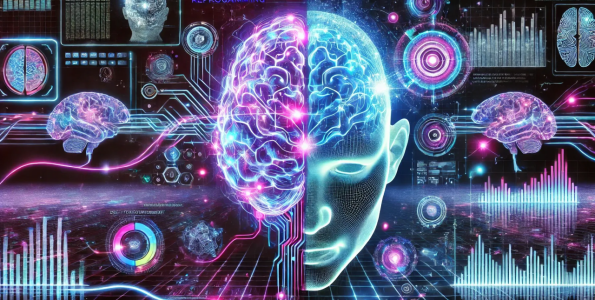
Technology evolves faster than most can track. One fascinating recent leap is Autonomous LLM Synthesis. This term describes how language models operate and improve without much human help. These models are programs built to understand and generate human language. Imagine a virtual assistant that [...]
Frédéric Bastiat published his most influential work in the final months of his life. This document remains a primary tool for understanding the mechanics of institutional failure. In the middle of the nineteenth century, Bastiat witnessed a fundamental shift in the nature of governance. He [...]