
Military theory treats total rule as the complete command of every battle zone across land, sea, air, and space. When brought into civic rule, this concept expands into guiding daily habits, body health, and private beliefs across whole nations. Modern ruling boards rarely rely on open armed force [...]

Intellectual freedom serves as a fundamental foundation for democratic societies. It represents the right of individuals to explore, discuss, and challenge diverse viewpoints without institutional suppression. This principle becomes especially visible during public health crises when the stakes for [...]
In late 1963, Malcolm X spoke to civic leaders in Detroit. He shared an old story from plantation days that reshaped modern politics. He contrasted the enslaved worker kept inside the master's house with the worker sent to open fields. The house worker ate food from the master's kitchen and wore [...]
In contemporary discussions about governance, the relationship between authority and individual rights often takes center stage, with significant implications for the fabric of society. Jon Stewart’s assertion that a free republic is self-sustaining and protected solely by the purity of democratic [...]
The simple act of riding a bicycle represents a significant step toward achieving personal freedom and fostering a deeper connection with the self. This journey involves a process of discovery that strengthens the body while clarifying the mind and enriching the spirit. The bicycle serves as a [...]
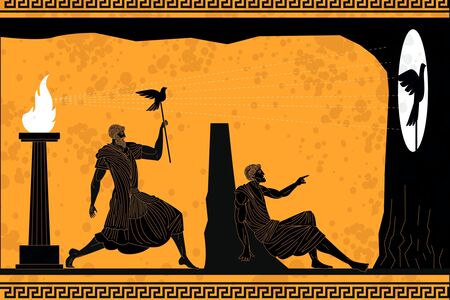
In the fourth century before our era, on the outskirts of Athens, Plato composed an allegory that remains the standard diagnostic tool for examining human society. He described prisoners bound from childhood inside a dark subterranean cave. Their heads were fixed in place, unable to turn toward the [...]