
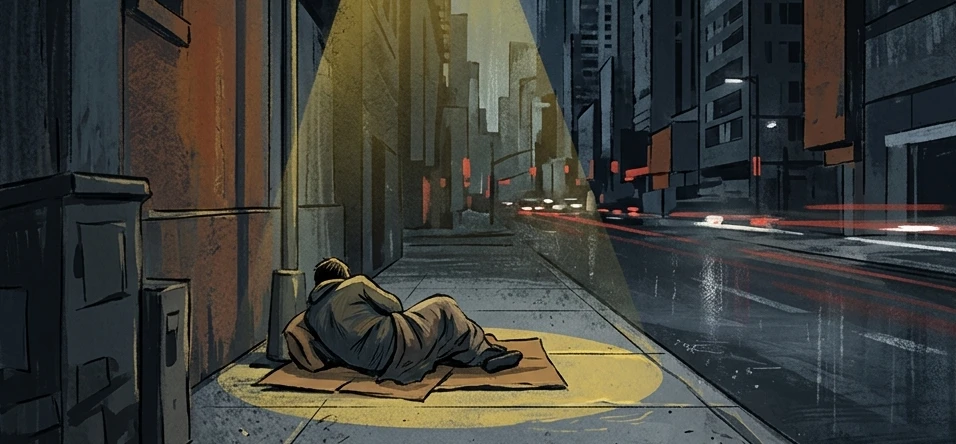
Most housing for individuals exiting homelessness centers on one question: does it have a roof and a door? If it meets that criteria, it counts as housing. The individual is no longer homeless. The tally decreases and the program reports success. Series: Urban Survival — The Building That Rebuilds [...]
Every one or two years, volunteers in many U.S. cities venture out on a single night to count people sleeping on the streets. They follow designated routes, inspect doorways, parks, and known encampments, and document their findings. This effort produces the Point-in-Time count. Governments rely on [...]
Part 6: What a Real Offer Looks Like described the person whose refusal of housing is rational, whose objections are real and whose barriers are concrete and removable. This post describes a different person. This person cannot be reached by better offers, longer outreach relationships, or more [...]
Most housing offers to people in encampments are not genuine. They mimic the form of an offer. They use language that suggests assistance and creates an illusion of choice. When individuals evaluate the actual proposals, they reveal a harsh reality. The offer demands they surrender everything they [...]
There is a sequence to recovery that the body enforces whether or not the city acknowledges it. The body does not care about policy timelines or intake forms or housing availability. It moves through its own stages of damage and repair at its own speed, in response to its own conditions. A system [...]
The term "homeless" identifies an administrative category. It indicates a legal and economic status for individuals lacking a fixed address. This term does not capture bodily, psychological, or social conditions. It fails to reflect varying circumstances. This label unites people with vastly [...]