
Urban Survival Series Index
The Urban Survival structure is built on a single, testable premise: models fail when they do not provide clinical support to neurologically destabilized individuals. This series outlines the problem, the required infrastructure, and operational protocols for stable, independent living.
The Core Insight
Living outside for long periods places extreme stress on the human nervous system. This stress temporarily reduces the mental energy required to manage an independent apartment. When we recognize this biological reality, we can stop feeling frustrated. We can offer clinical support instead.
We must stabilize the brain first. We call this initial step Phase Zero. Providing Phase Zero prepares individuals for permanent success. It is an act of profound care. It gives the brain the physical rest it requires to recover and thrive.
This is the core idea supporting the entire Urban Survival structure. Every design choice flows directly from the need to support this healing. Soundproof walls provide essential structural silence. The 150-person community limit ensures safety. Permanent stewardship guarantees necessary ongoing stability.
Series Index and Segment Descriptions
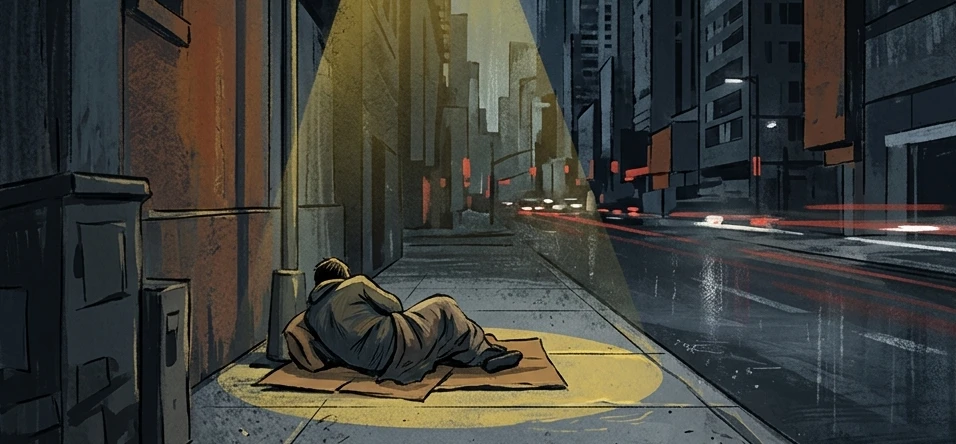
Part 1: How It Feels to Be Homeless Establishes the physical baseline of street exposure. An objective examination of the environmental hostility that begins the biological descent.
Part 2: The Spiral That Nobody Stops Documents the three stages of metabolic and neurological collapse. Explains how sleep deprivation and cortisol flooding fundamentally alter brain chemistry over time.
Part 3: Why the Usual Answers Fail Analyzes the systemic failure of placing biologically destabilized individuals directly into independent housing without clinical prerequisites.
Part 4: Not One Crisis, Five Categorizes the unsheltered population into five distinct groups requiring five specific, matched, and parallel responses.
Part 5: What the Body Needs Before the Key This step introduces Phase Zero stabilization. The absolute clinical requirement of bringing the body's threat-detection system back to baseline before expecting executive function.
Part 6: What a Real Offer Looks Like Defines the elements of an acceptable housing offer for the rational holdout, addressing the "Three Ps": pets, partners, and possessions.
Part 7: When Persuasion Cannot Reach Addresses anosognosia and the necessity of legal instruments for individuals whose neurological damage prevents them from recognizing their own critical illness.
Part 8: The People Nobody Counted Examines the invisible, terrain-adapted population living in riparian corridors and the environmental enforcement mechanism required to reach them.
Part 9: The Building That Rebuilds People Details the precise clinical architecture required for permanent supportive housing, integrating acoustic isolation, permanent tenure, and Dunbar's 150-person community threshold.
Part 10: What It Costs to Do Nothing This segment presents the core fiscal argument. Contrasts the reactive, endless expense of emergency system usage against the proactive investment in clinical stabilization infrastructure.
Part 11: How We Know If It Works Establishes seven verifiable metrics to audit the system's effectiveness, proving the model remains accountable to its clinical and economic claims.
Evidence-Based Design for Permanent Supportive Housing
The built environment dictates biological recovery. Chronic street exposure locks the nervous system in a state of high alert. This sustained stress damages executive function and blocks healing. Permanent housing must operate as a clinical tool to reverse this damage.
Prolonged sleep deprivation and constant environmental threat trigger a physiological cascade that makes independent living biologically impossible without intervention (Mascaro et al., 2017). A quiet, protected environment is not an amenity. It is the baseline requirement for a person to accept help and recover autonomy.
Key Architectural Features for Recovery
Acoustic isolation is the primary requirement. The ambient noise of city streets blocks the deep sleep necessary for neurological repair. Current noise levels in standard supportive housing frequently fail to meet basic health standards (Schäfer et al., 2020). High-performance sound insulation guarantees restorative sleep. This silence repairs the brain after prolonged outdoor exposure (Basner et al., 2014).
Permanent tenure prevents unnecessary systemic disruption. Moving a vulnerable person severs their routines and breaks their social bonds. Housing models that guarantee permanent residence and block displacement produce higher long-term recovery rates. Permanent tenure gives a person the time required to build trust and begin healing (Sardinha et al., 2023).
Community scale strictly determines overall social stability. Anthropologist Robin Dunbar's research sets the human limit for stable social groups at 150 people. When communities exceed this number, cohesion and individual responsibility fail (Dunbar, 2012). Organizing housing into distinct clusters of 150 residents forces social recognition. Residents successfully recognize and know their neighbors. This visibility naturally regulates behavior and creates mutual safety.
Physical design directly dictates necessary psychological conditions. A resident must know they are protected from intrusion before their nervous system will power down. Clear sightlines, defensible space, and controlled access points reduce anxiety and build a genuine sense of home (Osborn et al., 2021). Material quality strongly signals inherent social value. Durable, high-quality finishes reduce ambient stress. A well-built room proves to the resident that the system expects them to succeed, increasing their motivation to maintain the space (Nussbaumer-Streit et al., 2020).
Site Planning and Integration
The location of the building matters as much as the individual rooms. Sites are selected to minimize stress and maximize access. Locating supportive housing inside mixed-income neighborhoods limits isolation and reduces systemic stigma (Sardinha et al., 2023). Proximity to transit and healthcare gives residents the physical means to rebuild their lives (Osborn et al., 2021).
Ongoing Clinical and Administrative Support
The built environment must house immediate care. Medical, psychiatric, and addiction treatment must operate inside the building to eliminate barriers to access (Osborn et al., 2021). These integrated services allow residents with complex neurology to stabilize. Case management, skills training, and medical support operate as the functional backbone of the physical structure (Mascaro et al., 2017).